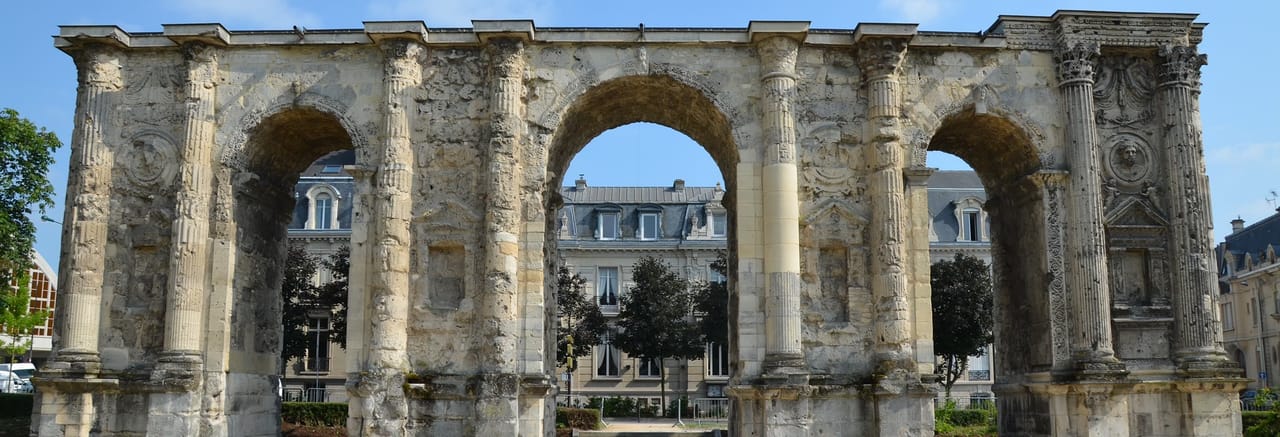
Porte de Mars
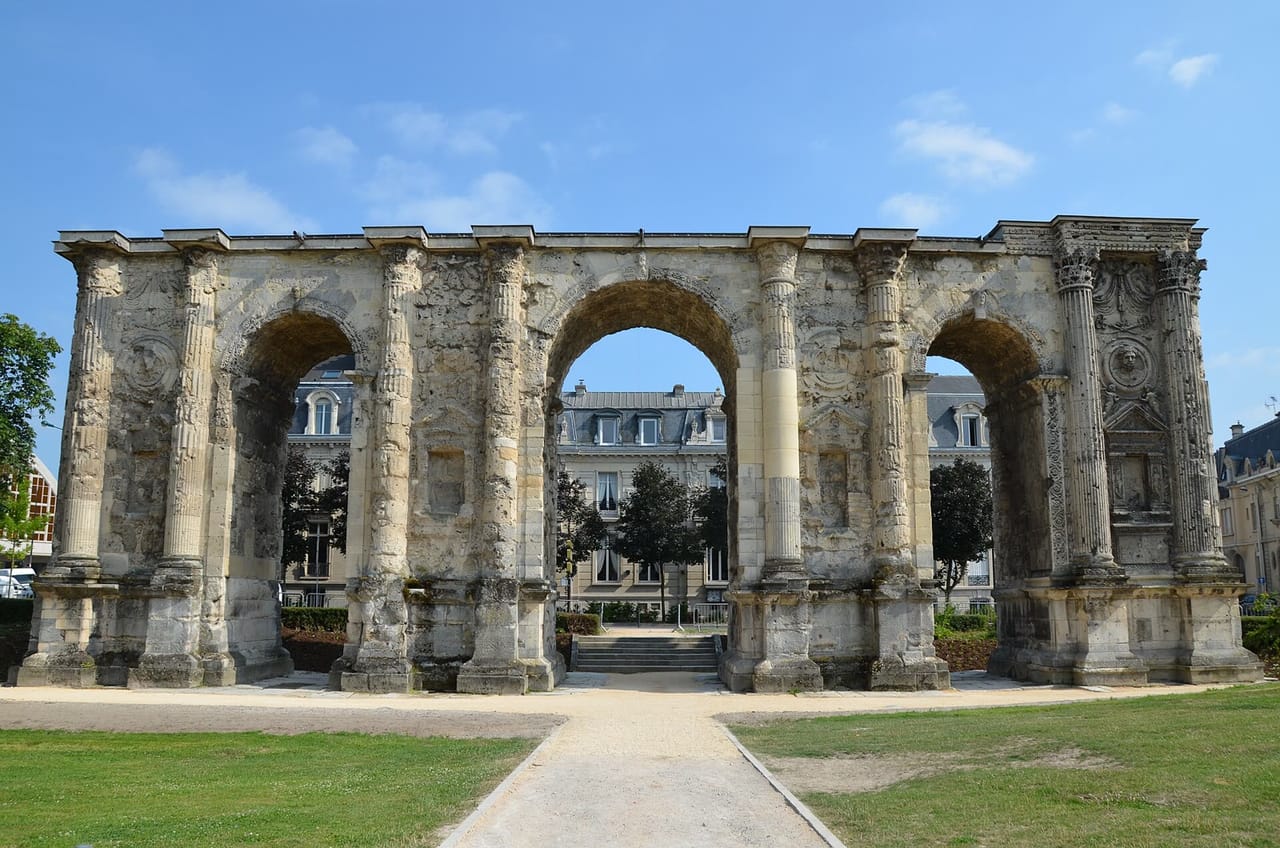
The Porte de Mars is a 3rd-century Roman arch standing north of central Reims, near the Hautes Promenades park. It takes its name from a nearby temple of Mars that has since vanished. It is the main visible relic of ancient Durocortorum in the middle of town, and an easy stop between two visits.
A gate of Roman Durocortorum
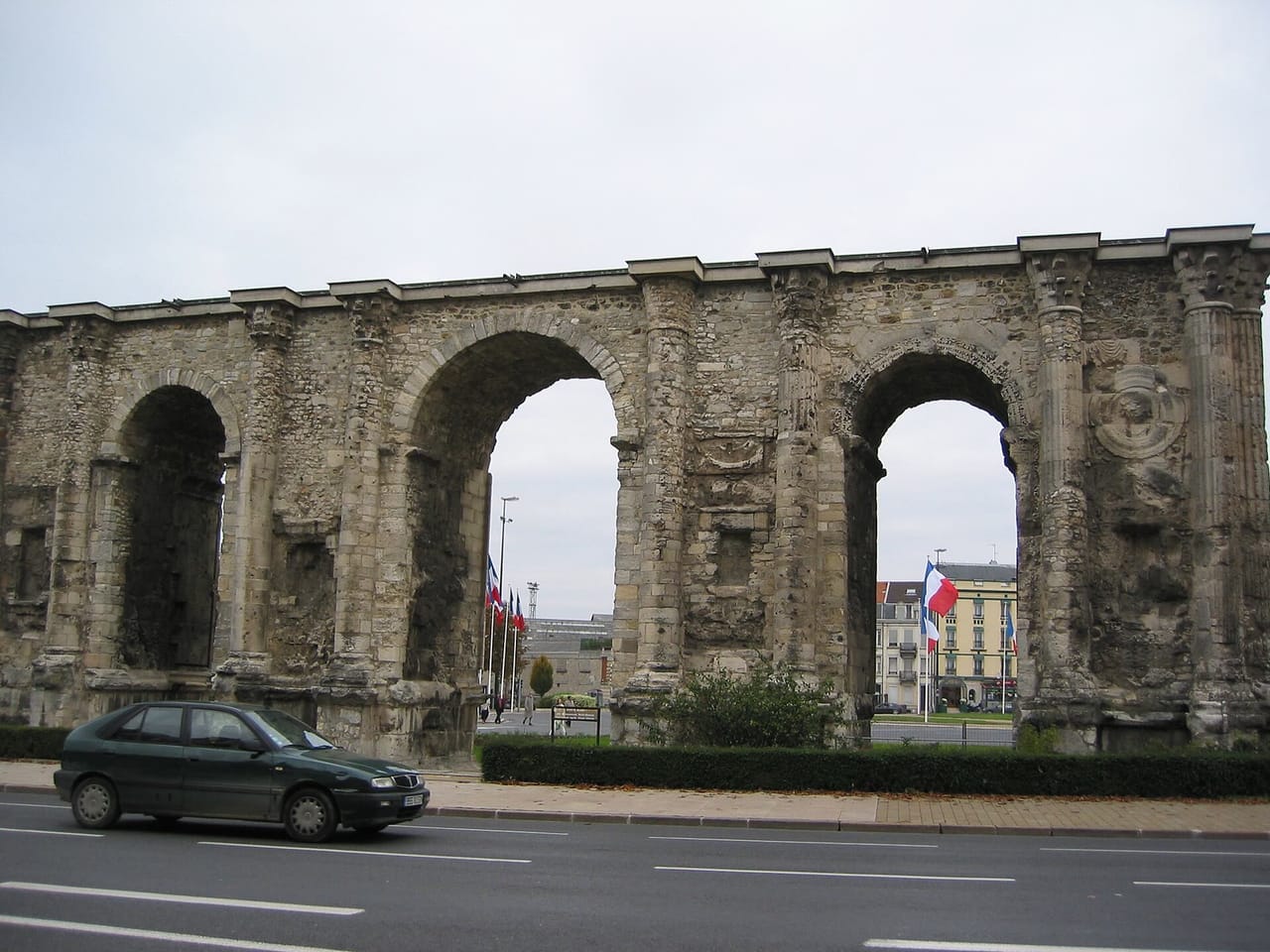
Durocortorum, the ancient name of Reims, was an important city of Roman Gaul. The Porte de Mars marked one of the entrances to the town and dates from the 3rd century. It has been a monument historique since 1840. Standing for almost eighteen centuries amid modern traffic, it is a reminder that the origins of Reims go back well before the cathedral.
An arch of rare scale
The monument consists of large arcades whose scale is striking as soon as you approach. Several sources describe it as the widest known Roman arch, which makes it a major monument for anyone interested in antiquity. The very worn reliefs are easier to read in low light, in the morning or late in the day.
Between town and promenade
The gate stands at the edge of the Hautes Promenades, a tree-lined walking space where you can take a break. The monument can be seen from outside as you pass, with no ticket or booking that we know of. Allow about a quarter of an hour to walk around it, read the signs and photograph the whole.
Pair it with the cathedral
The Porte de Mars fits neatly into a day on foot: from the centre you can link it with the cathedral, the town hall and place Drouet-d'Erlon. The contrast between Roman arch, Gothic cathedral and 20th-century rebuilt facades gives a good sense of the layers of Reims's history.
Frequently asked questions
Where is the Porte de Mars?
North of central Reims, at the edge of the Hautes Promenades park.
Why is it notable?
It is a 3rd-century Roman arch, a relic of Durocortorum, a monument historique since 1840.
Can you visit it?
You see it from outside as you pass. For a guided visit, ask the tourist office.
Wikimedia Commons — Carole Raddato from FRANKFURT, Germany · Wikimedia Commons — Magnus Manske