Pey-Berland Tower
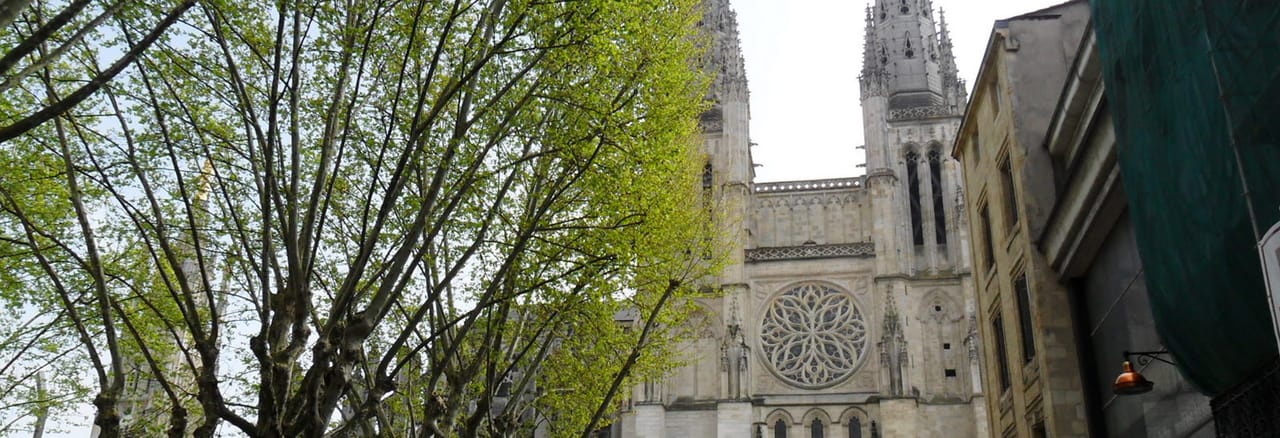
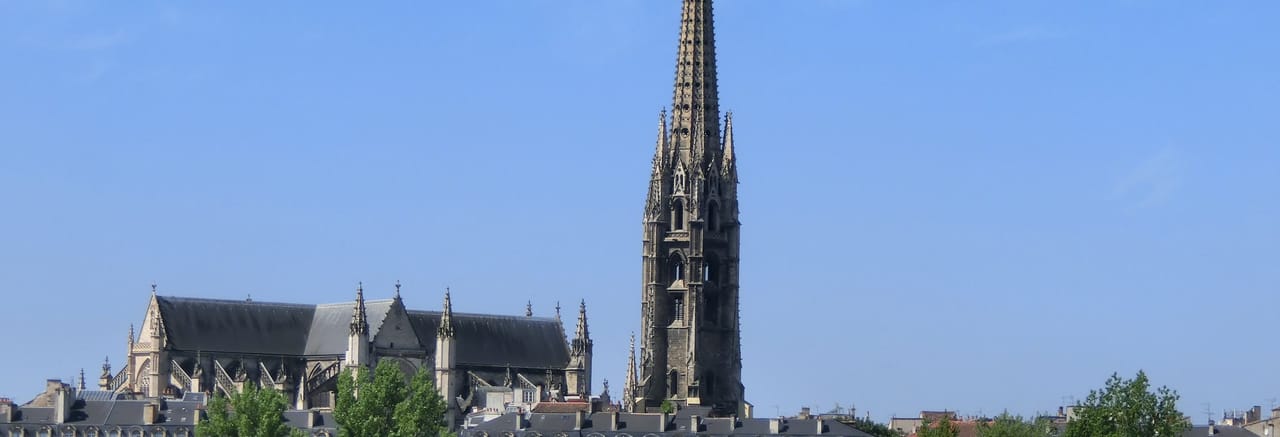
The Pey-Berland Tower is the bell tower of Saint-André Cathedral, standing beside it on Place Pey-Berland. Built between 1440 and 1500 on the initiative of the archbishop whose name it bears, it is crowned by a gilded Virgin and Child. Visitors can climb its steps for a view over the city.
A tower for the bells, away from the walls
The tower has always stood apart from the rest of the cathedral. This is not unusual in the Gironde: it keeps the bells' vibrations from reaching the building, which stands on marshy ground. In the past, the tower was linked to the cathedral by the canons' houses.
Notre-Dame d'Aquitaine at the top
The spire, cut short by a storm in the 18th century, is now topped by the gilded statue Notre-Dame d'Aquitaine, made by Jean-Alexandre Chertier and installed in 1863. It also houses a famous bourdon bell of over eight tonnes. The Virgin faces the village of Avensan, in the Médoc, where Pey Berland came from.
Climbing the steps to the terrace
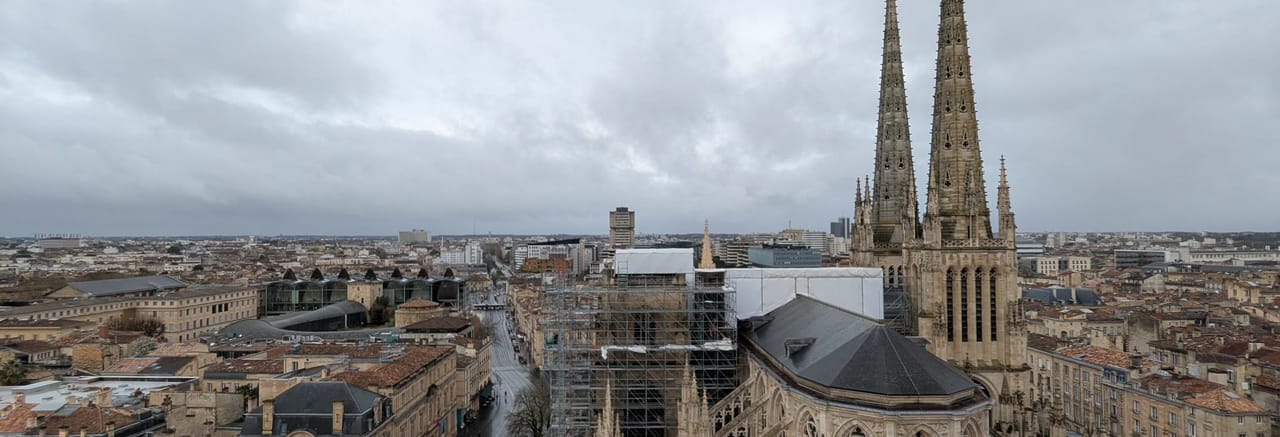
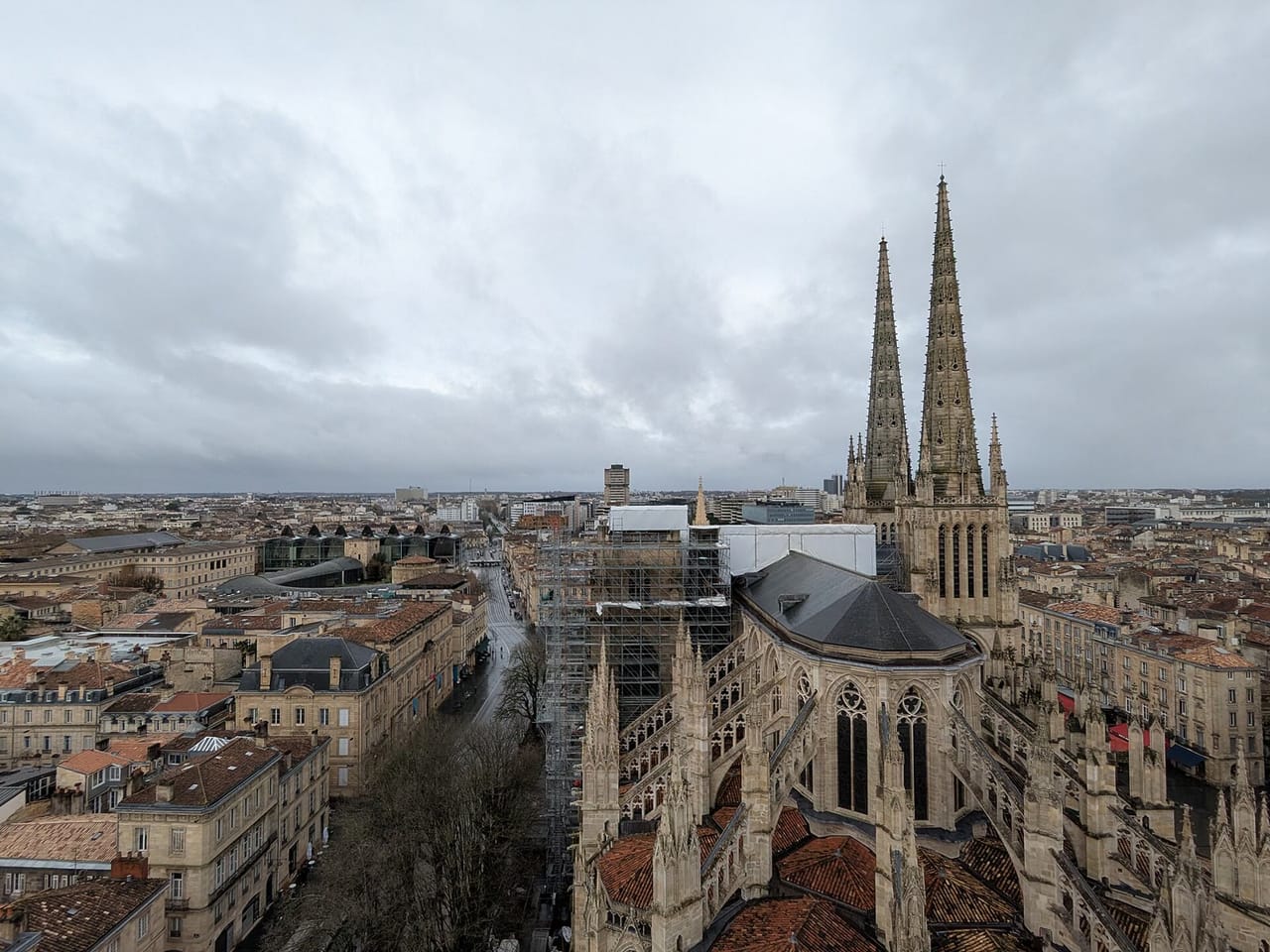
You climb 233 steps in a narrow spiral staircase to reach the terrace, a gallery around the spire, about fifty metres above the ground. The effort is rewarded by the view of the rooftops of the centre, the cathedral and the river. The tower is run and opened to visitors by the Centre des monuments nationaux.

Practical information
Address: Place Pey-Berland, 33000 Bordeaux
Frequently asked questions
Where is the Pey-Berland Tower?
On Place Pey-Berland, next to Saint-André Cathedral, in the centre of Bordeaux.
Why is it notable?
It is the cathedral's detached bell tower, a listed historic monument, topped by the gilded statue Notre-Dame d'Aquitaine and offering a panorama over the city.
Can you visit it?
Yes, the climb is run by the Centre des monuments nationaux. Remember to check opening times and conditions on the official website before you go.
What can you combine it with?
With Saint-André Cathedral, naturally, then a walk toward the Grosse Cloche and the Porte Cailhau.
Wikimedia Commons — Romainbehar