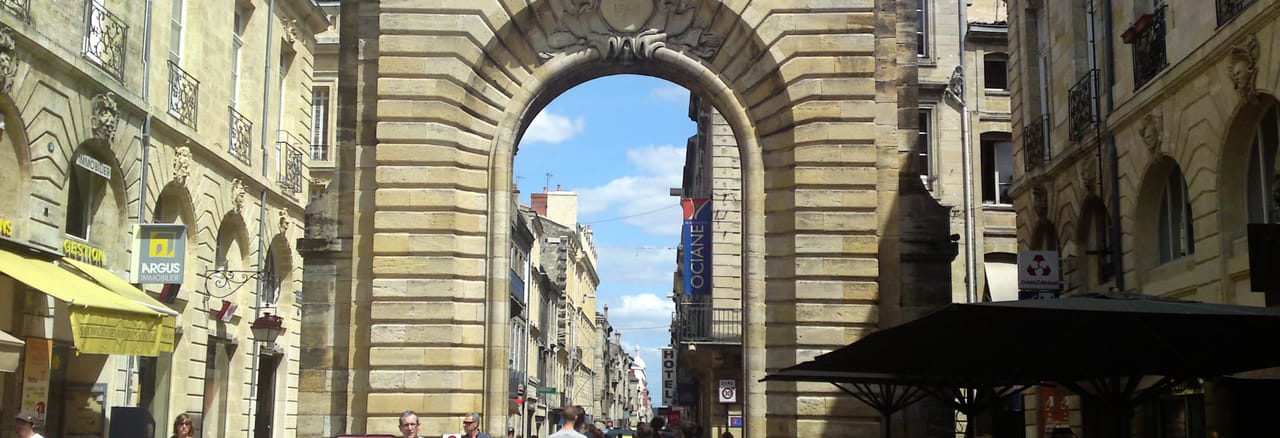
Porte Dijeaux
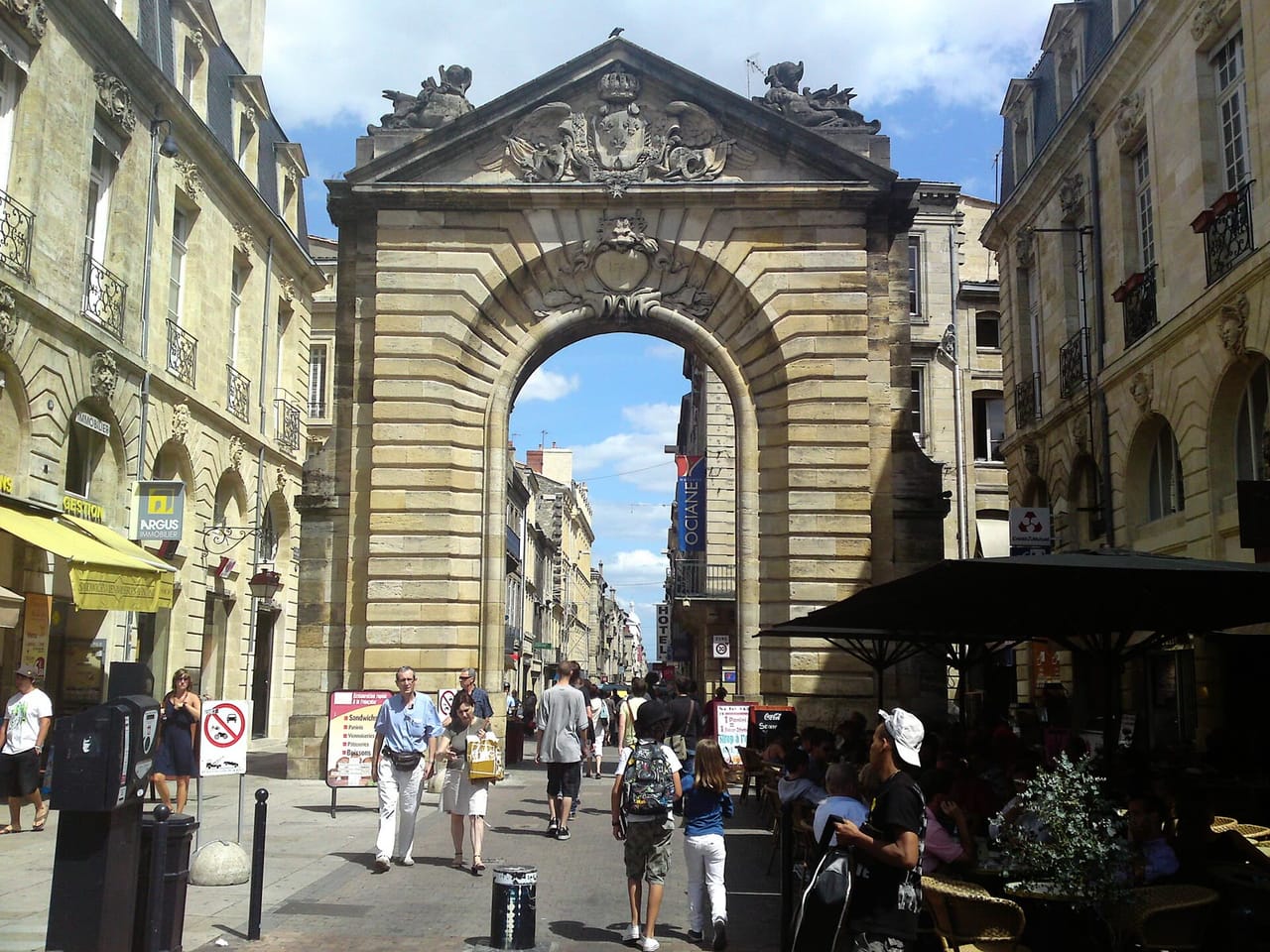
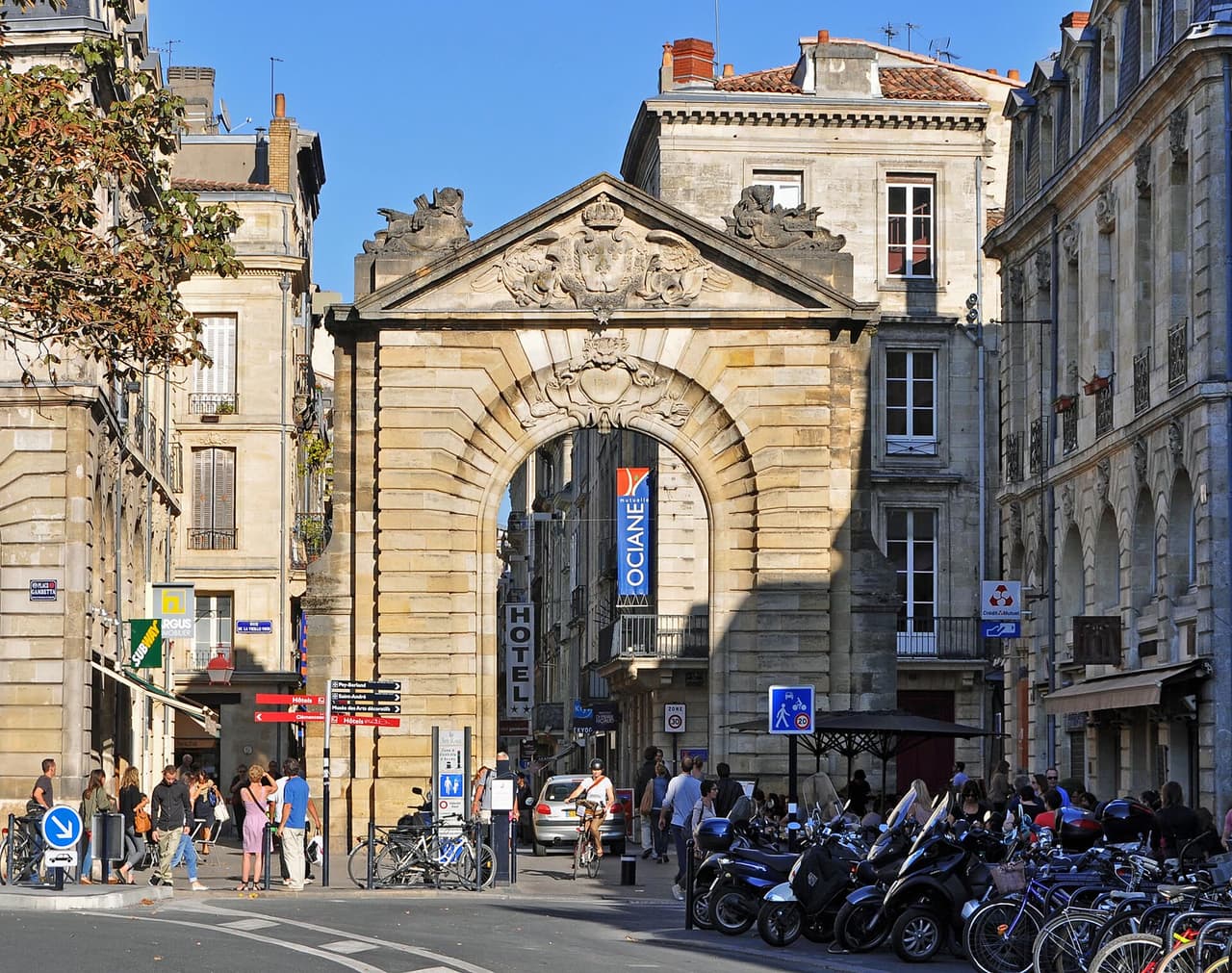
The Porte Dijeaux stands on place Gambetta, at the western end of rue Porte-Dijeaux, a shopping street in central Bordeaux. Built between 1748 and 1753 from plans by André Portier, it has been protected as a historic monument since 1921. It is the third gate of this name on the site.
At the end of a very old street
The gate closes, to the west, a straight street formed by rue Porte-Dijeaux and rue Saint-Rémi, a former Roman decumanus. It opens onto place Gambetta, once called place Dauphine. Walking east to west along this axis follows one of the oldest routes in the city.
Third gate, debated origins
The first gate belonged to the Roman walls of the 4th century. The creation of place Dauphine, decided in 1746, led to the demolition of the earlier gate and its replacement by today's monument, decorated by Claude-Clair Francin. The origin of the name is still debated: it is linked either to a Jewish quarter or to a temple of Jupiter.
A pause on place Gambetta
The gate is seen from the outside, while crossing place Gambetta, and fits naturally into a stroll through the centre. It can open or close a walk along rue Porte-Dijeaux. Remember to check conditions and access on the tourist office's official website before visiting.
Frequently asked questions
Where is the Porte Dijeaux?
On place Gambetta, at the west end of rue Porte-Dijeaux, in central Bordeaux.
When was it built?
Between 1748 and 1753, from plans by André Portier.
What can I combine it with?
With a stroll along rue Porte-Dijeaux and on towards place de la Comédie.
Wikimedia Commons — Jean-Louis Lascoux · Wikimedia Commons — Marc Ryckaert ( MJJR )