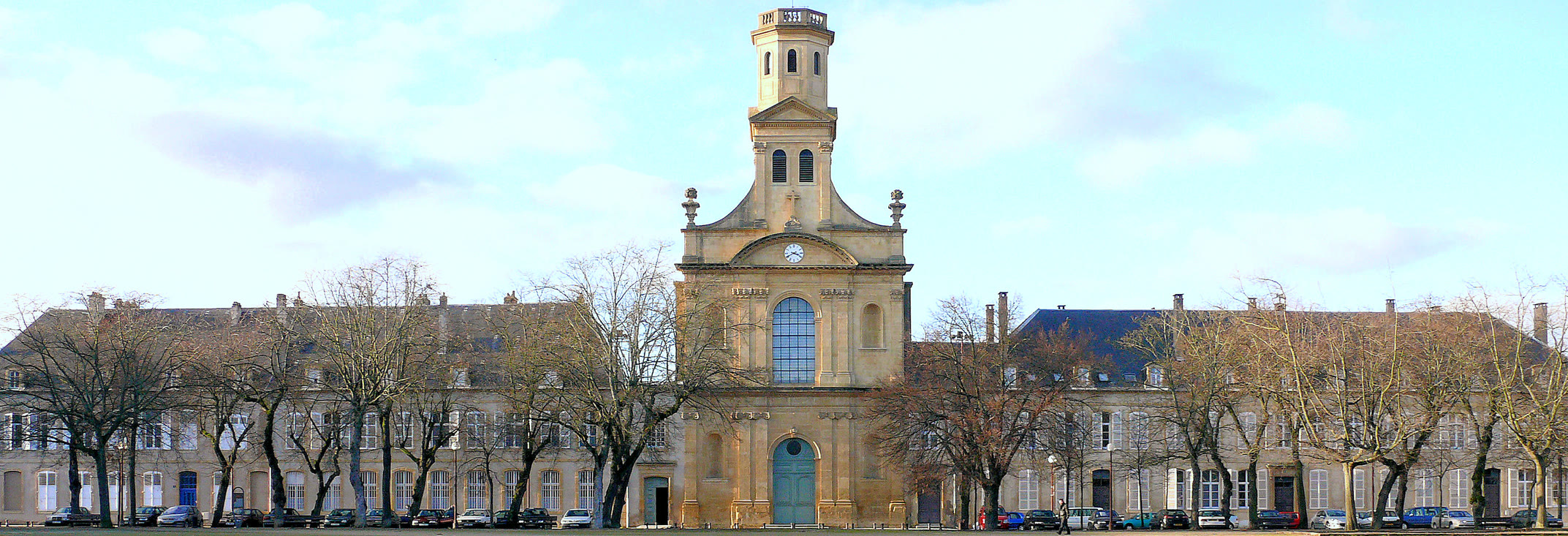
Église Saint-Simon de Metz
In the Îles quarter, ringed by the arms of the Moselle, stands a church very different from the medieval sanctuaries of Metz. Built between 1735 and 1740 at the initiative of the Marshal de Belle-Isle, the city's military governor, Saint-Simon-et-Saint-Jude displays an elegant neoclassical restraint. Unusually, it has no bell tower, so as to give no landmark to enemy gunners aiming at the nearby barracks. Placed under the patronage of the apostles Simon and Jude, it bears witness to the great urban project that transformed Metz in the Age of Enlightenment.
A church born of a military project
In the early 18th century Metz, a major fortress of the kingdom, underwent a vast redevelopment. The Marshal de Belle-Isle, military governor and great builder, wanted to give the new town a parish worthy of the name. In June 1735 regular canons from the abbey of Saint-Pierremont received land from Louis XV, and as early as 25 October that year the chapel was made a parish church. Work was completed in 1740. The building thus fits an urban and military logic as much as a religious one, characteristic of a period when the whole city was being rethought.
Neoclassical restraint, and no tower
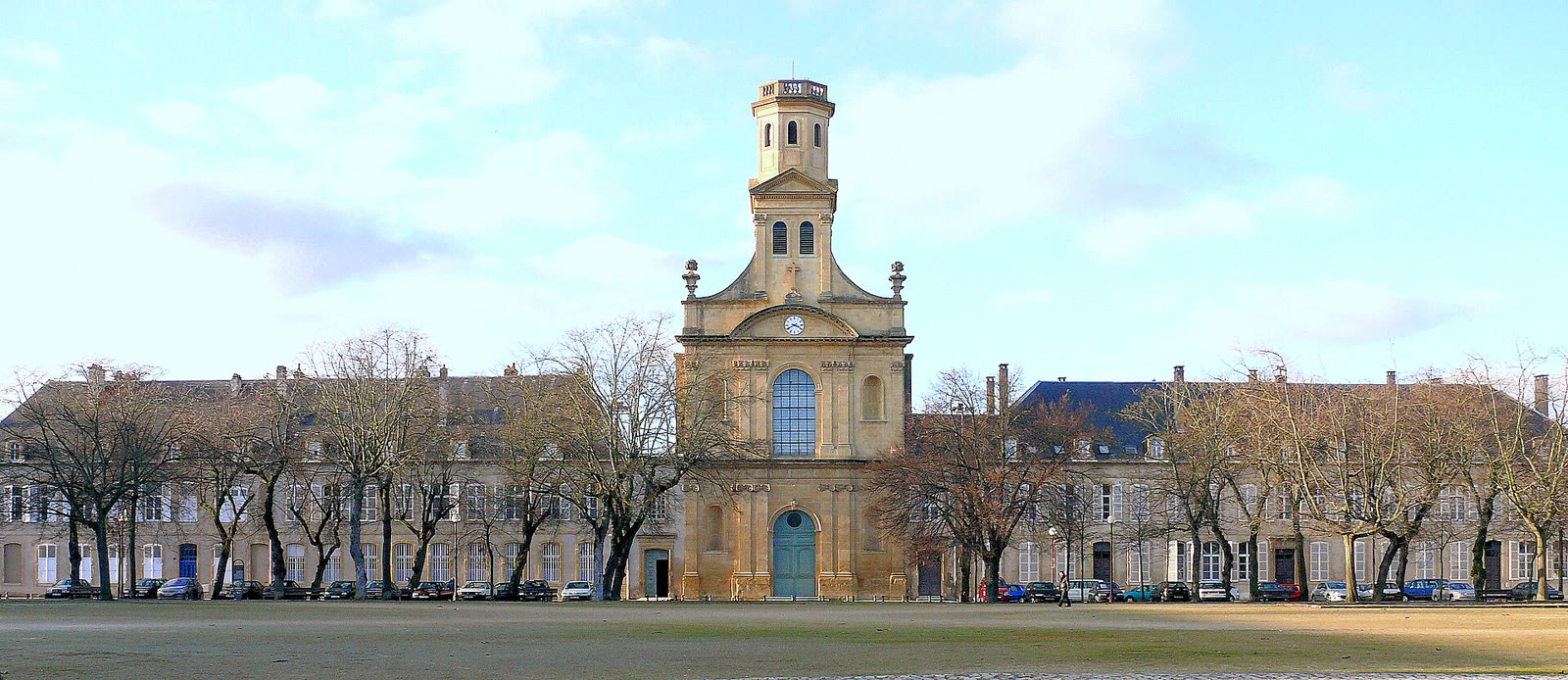
The architecture of Saint-Simon-et-Saint-Jude cultivates restraint. Its neoclassical lines, clean and regular, were deliberately matched to the barracks and military buildings around it, on today's Place de France. The most surprising detail is the absence of a bell tower: it was designed this way so as not to give enemy cannon a target aiming at the fort. A rare example of a church shaped by defensive constraints, the building perfectly illustrates the spirit of a garrison town. Its discreet façade conceals a bright, balanced interior, where the classical order imposes its calm and serene majesty.
The frescoes of the Metz school
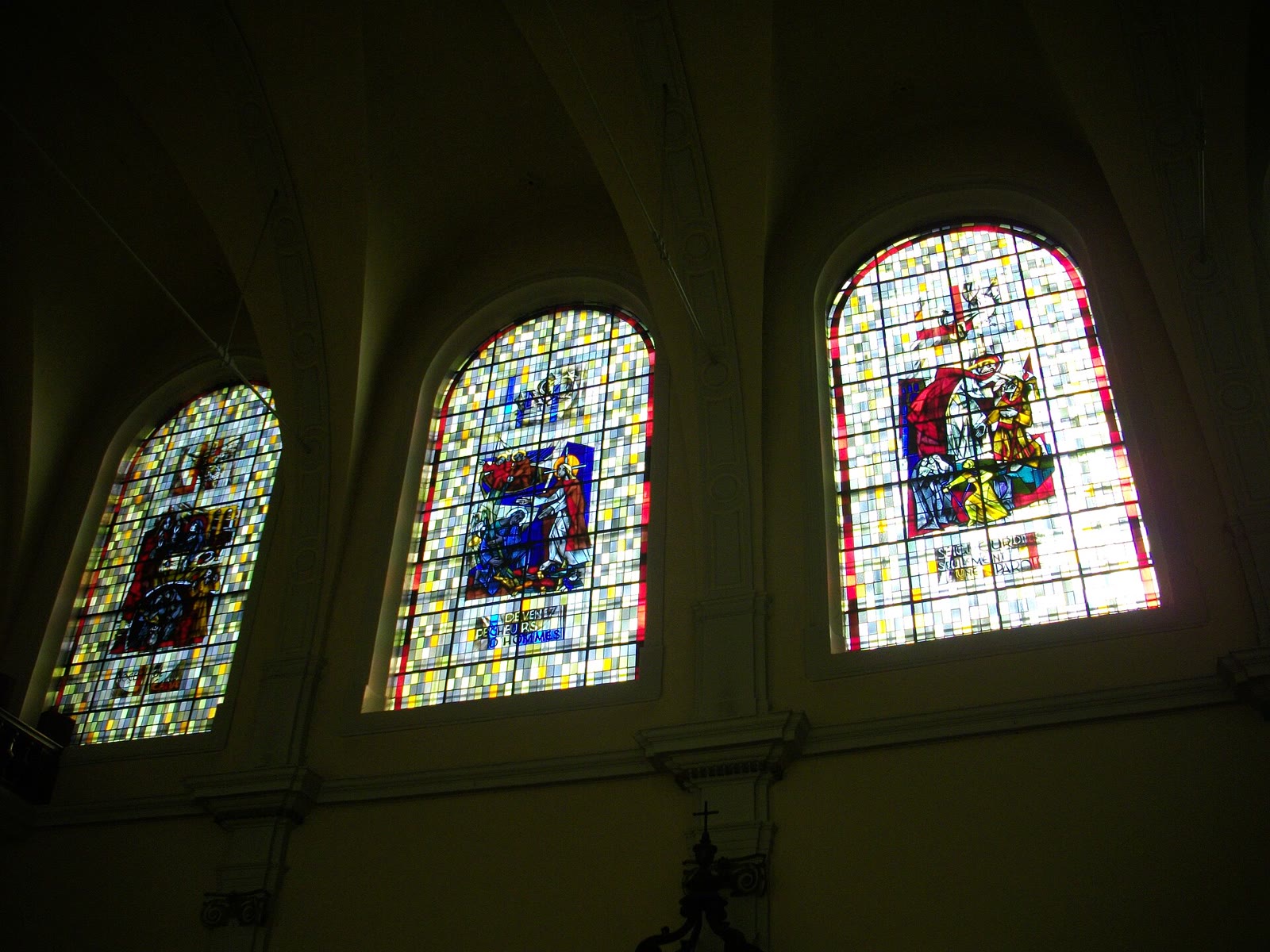
The interior holds a fine surprise: the choir is decorated with frescoes by Auguste Hussenot, a painter linked to the Metz school, the artistic movement that flourished in the 19th century. These compositions bring warmth and depth to an otherwise plain space, extending the great decorative tradition of Metz, of which stained glass is the other jewel. Taking time to look up at these paintings is to grasp how local art managed to inhabit buildings of every era. It is a detail that rewards the attentive visitor and gives this church an added soul.
The Îles quarter, between water and barracks
Entrusted in 1921 to the Congregation of the Mission, the Lazarists, the church became from 1922 a place of monthly pilgrimages to Saint Jude, invoked for hopeless causes. To this day it still sets the rhythm of the Îles quarter, a peaceful area enclosed by the arms of the Moselle. Around it, the old barracks, the regular alignments of the 18th-century town and the green riverbanks make for a refreshing walk, away from the usual circuits. Staying in this corner of Metz means tasting the charm of a city that, far from its tourist showcase, keeps a quiet and authentic art of living.
Infos pratiques
Adresse : 6 Place de France, 57000 Metz
Questions fréquentes
Why does the church have no bell tower?
For military reasons. Set in a garrison town surrounded by barracks and fortifications, the church was deliberately built without a bell tower so as not to give enemy gunners a visual landmark for aiming at the nearby fort.
Who decided to build it?
The Marshal de Belle-Isle, military governor of Metz and a keen promoter of urban development, wanted to give the new town a parish. Regular canons of Saint-Pierremont received land from Louis XV in 1735; the church was completed in 1740.
Why two saints, Simon and Jude?
The apostles Simon and Jude are traditionally cited together and celebrated on the same day, 28 October. The church therefore bears their joint patronage. Saint Jude is especially invoked here for hopeless causes, a tradition kept up since 1922.
Is the church a listed historical monument?
Yes. Saint-Simon-et-Saint-Jude has been listed as a historical monument since 6 December 1989. It is a precious testimony to neoclassical architecture and to 18th-century town planning in Metz.
Wikimedia Commons — MOSSOT · Wikimedia Commons — Fab5669