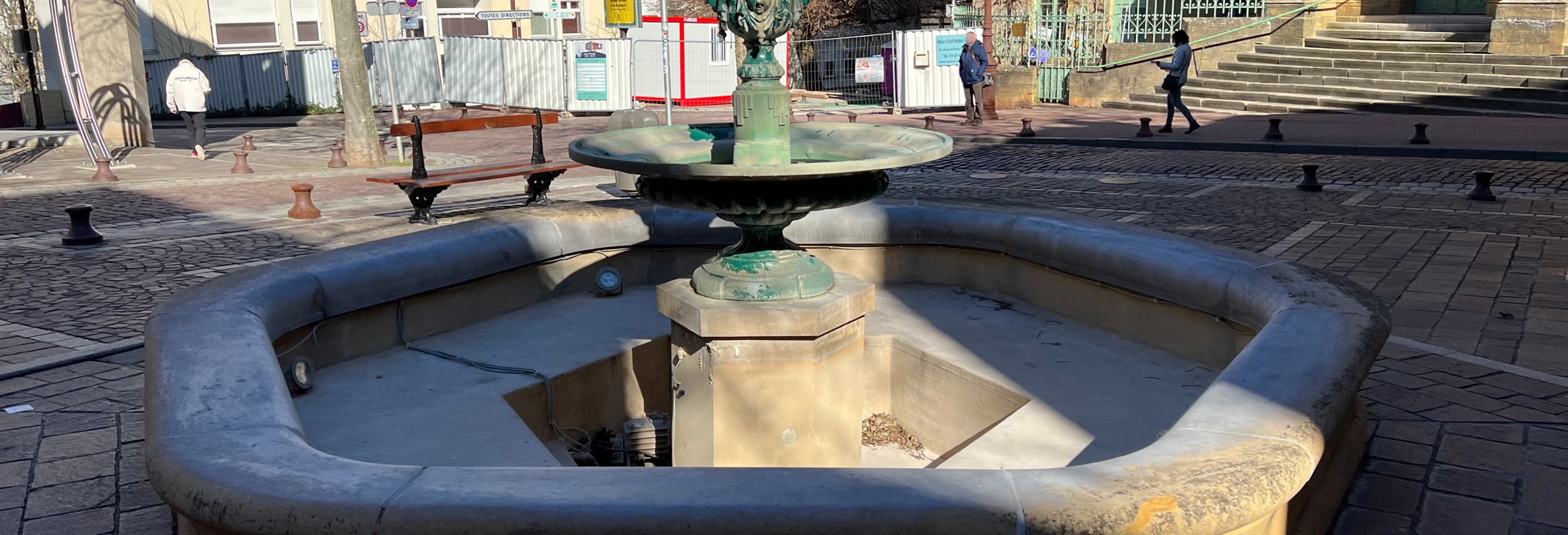
Place Jeanne d'Arc
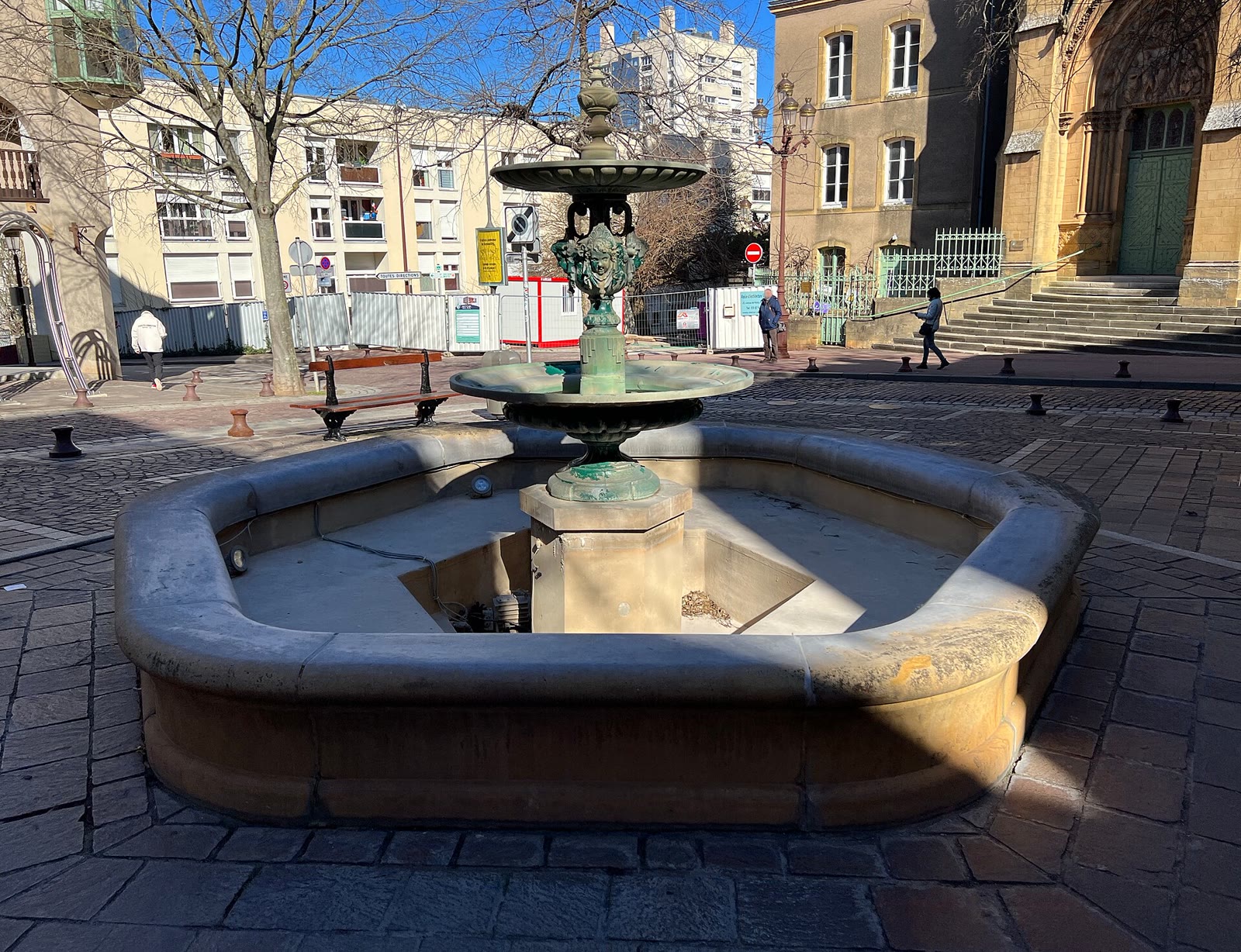
Perched on the Sainte-Croix hill, Place Jeanne d'Arc is one of the most endearing corners of old Metz. Long known as Place des Quatre-Maisons, it was laid out in 1905 to open up the new façade of Sainte-Ségolène church. Framed too by Les Trinitaires, now a performance venue, it offers a timeless pause away from the bustle.
On the edge of ancient Metz
The square lies on the Sainte-Croix hill, one of the city's oldest nuclei, in the Ancienne Ville district. Its former name, Place des Quatre-Maisons, hints at the modest origins of this crossroads of narrow streets. Only in the early 20th century did it take its present shape, cleared to showcase the neighbouring church's new façade. The result is a human-scaled little square, cobbled and lined with old houses, where the medieval fabric of old Metz can still be felt.
Sainte-Ségolène church
The square is dominated by Sainte-Ségolène church, founded on a site occupied since the 9th century and rebuilt in Gothic style around 1230-1240. Its present outline owes much to late-19th-century remodelling: between 1896 and 1898, architect Conrad Wahn replaced the old portal and belfry with a richly worked neo-Gothic façade crowned by two rigorously symmetrical twin spires. It is these twin spires, visible from afar, that justified opening up the square in 1905 to give them the necessary perspective.
Les Trinitaires and the Jeanne legend
Onto the square also opens the former Trinitarian convent, Les Trinitaires, whose vaulted cellars and courtyard now host concerts and shows, making the site a lively hub of the Metz cultural scene. As for the square's name, it recalls a persistent legend: Jeanne d'Arc is said to have escaped the Rouen pyre to end her days in Metz beside Robert des Armoises. History keeps no proof of this, but it adds to the enigmatic charm of this corner of the city.
Infos pratiques
Adresse : Place Jeanne d'Arc, 57000 Metz
Questions fréquentes
What was the square's former name?
It was formerly called Place des Quatre-Maisons, before being renamed in honour of Jeanne d'Arc.
What is there to see around the square?
Sainte-Ségolène church with its twin neo-Gothic spires, and Les Trinitaires, a former convent turned performance venue.
Why was the square created?
It was cleared in 1905 to give the new neo-Gothic façade of Sainte-Ségolène church the necessary perspective.
Wikimedia Commons — Chabe01