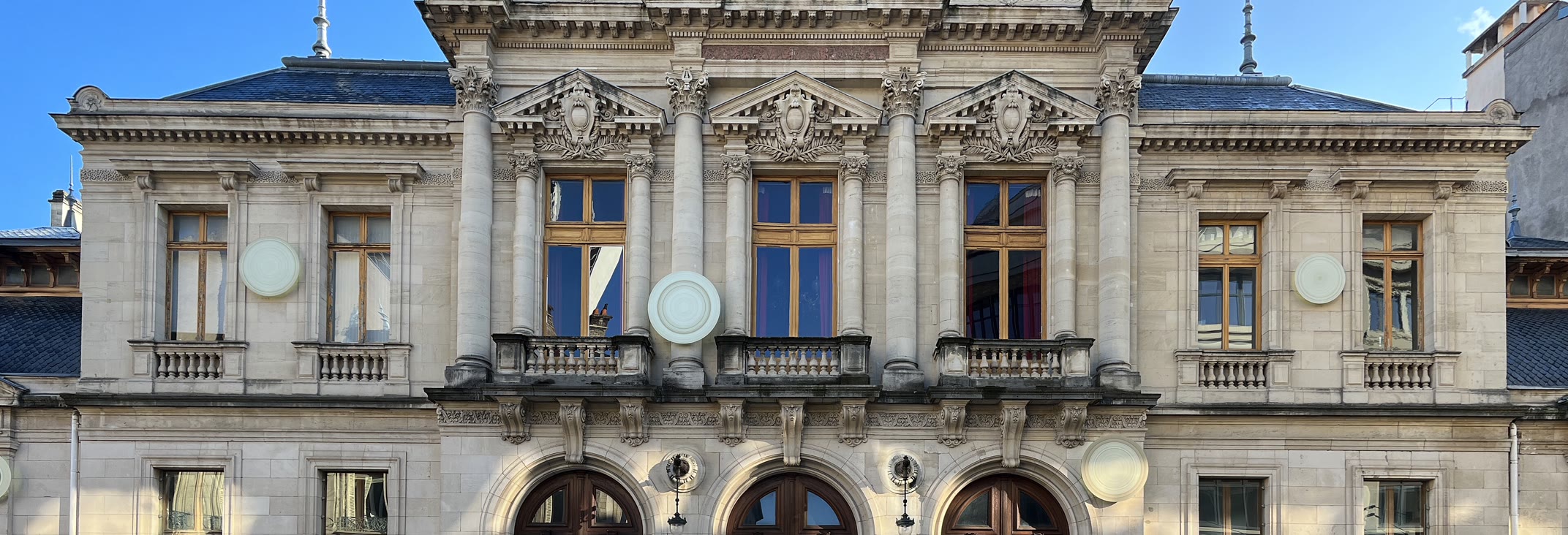
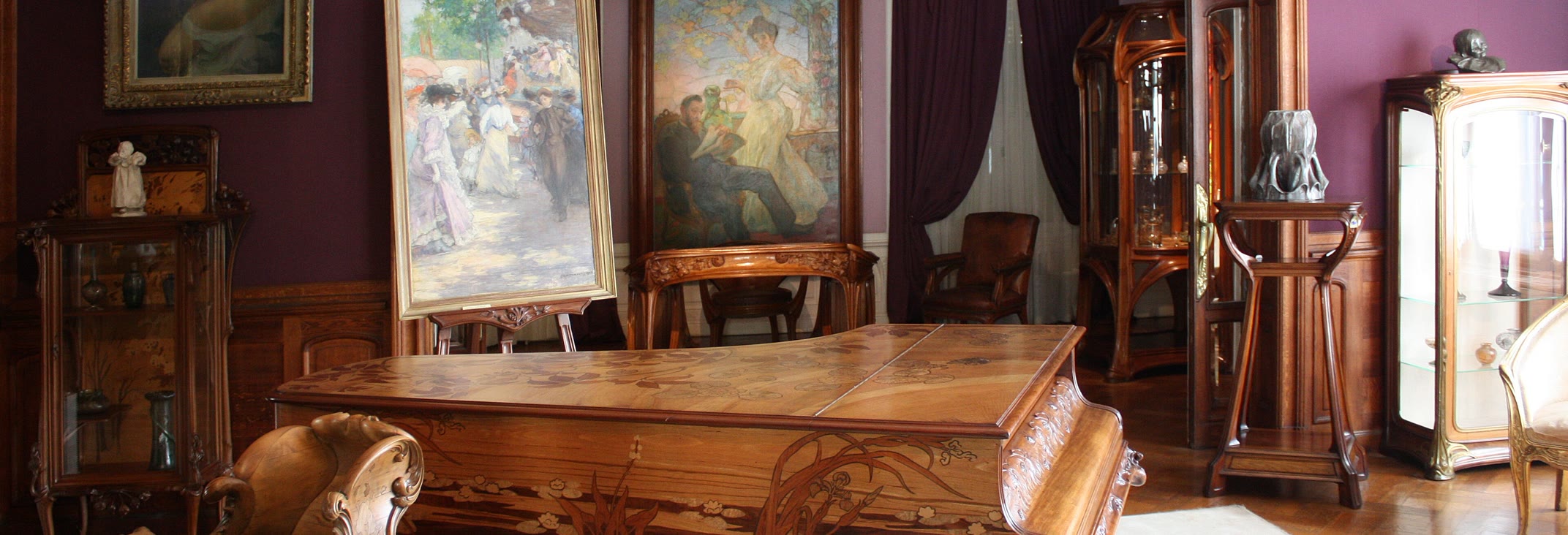
The École de Nancy Museum, a temple of Art Nouveau
Set in the former home of patron Eugène Corbin, the Museum of the School of Nancy recreates the refined atmosphere of the 1900s. Furniture, glassware, stained glass and ceramics by Gallé, Majorelle, Daum and Grüber form a unique ensemble, extended by an Art Nouveau garden. It is the beating heart of the movement that made Nancy the world capital of Art Nouveau.
The villa of a passionate patron
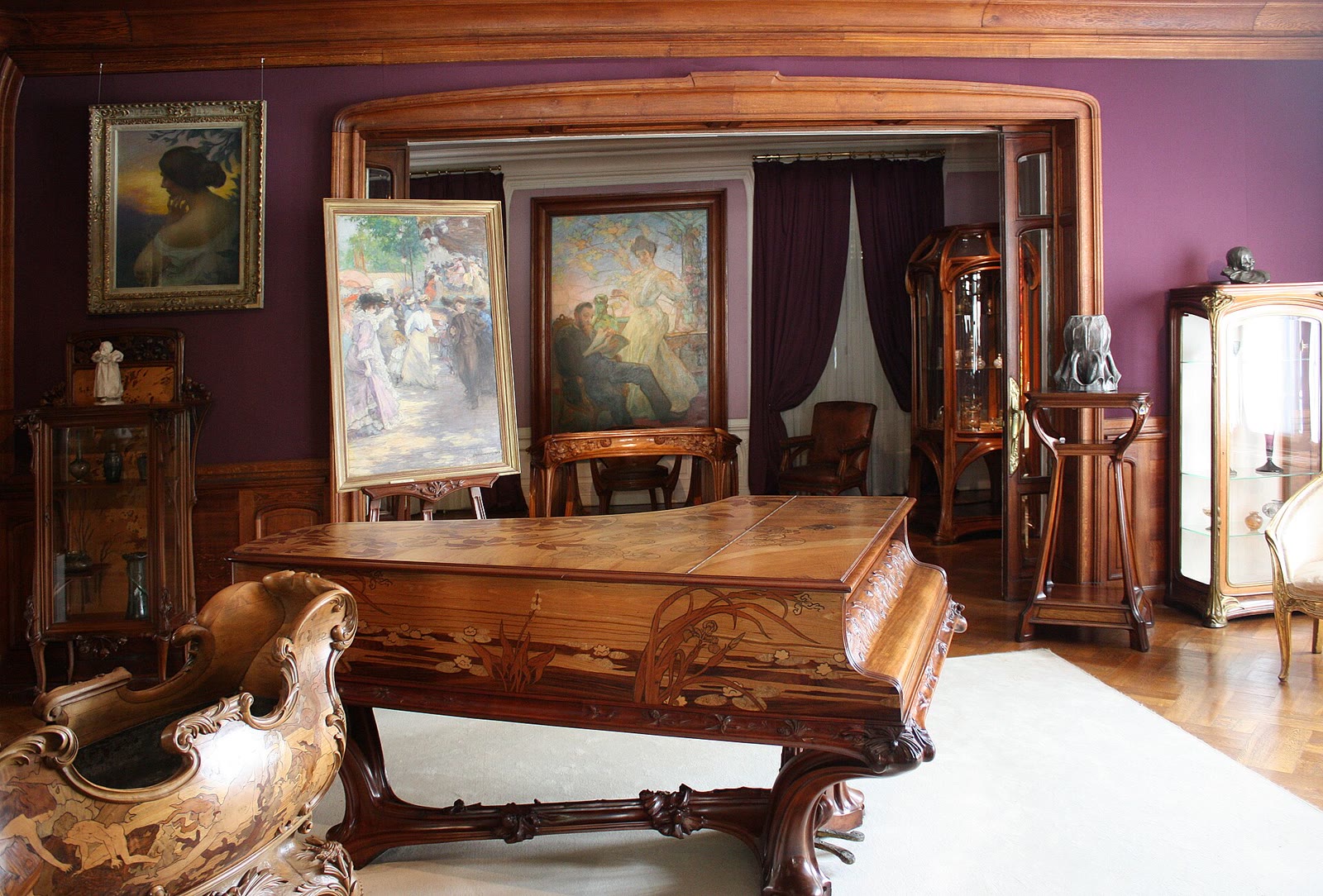
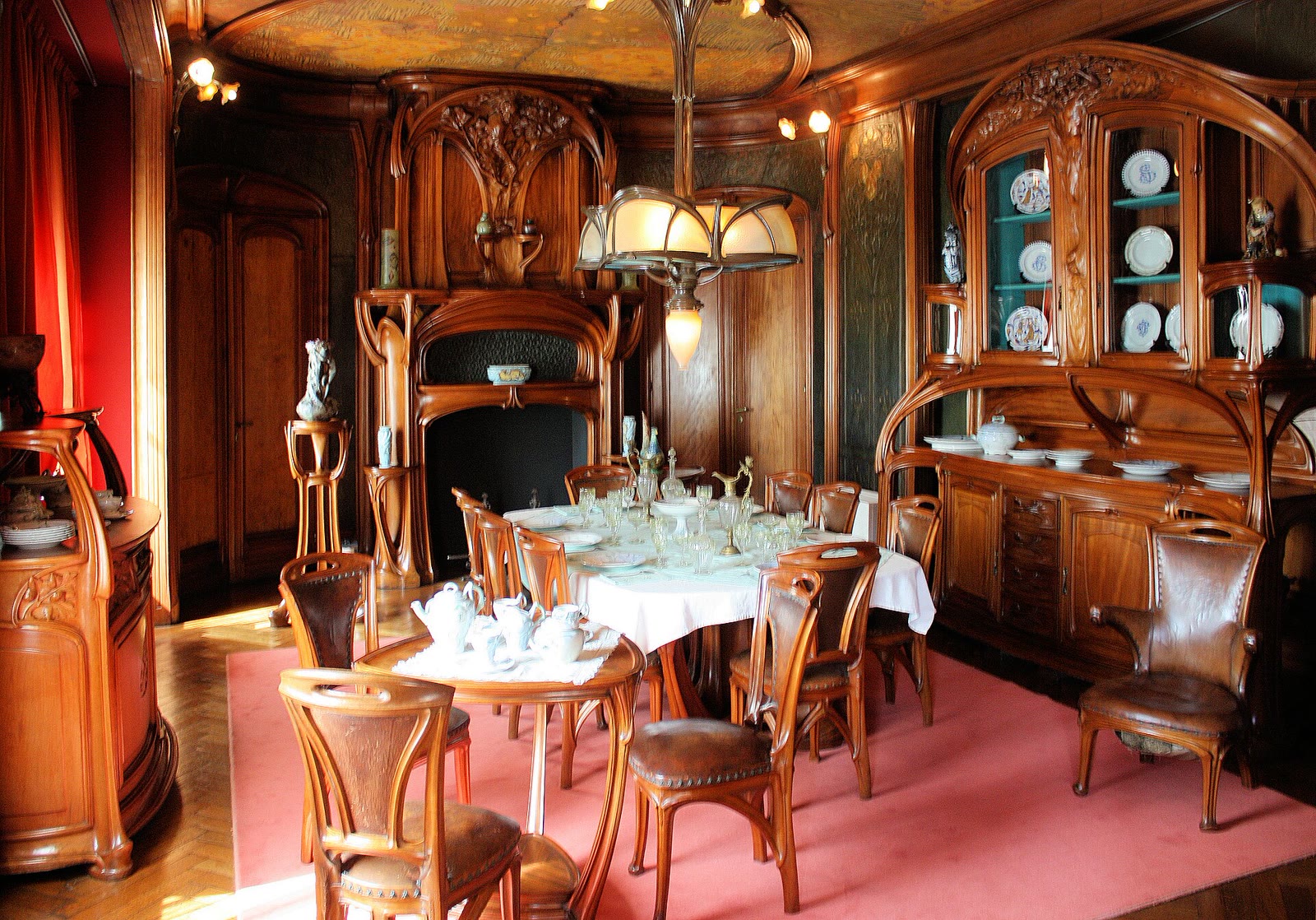
The museum occupies the mansion of Eugène Corbin, a great collector and financial supporter of the School of Nancy. The city acquired the house in the early 1950s; the museum first opened one day a week in 1954, then fully in 1964. Far from a conventional hang, the visit unfolds room by room, as in a lived-in house: drawing room, dining room, bedroom. Woodwork, wallpaper and light fittings recreate a bourgeois interior from the early 20th century, where each object finds its natural place, close to the spirit of the makers.
Gallé, Majorelle, Daum: the masters gathered
The museum brings together the greatest names of the movement founded around Émile Gallé in 1901. A large share goes to Gallé himself, with a glass collection of more than four hundred pieces, in plant-inspired forms and deep colours, plus ceramics. The furniture of Louis Majorelle, carved with flowers and insects in precious marquetry, speaks volumes about its elegance. Add to this Daum's glass, Jacques Grüber's stained glass, Eugène Vallin's furniture and Victor Prouvé's decors. Nature, animal and plant, runs through every creation.
A garden in the 1900s spirit
The visit does not stop at the walls. Around the villa lies a freely accessible pleasure garden, planted with local species and plants that inspired the artists of the School of Nancy. Here you find the flowers, leaves and curves that the movement translated into glass and wood. A funerary monument by Gallé and architectural elements punctuate the walk. It is the ideal place to understand, while breathing, how the Lorraine countryside nourished an entire aesthetic. A welcome pause, especially in fine weather.
Understanding Art Nouveau in Nancy
The School of Nancy, or Provincial Alliance of Art Industries, was born in 1901 to unite artists, craftsmen and manufacturers around one idea: to bring beauty into everyday life. Vases, beds, lamps, doors and stair rails became works of art. This museum is the best entry point to grasp this profusion, before admiring the Villa Majorelle, the Excelsior brasserie or the many ornate facades around town. It also sheds light on the Daum collection at the Museum of Fine Arts. A movement that lastingly shaped the face of Nancy.
Planning your visit
The museum is at 36-38 rue du Sergent Blandan, slightly away from the historic centre, easily reached by tram or bus. Allow one hour to an hour and a half for the house and garden. It opens Wednesday to Sunday, 10am to 6pm. Consider combining the visit with the Villa Majorelle, an Art Nouveau masterpiece nearby, for a full immersion. A combined ticket often links the two sites. On the first Sunday of the month, admission is free for everyone.


Infos pratiques
Adresse : 36-38 Rue du Sergent Blandan, 54000 Nancy
Questions fréquentes
What are the opening hours of the Museum of the School of Nancy?
The museum is open Wednesday to Sunday, from 10am to 6pm. It is closed on Mondays, Tuesdays and public holidays (1 January, 1 May, 14 July, 1 November, 25 December).
How much is admission?
The full rate is around €7.50 and the reduced rate around €5. Admission is free for everyone on the first Sunday of each month.
Is the garden freely accessible?
Yes, the pleasure garden surrounding the villa is freely accessible and lets you admire the plants that inspired the artists of the School of Nancy.
Can the visit be combined with the Villa Majorelle?
Yes, the Villa Majorelle is nearby and managed alongside the museum; a combined ticket is often offered. It is the ideal complement to explore Art Nouveau further.
How long does the visit take?
Plan for about one hour to an hour and a half to explore the reconstructed interiors and stroll in the garden.
Wikimedia Commons — Dguendel · Wikimedia Commons — Léna · Wikimedia Commons — Antony-22