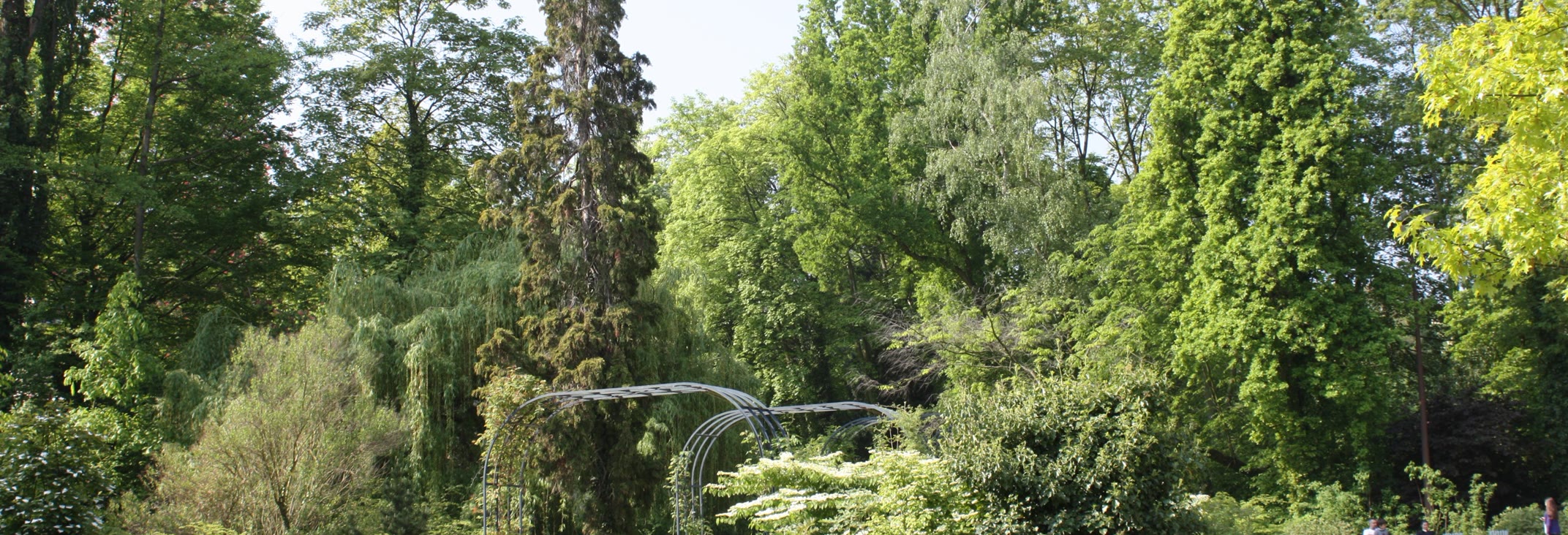
The garden of the École de Nancy Museum, an Art Nouveau setting
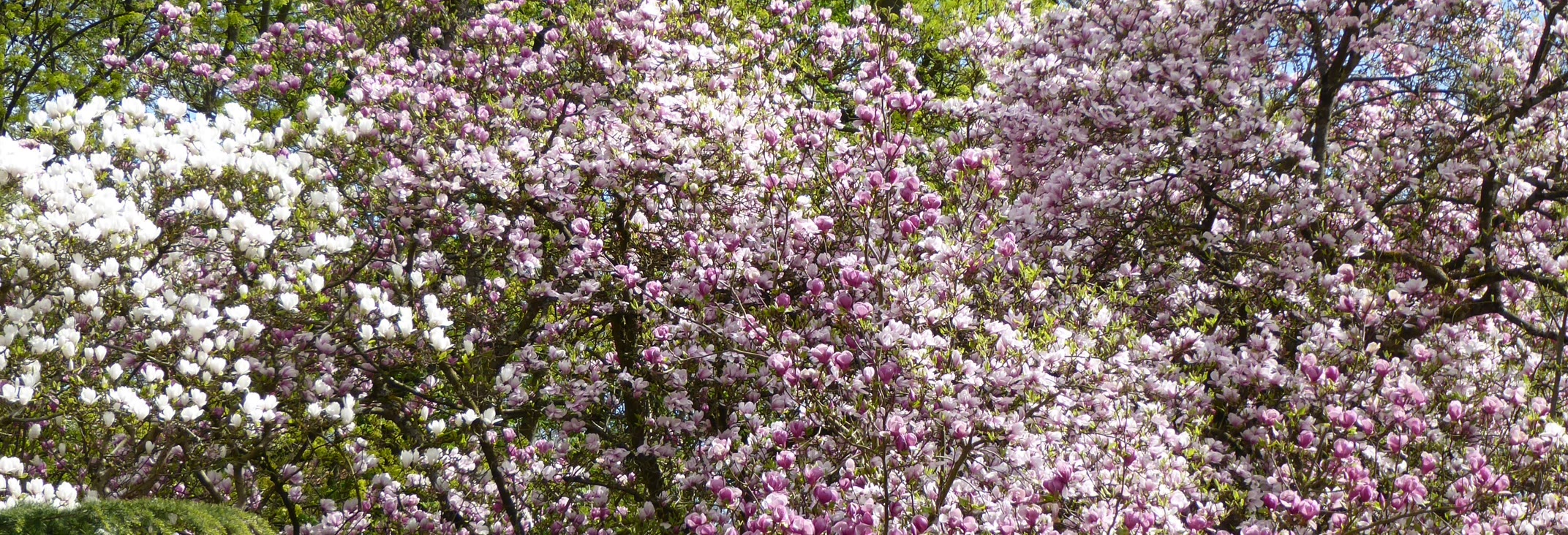
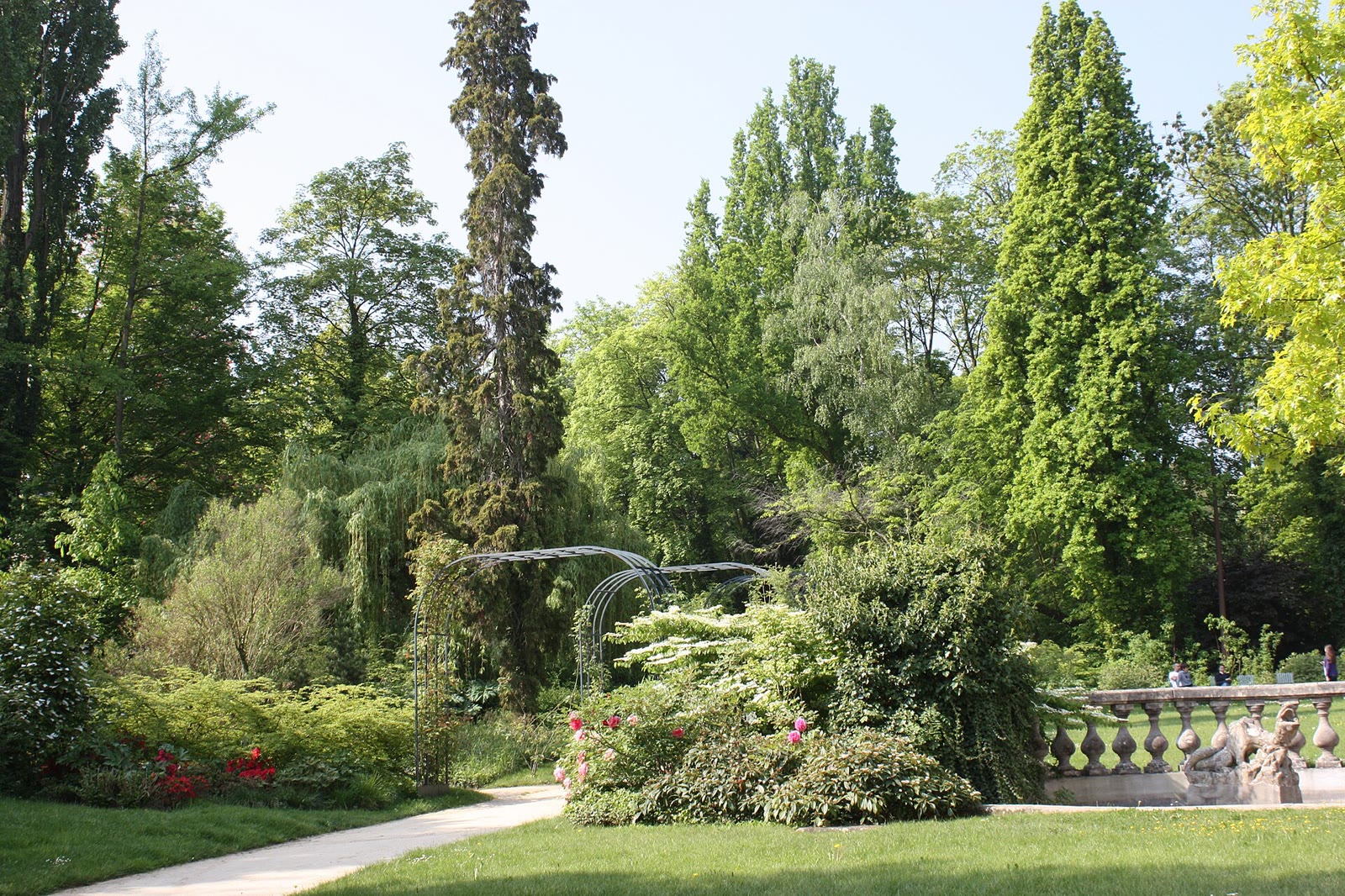
Behind the villa of the musée de l'École de Nancy hides a garden full of charm, the last relic of the great park of the patron Eugène Corbin. A monumental door, an aquarium and a funerary monument carry the spirit of Nancy's Art Nouveau outdoors.
Last relic of a patron's park
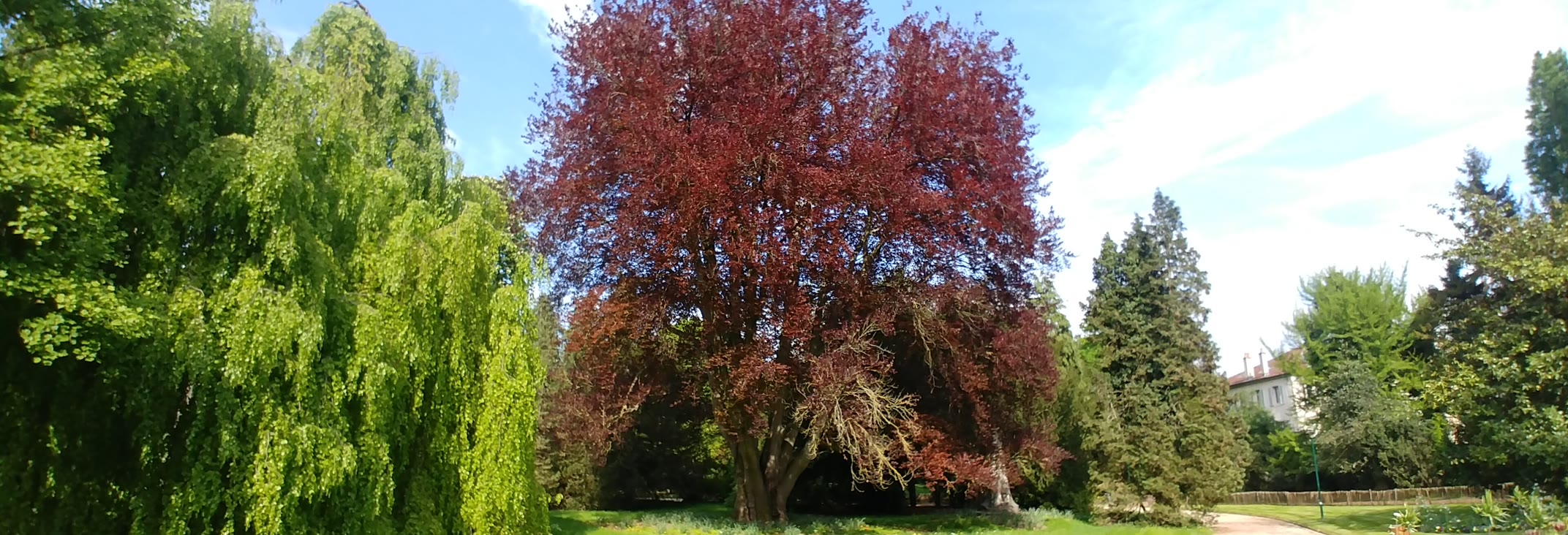
The museum occupies the former property of Eugène Corbin, a great collector and patron of the École de Nancy, the Art Nouveau movement that made the city shine around 1900. The garden you walk through today is the last preserved fragment of his once vast park. Laid out in the spirit of the early 20th century, it links the museum's interior to nature, the constant source of inspiration for the École de Nancy artists. Listed as a historic monument, this garden is a full part of the collection, in the open air.
The monumental door and Gruber's stained glass
The garden's centrepiece is without doubt the monumental door, an imposing wooden structure from Émile Gallé's factories. Made in 1897 by cabinetmaker Eugène Vallin, it was installed in the garden in 1964 when the museum opened to the public. Its transoms are set with stained glass by Jacques Gruber, a leading master glassmaker of the École de Nancy, whose plant motifs echo the surrounding foliage. This spectacular ensemble sums up the ambition of Art Nouveau: to erase the border between art, craft and nature.
The aquarium and the funerary monument
The garden also shelters a curious circular pavilion built around 1904 at Eugène Corbin's initiative, to plans by Nancy architect Lucien Weissenburger: the aquarium, a listed historic monument and a little jewel of Art Nouveau architecture. Nearby, a funerary monument, originally erected in 1901 at Préville cemetery, has been reassembled here. Decorated with floral stained glass and crowned with an enamelled stoneware lily, it illustrates the refined funerary art of the time. These two structures, unusual in a garden, make it a truly singular place, almost an open-air museum.
A setting to visit with the museum
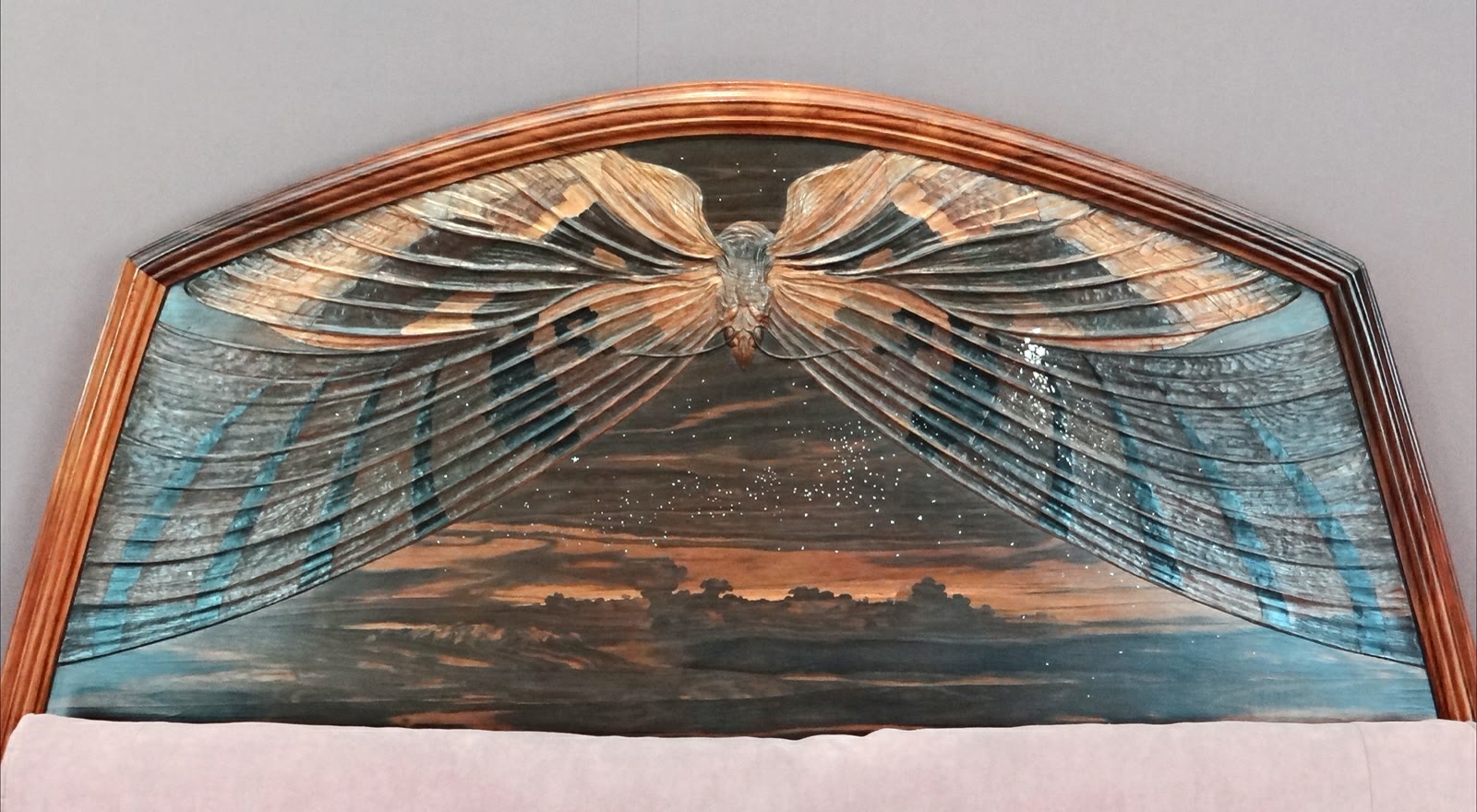
The garden is discovered as an extension of a visit to the musée de l'École de Nancy, at 36-38 rue du Sergent Blandan, in a residential district south of the city. After admiring Majorelle's furniture, the glassware of Gallé and Daum or Gruber's stained glass, you step out to breathe among the beds and trees that inspired these creators. It is an intimate, poetic place, perfect for a culture visit on a human scale. Do check the opening days and hours, as the museum is usually closed early in the week.
.jpg?width=1600)
Infos pratiques
Adresse : 36-38 rue du Sergent Blandan, 54000 Nancy
Questions fréquentes
Is there a charge for the garden?
The garden is visited in connection with the musée de l'École de Nancy, whose entry is chargeable (with reduced rates and free days in some cases). Check the access conditions and free days on the museum's website.
What are the opening days?
The museum and its garden are generally open later in the week and closed early in the week; hours vary by season. Check the museum's official site before your visit.
What are the must-sees in the garden?
The monumental wooden door with Gruber's stained glass, the aquarium in its circular pavilion by Weissenburger, and the funerary monument crowned with an enamelled stoneware lily.
Is the visit suitable for children?
Yes, the garden is small and easy to walk. It nicely rounds off a museum visit for a short culture outing; it is not a playground, though, but a pleasure garden to enjoy gently.
Where is the garden and what is nearby?
The garden and museum are at 36-38 rue du Sergent Blandan, south of Nancy. The district has several Art Nouveau villas and houses; the Sainte-Marie park is not far to extend the walk.
Wikimedia Commons — Dguendel · Wikimedia Commons — Jean-Pierre Dalbéra from Paris, France