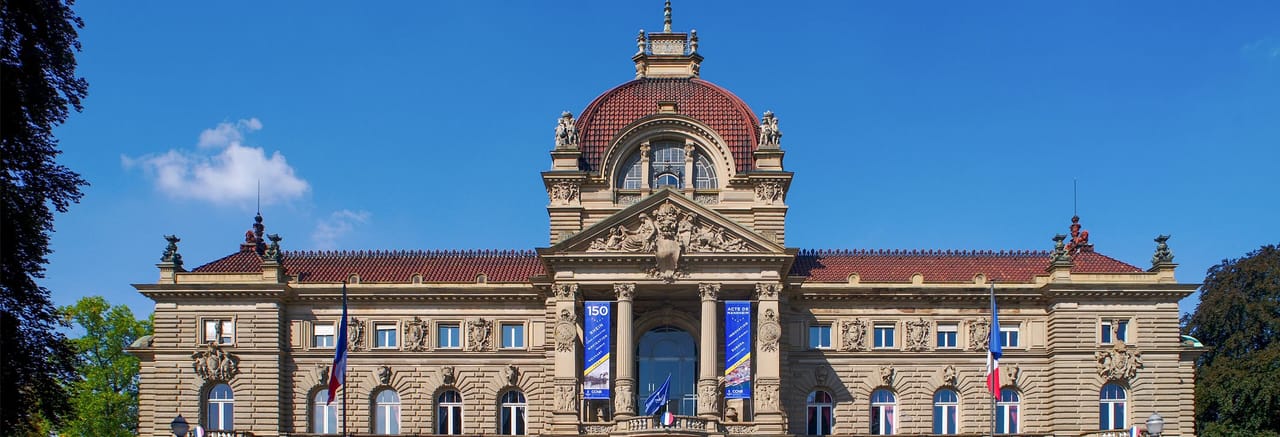
Palais du Rhin
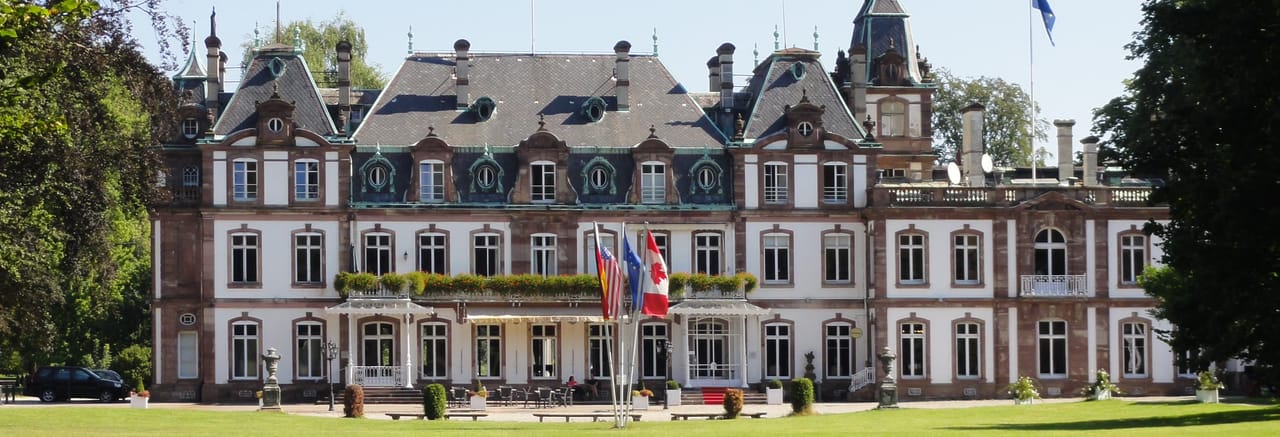
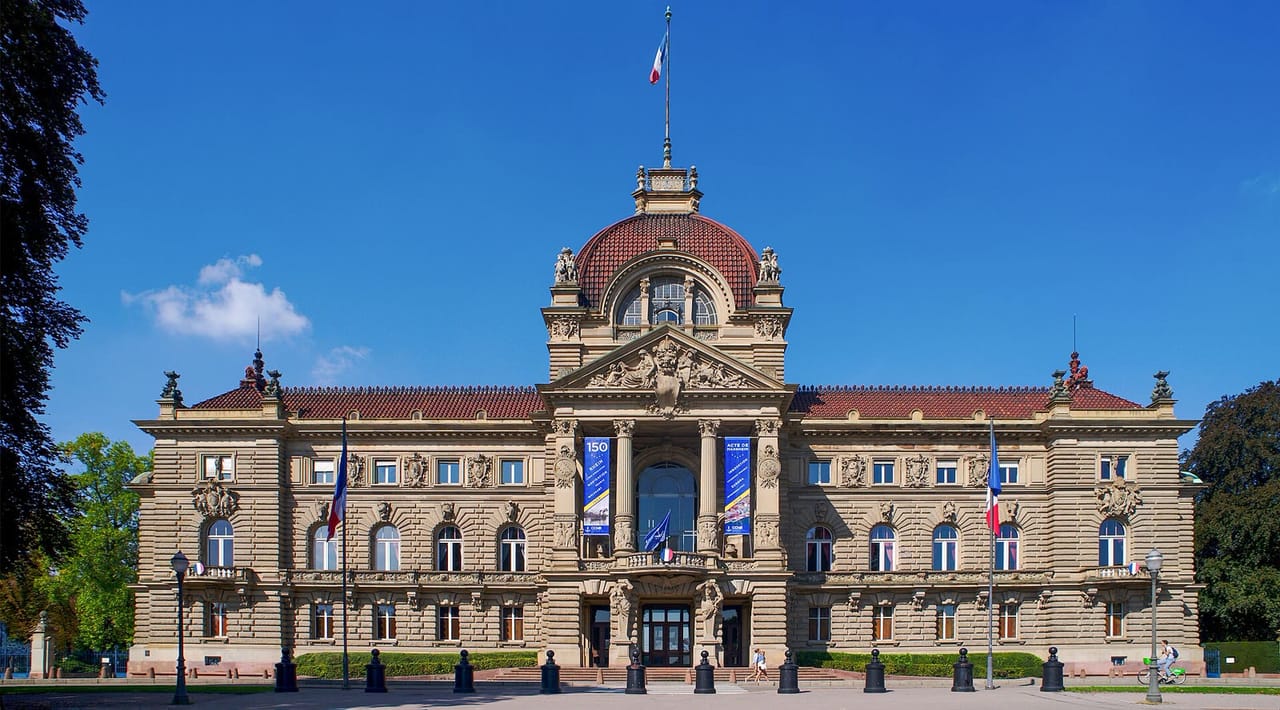
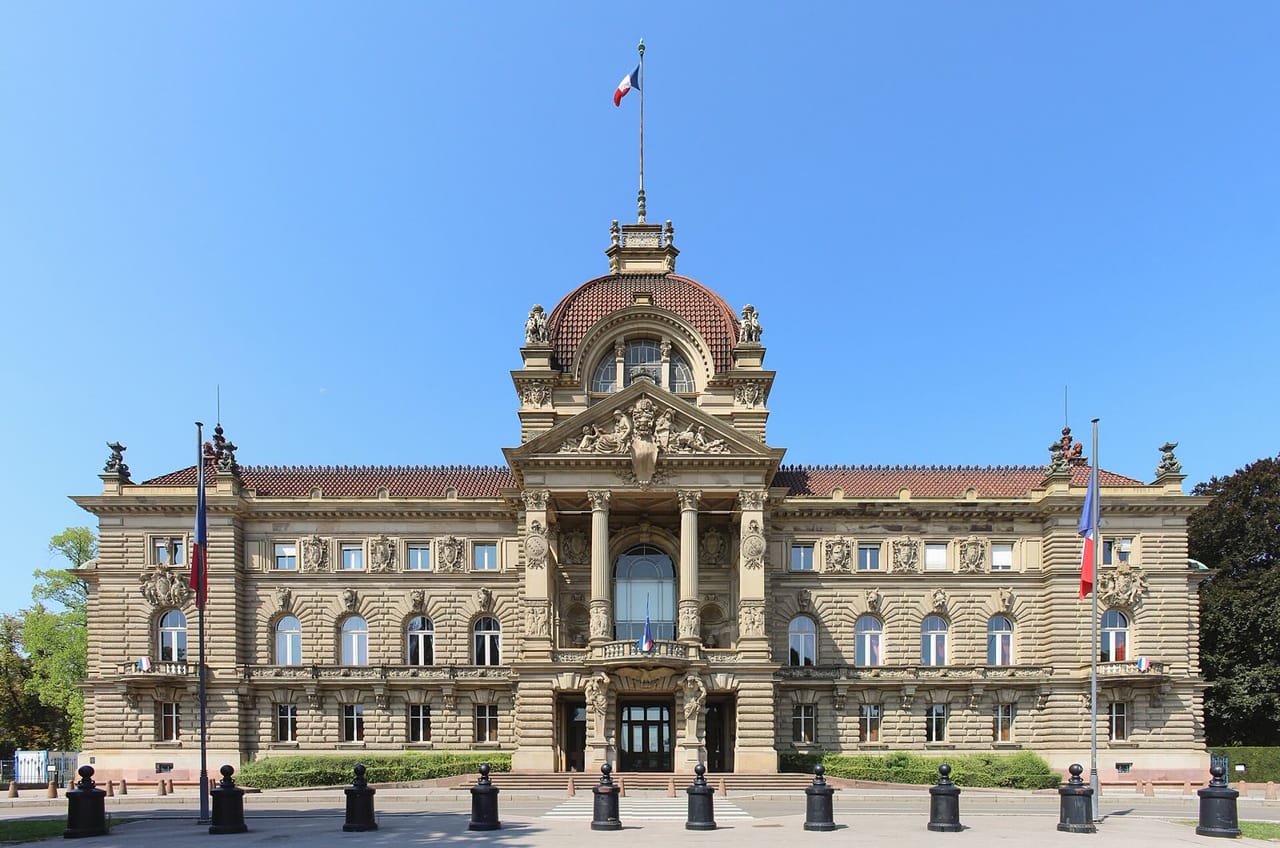
On Place de la République, the Palais du Rhin dominates the Neustadt with its massive dome. A former imperial palace designed by Hermann Eggert and inaugurated by Wilhelm II in 1889, it forms with its garden and stables a landmark ensemble of late 19th-century German architecture. Today it houses the Central Commission for the Navigation of the Rhine.
The emperor's palace in Strasbourg
After the annexation of 1871, Strasbourg became capital of the Reichsland of Alsace-Lorraine and gained a new district, the Neustadt. The imperial palace was designed there by Hermann Eggert in the 1880s as the German emperor's official residence during his stays. Work began in honour of Wilhelm I's 87th birthday, and it was Wilhelm II who inaugurated the palace in August 1889. The project is said to have cost 3 million gold marks.
A dome to command the square
With its façade facing east, the palace looks onto Place de la République, the former imperial square, which it dominates with its imposing dome. The heavy, symmetrical neo-Renaissance decoration was meant to express the power of the new Empire. Inside, the dining room could seat 350 guests. The palace was lit by gas until 1902, when electricity arrived. With its surrounding garden and the former stables at the back, it forms a remarkably coherent ensemble.
From Kaiserpalast to the European Rhine
After Alsace returned to France in 1918, the former imperial palace was renamed the Palais du Rhin. Since 1920 it has been the seat of the Central Commission for the Navigation of the Rhine, the body that governs shipping on the river. It also houses the regional cultural affairs directorate (DRAC). The palace and its garden with railings have been protected as historic monuments since 1993, and the former stables since 2009.
Gateway to the Neustadt
The palace is the natural start for exploring the Neustadt, added in 2017 to the UNESCO World Heritage site that had covered the Grande Île since 1988. Place de la République, with its circular garden, is lined with other major buildings from the German period. As the palace houses public offices, its interior is not open for casual visits; admire it from the square and the garden railings. Then carry on along Avenue de la Liberté towards the university and the Palais Universitaire.
Frequently asked questions
Where is the Palais du Rhin?
On Place de la République, just north-east of the Grande Île, where the Neustadt, the district built in the German period, begins. The cathedral is about ten minutes' walk away.
Can you visit inside the Palais du Rhin?
Not on a walk-in basis: the building houses the Central Commission for the Navigation of the Rhine and the DRAC. Look out for occasional openings during heritage events; otherwise, admire the exterior and garden from the square.
Why does the Palais du Rhin matter?
As Wilhelm II's former imperial palace, it is one of the most complete ensembles of late 19th-century German architecture and a symbol of the Neustadt, added to the UNESCO World Heritage list in 2017.
What is there to see around Place de la République?
The other large German-era buildings lining the square, then Avenue de la Liberté to the Palais Universitaire. The Catholic church of Saint-Pierre-le-Jeune and its dome are close by, and the Grande Île begins across the Faux-Rempart canal.
Wikimedia Commons — Flocci Nivis · Wikimedia Commons — Chabe01