Saint-Pierre-le-Jeune Protestant Church
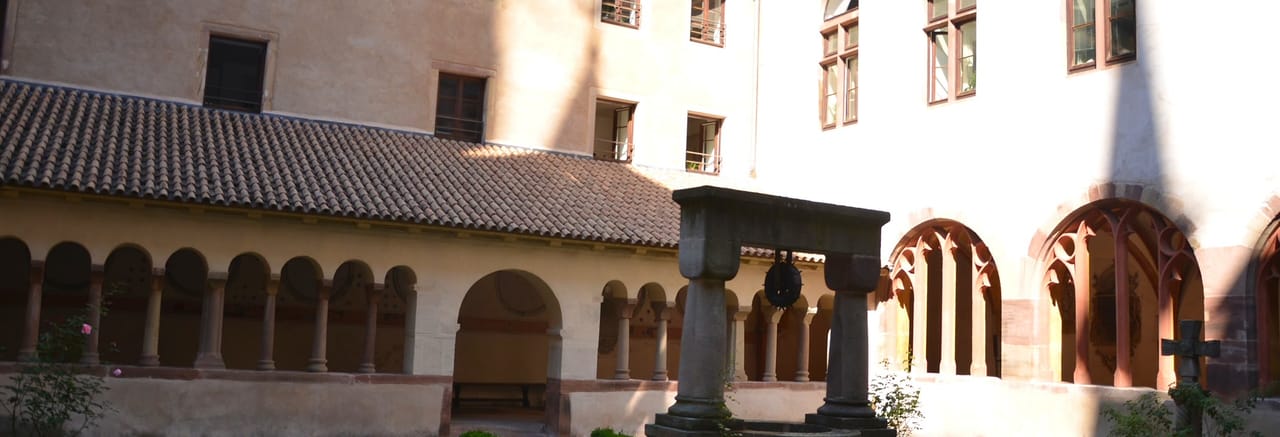
On Place Saint-Pierre-le-Jeune, in the north of the Grande Île, this Lutheran church is one of the most remarkable in Strasbourg for art history. Behind its Gothic façade lie a cloister with Romanesque galleries, a rood screen unlike any other in Alsace and large wall paintings. Not to be confused with the domed Catholic church of the same name, built in the late 19th century.
Thirteen centuries on the same ground
By the end of the 7th century a wooden chapel, probably founded by Irish monks and dedicated to St Columbanus, already stood here. A Romanesque collegiate church followed in the 11th century, and most of the present building went up in Gothic style in the 14th century. These layers can still be read in the building, where Romanesque elements sit alongside the Gothic nave. The church is protected as a historic monument.
The cloister and the rood screen
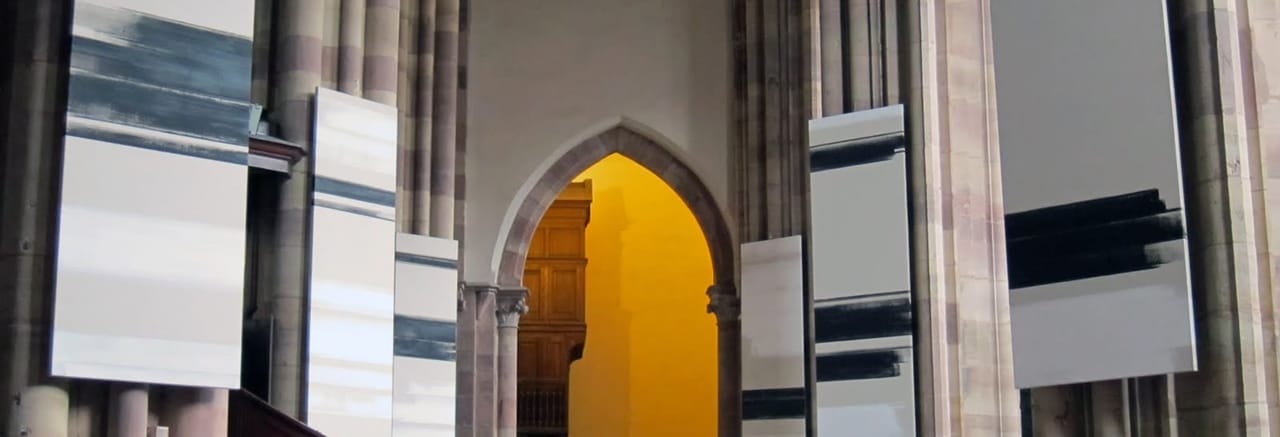
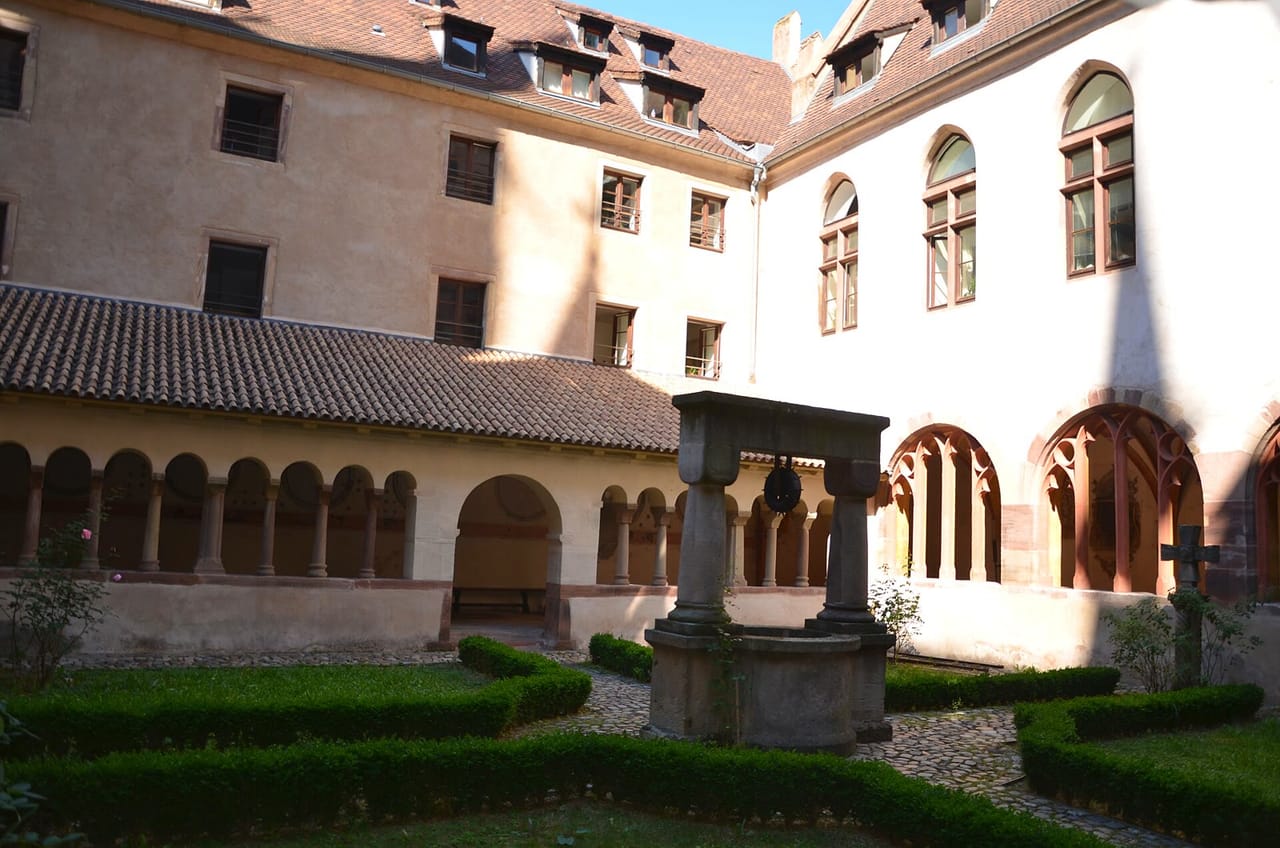
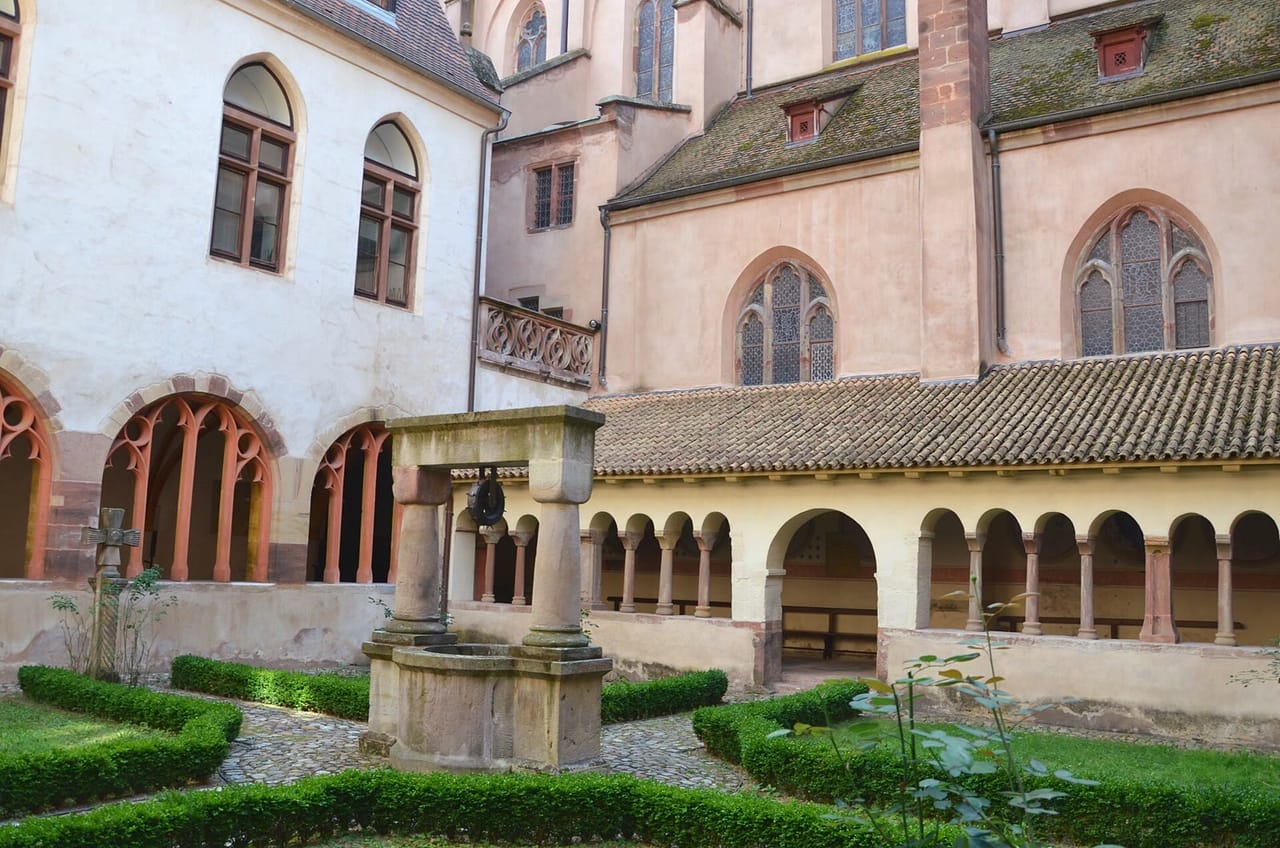
The cloister is one of the main draws: three of its four arcaded galleries date from the 11th century, the fourth from the 14th. Its Romanesque arches, older than the Gothic church, offer a moment of calm in the middle of the city. Inside, the rood screen, the partition that once separated the choir from the nave, has no equal left in Alsace, as most have disappeared elsewhere. Take time to look at its structure and the way it divides the church.
Painted walls between Middle Ages and Gothic Revival
Covered in whitewash in the 16th century, the interior paintings were brought back to light during Carl Schäfer's restoration from 1897 to 1901, which gives the church much of its present appearance. Three works stand out: the Navicella on the west wall of the nave, now entirely Gothic Revival; the Procession of the Nations in the south aisle, largely reconstructed by Schäfer; and the Weighing of Souls on the north side, where an angel and the devil fight over a soul.
Reformation, Silbermann and two churches of the same name
In 1524 the reformer Wolfgang Capito preached the Reformation here, and the church has been Lutheran ever since. From 1682 the choir was returned to the Catholics while the nave stayed Protestant, until the Protestants regained the whole building in the late 19th century. The city then built a new neo-Romanesque domed church for the Catholics, Catholic Saint-Pierre-le-Jeune, on the site of the former Finkmatt barracks. The organ, ordered from Johann Andreas Silbermann in 1779, has been rebuilt many times.
Practical information
Address: Place Saint-Pierre-le-Jeune
Frequently asked questions
Where is the Saint-Pierre-le-Jeune Protestant Church?
On Place Saint-Pierre-le-Jeune, in the northern part of the Grande Île, a few minutes' walk from Place Kléber.
How does it differ from the Catholic Saint-Pierre-le-Jeune?
They are two separate buildings. The Protestant church is the medieval one, with cloister and rood screen. The Catholic church is a neo-Romanesque building with a large dome built in the late 19th century, a little further north near Place de la République. Saint-Pierre-le-Vieux is yet another church.
What should I see inside?
The cloister with its 11th-century galleries, the rood screen, unique in Alsace, and the wall paintings, including the Navicella and the Weighing of Souls. As it is an active place of worship, check opening times with the parish.
What is there to see nearby?
Place Kléber and the Aubette are close by. Cross the Faux-Rempart canal to reach the Neustadt, the Catholic church of Saint-Pierre-le-Jeune and the Palais du Rhin.
Wikimedia Commons — Valentin R. from France