
Hôtel de Lillebonne, the Renaissance in the heart of Nancy
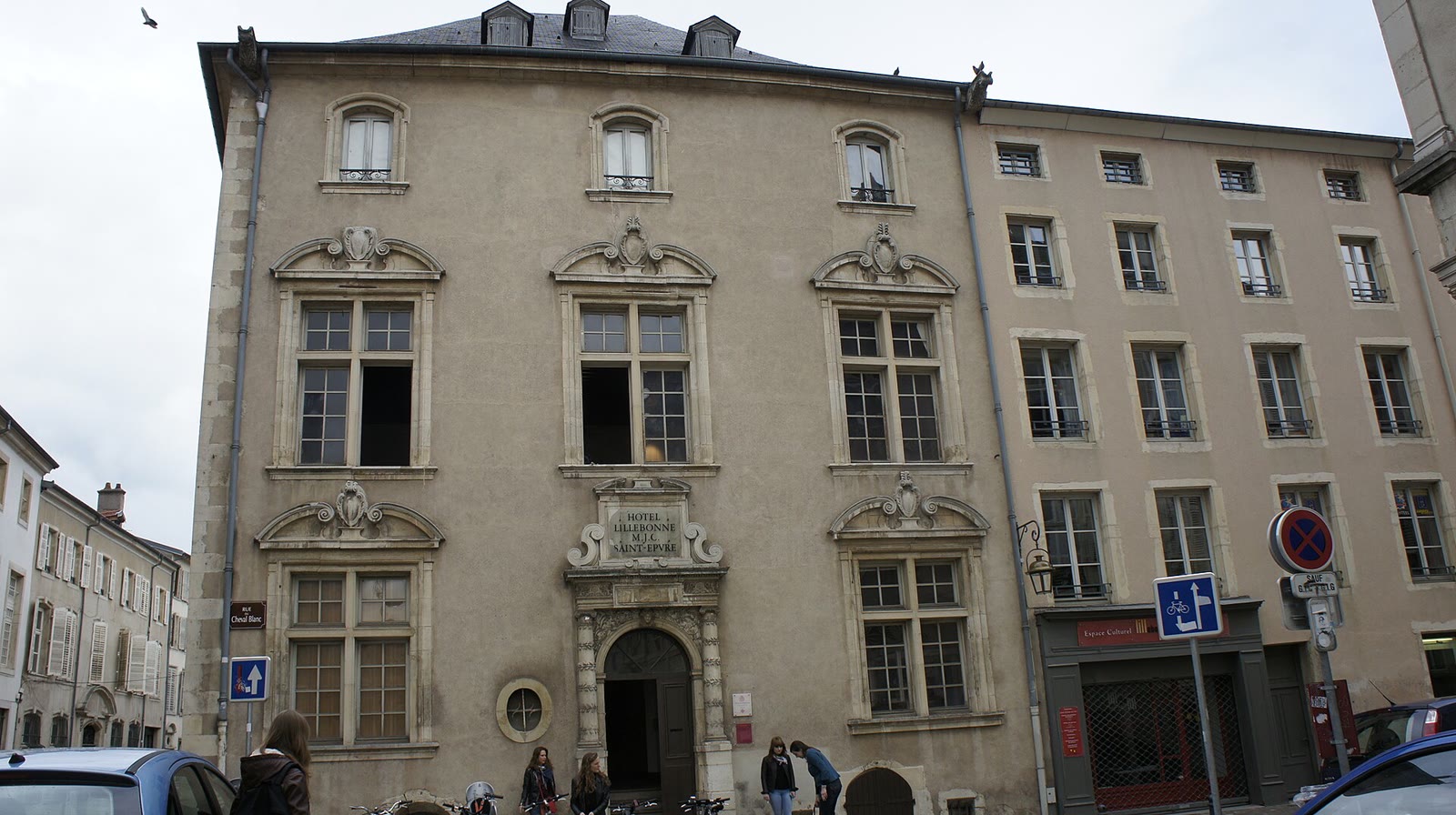
In the heart of Nancy's Old Town, the Hôtel de Lillebonne has displayed its Italianate Renaissance façade since 1580, a rare witness to the ducal architecture of the 16th century. Now a community centre and contemporary art gallery, it blends memory with cultural life.
A mansion born in 1580
The mansion appeared in 1580, on the site of former public baths, at the initiative of Claude de Beauvau-Craon, lord of Beauvau and Fléville. A courtier of Duke Charles III, this gentleman wanted a prestigious residence a few hundred metres from the ducal palace. He entrusted the project to architect Nicolas La Hiere. The house rises in the Old Town, the historic quarter nestled around the Palace of the Dukes of Lorraine, at the corner of rue du Cheval-Blanc and rue de la Source. It reflects the ambition of a Lorraine aristocracy eager for Italian refinement.
Renaissance façade and carved staircase
The plain, symmetrical façade draws directly on Italy: engaged columns with Ionic capitals and delicate ornaments shape its design. But the real treasure lies inside. The stone staircase, adorned with finely carved interlacing and palmettes, recalls the one at Château de Fléville, another Beauvau family property. In the courtyard, a semicircular well extends this Renaissance elegance. This discreet yet precious ensemble earned the building historic monument status as early as 1944, protecting the street façade, the roof and the courtyard well.
Names that tell its story
The house changed hands often. In 1621 it passed to Duke Henri II of Lorraine, who gave it to a natural son. Entrusted for a time to the Knights of Saint John of Jerusalem, it took the name Hôtel de Malte. In 1665 Anne of Lorraine and her husband, the Prince of Lillebonne, moved in: it is from this couple that today's name comes. In the 19th century, in 1826, the Daughters of Charity acquired the site for their charitable works. Each owner thus left a mark on the story of this private mansion.
A living place: youth centre and gallery
In 1972 the City of Nancy acquired the complex and gave it a new purpose. Today it houses the MJC Lillebonne-Saint-Épvre, a youth and culture centre with a rich programme of workshops and activities, as well as the Galerie Lillebonne, a space devoted to contemporary art. This dialogue between 16th-century stone and present-day creation gives the place a special energy. Visitors step in for an exhibition, a workshop or simply to admire the courtyard and staircase: the Hôtel de Lillebonne thus remains a living link in Nancy's heritage.
Infos pratiques
Adresse : 14 rue du Cheval Blanc, 54000 Nancy
Questions fréquentes
Can you visit the Hôtel de Lillebonne?
Partly: the building houses the MJC Lillebonne and the Galerie Lillebonne, open during workshops and exhibitions. The courtyard and staircase can also be seen during the European Heritage Days.
Why is it called Hôtel de Lillebonne?
The name comes from Anne of Lorraine and her husband, the Prince of Lillebonne, who occupied the mansion from 1665.
When does the Hôtel de Lillebonne date from?
It was built in 1580 by architect Nicolas La Hiere for Claude de Beauvau-Craon, and has been a listed historic monument since 1944.
Where is the Hôtel de Lillebonne?
At 14 rue du Cheval-Blanc, in Nancy's Old Town, a few steps from the Saint-Épvre basilica and the Palace of the Dukes of Lorraine.
What does the mansion house today?
The MJC Lillebonne-Saint-Épvre, a youth and culture centre, and the Galerie Lillebonne, devoted to contemporary art, have coexisted here since the City acquired the site in 1972.
Wikimedia Commons — G.Garitan