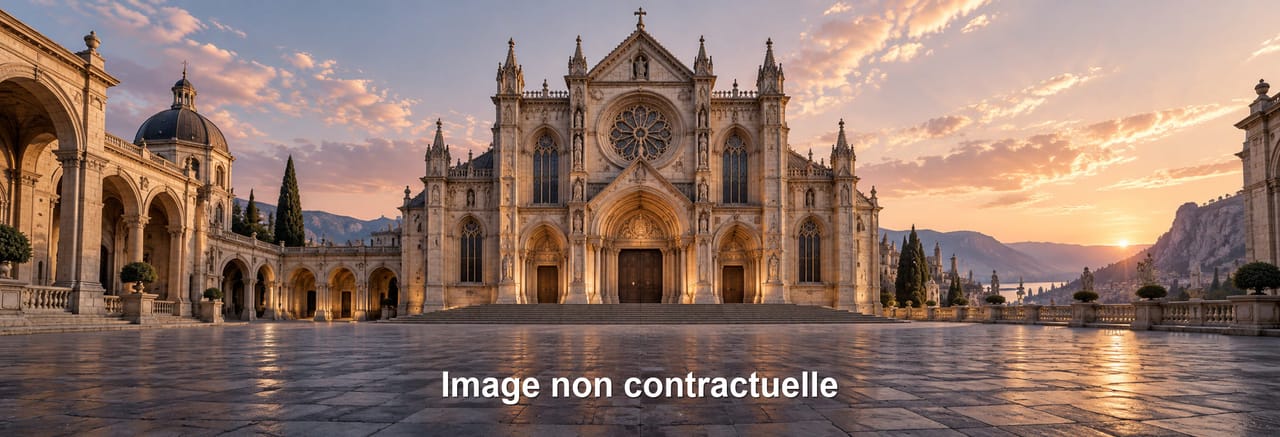
Church of Notre-Dame, Dijon
Notre-Dame church in Dijon, on place Notre-Dame, is a masterpiece of Gothic architecture built around 1220-1250. Its flat façade, studded with false gargoyles, carries the Jacquemart, a 14th-century automaton clock. On the flank, the little carved owl, a symbol of the city, is stroked for luck.
A façade without equal
The church was raised around 1220-1250 on the site of a Romanesque chapel; its architect remains unknown. Its very flat façade is unique in French Gothic architecture. The original gargoyles are said to have been removed around 1240 after a fatal accident; the present chimeras were carved from 1880 to 1882 by seven Parisian sculptors.
The Jacquemart from Courtrai
The automaton clock was installed in 1383 on a campanile of the façade. It comes from Courtrai, a town captured in 1382 by Philip the Bold. Jacquemart and Jacqueline strike the hours, while Jacquelinet and Jacquelinette ring the quarters and half-hours: a show that delights young and old.
The owl, Dijon's lucky charm
On the side of the church, the owl is worn smooth by the touch of visitors who see it as a lucky charm. Its meaning remains unknown and several interpretations circulate. Vandalised in 2001, it was restored. The city's marked owl trail starts here and links the sights of the centre.
Stained glass, organ and World Heritage
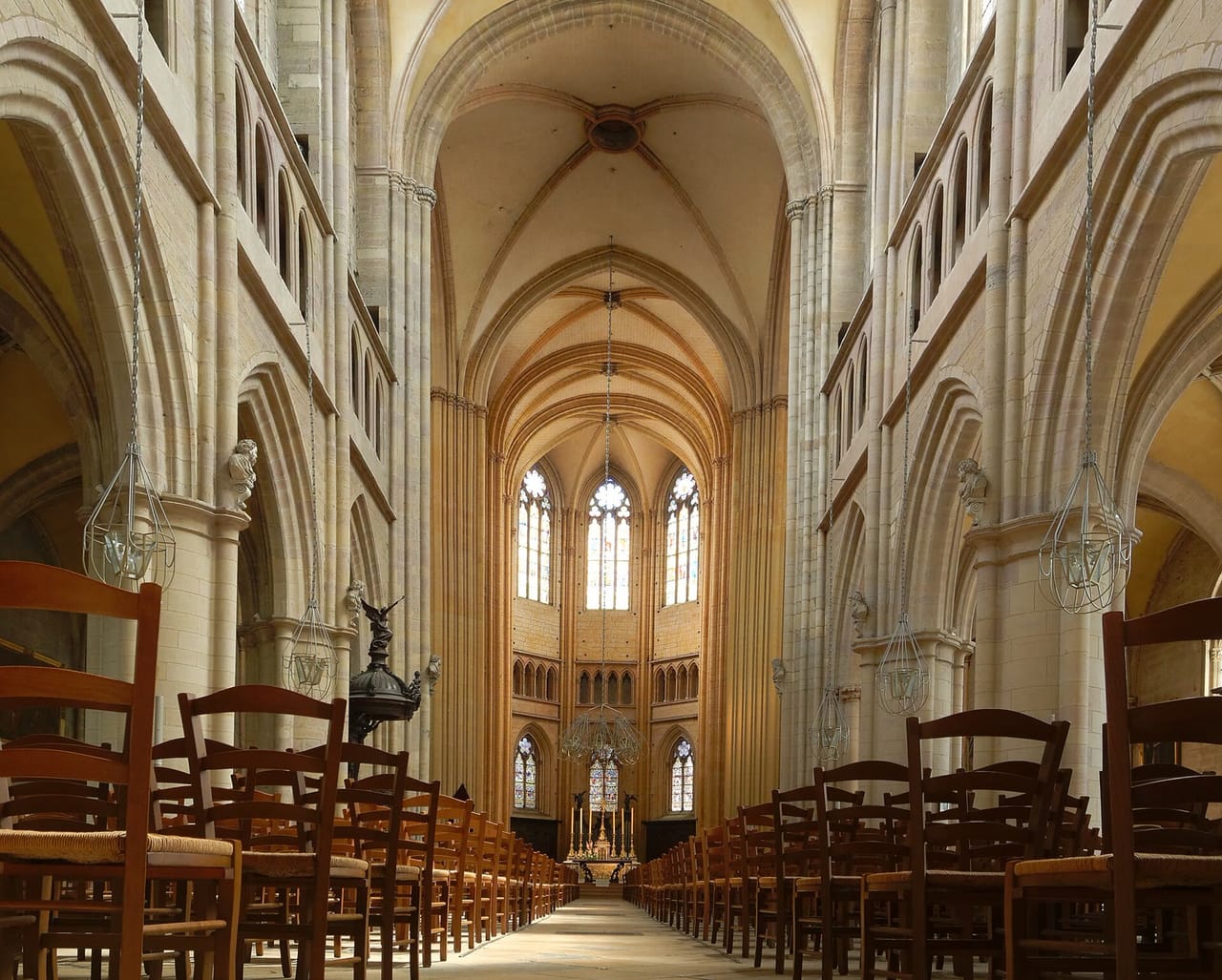
Inside, five 13th-century windows survive in the north transept; others, by Édouard Didron, date from 1874-1897. The present organ (1893-1895) has a neo-Gothic case, and Rameau played here between 1709 and 1713. Listed as a historic monument in 1840, the church lies within the protected district inscribed by UNESCO in 2015. Check the parish website before you come.
Practical information
Address: Place Notre-Dame, 21000 Dijon
Frequently asked questions
Where is Notre-Dame church in Dijon?
On place Notre-Dame in the historic centre, steps from rue des Forges and the market hall.
What is the Jacquemart?
An automaton clock installed in 1383 on the façade, brought from Courtrai; Jacquemart and Jacqueline strike the hours.
Where is the owl and what does it mean?
It is on the side of the church, on rue de la Chouette. Its meaning is unknown; people touch it for luck.
What should it be combined with?
With the neighbouring Hôtel de Vogüé, the Hôtel Chambellan, rue des Forges and the market hall.