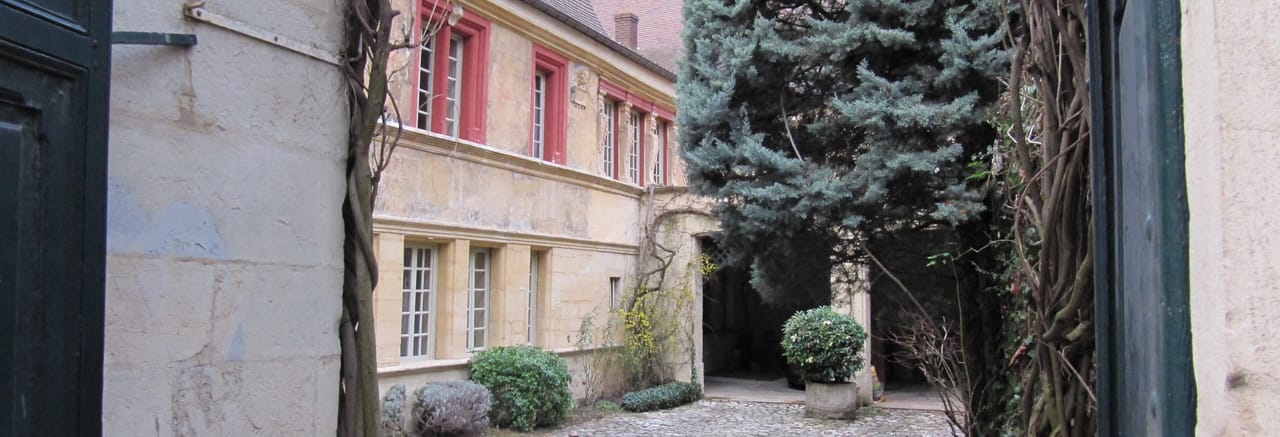
Hôtel de Samerey
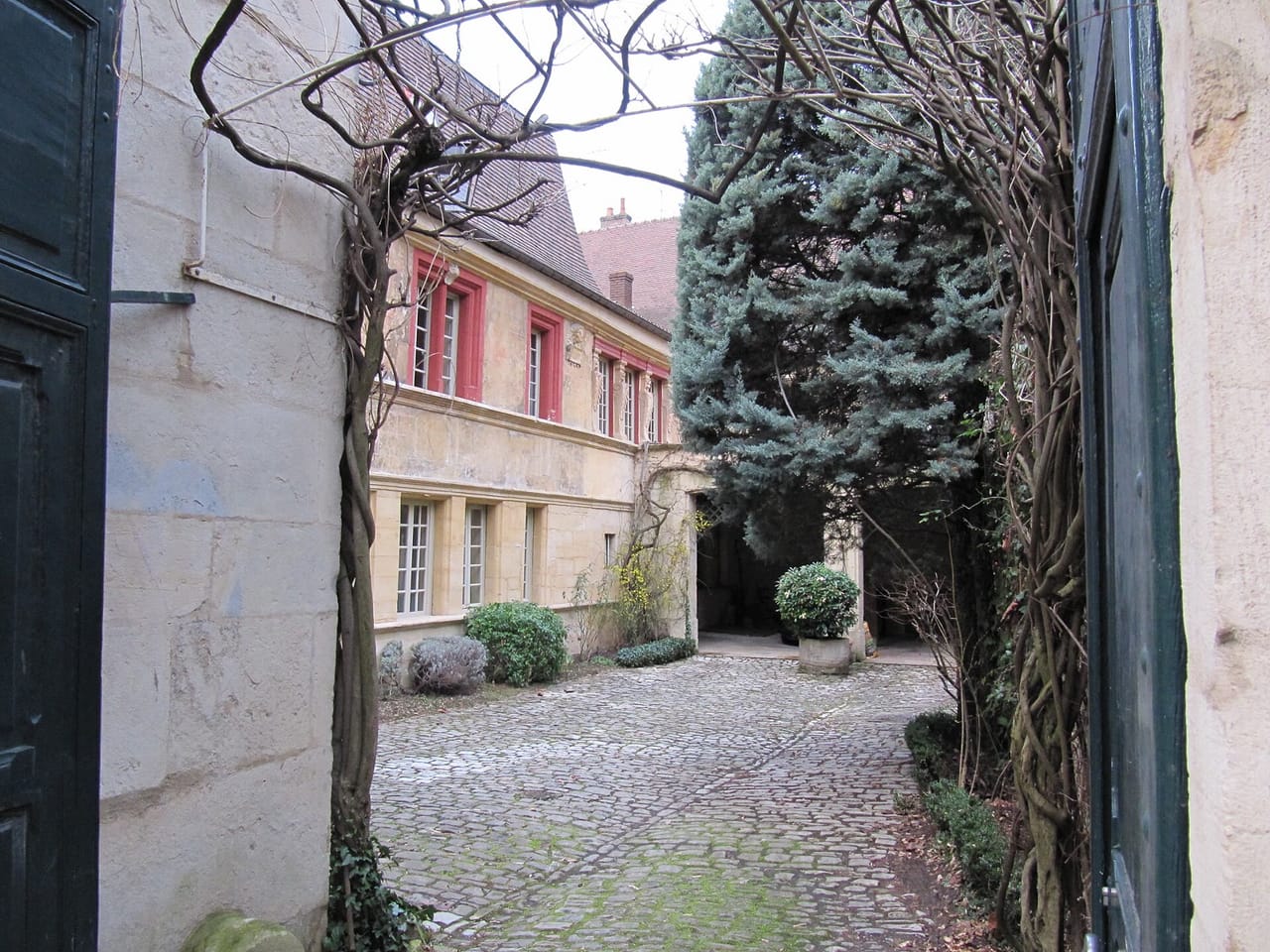
The Hôtel de Samerey, at 19 rue du Petit-Potet, is a French Renaissance town mansion built in 1541 for a notary, Simon Viard. A listed monument since 1946, it is recognisable by its motto Lors suffira and its fine triple window. It makes a quiet stop in Dijon's old town.
A notary in 1541 and his motto
The mansion was built in 1541 for Simon Viard, a notary, hence its older name, Hôtel Viard. On the façade, two cartouches carry the motto Lors suffira, which can be rendered as 'then that will be enough'. It is one of the easiest signatures to spot for anyone who looks up in rue du Petit-Potet.
Triple window, acanthus and lions
On the first floor, a triple window is decorated with carved acanthus leaves and lion heads, a vocabulary typical of the French Renaissance. In the courtyard, former stables topped by a hayloft recall the daily life of a well-off household, and vaulted cellars run beneath the building.
From the Lamy family to a vinegar maker, then the city
The Lamy family, who later acquired the mansion, added a street-side pavilion to house a more imposing staircase; the Samerey name is said to come from Antoine Bénigne Lamy de Samerey. Sold as national property during the Revolution, it hosted a vinegar maker and later wine merchants. The city bought it in 1947 to house regional heritage services, then sold it to private owners in 1975.
Rue du Petit-Potet and the vineyard heritage
The mansion lies in the protected district and appears within the Climats of the Burgundy Vineyards, a UNESCO site since 2015. Privately owned, it is seen from rue du Petit-Potet in a few minutes. To step inside you need to wait for an organised visit; the tourist office keeps that information.
Practical information
Address: 19, rue du Petit-Potet, 21000 Dijon
Frequently asked questions
Who had the Hôtel de Samerey built?
Simon Viard, a notary, in 1541. The Samerey name comes from the Lamy family, later owners.
What does Lors suffira mean?
It is the motto carved on two cartouches on the façade, in old French: 'then that will be enough'.
Can it be visited?
It has been privately owned since 1975, so it is admired from the street. Any guided visits are announced by the tourist office.
Wikimedia Commons — François de Dijon