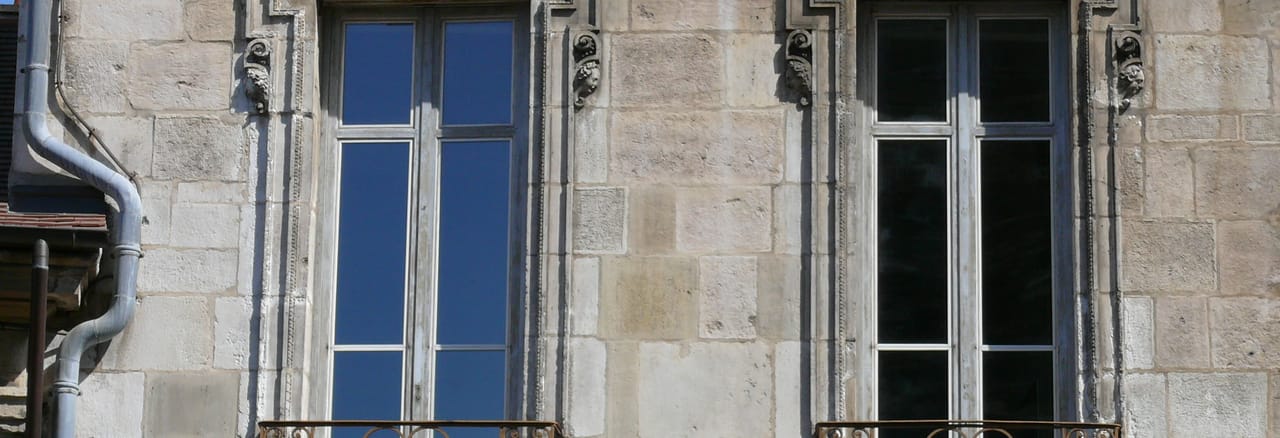
Hôtel Perreney de Baleure
The Hôtel Perreney de Baleure is a 17th-century town mansion in Dijon's protected historic district. Begun in 1618 for a councillor of the Parlement of Burgundy, it has been a listed monument since 1950. Its carved façade, built right on the street, sets it apart from the city's other parliamentary mansions.
1618: a councillor builds his house
Work began in 1618 for Antoine de Bretagne, a councillor at the Parlement of Burgundy, on top of older buildings. The mansion later passed to the Perreney de Baleure family, whose name it still carries. This chain of owners shows how a magistrate's house was handed down and altered over the generations.
A main block facing the street
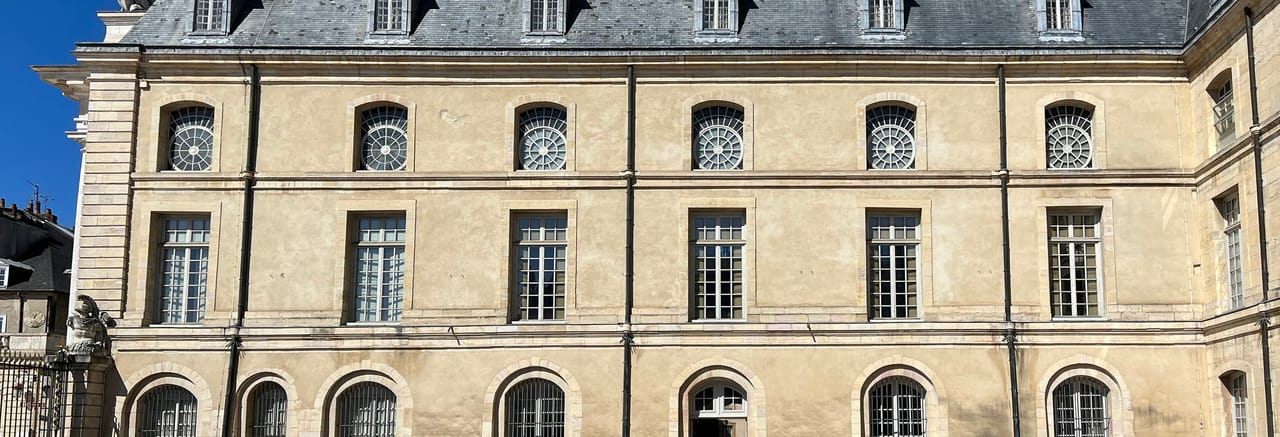
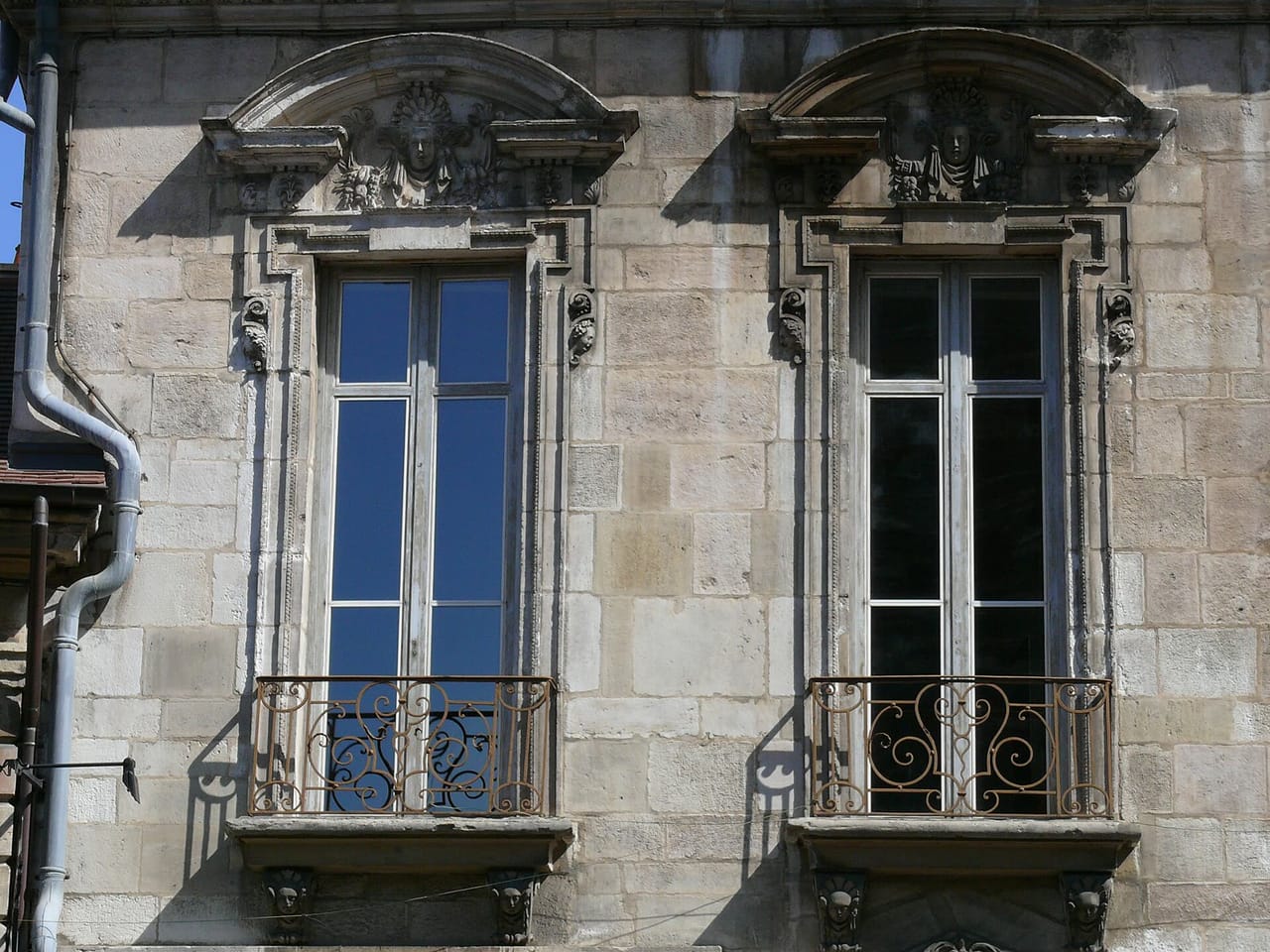
Unlike most of Dijon's parliamentary mansions, which sit between courtyard and garden behind a wall, the main block here rises straight from the street. Passers-by see the façade at once, which changes the pleasure of the walk: there is no door to push open to appreciate the sculptors' work.
Pediments, carved heads and fruit
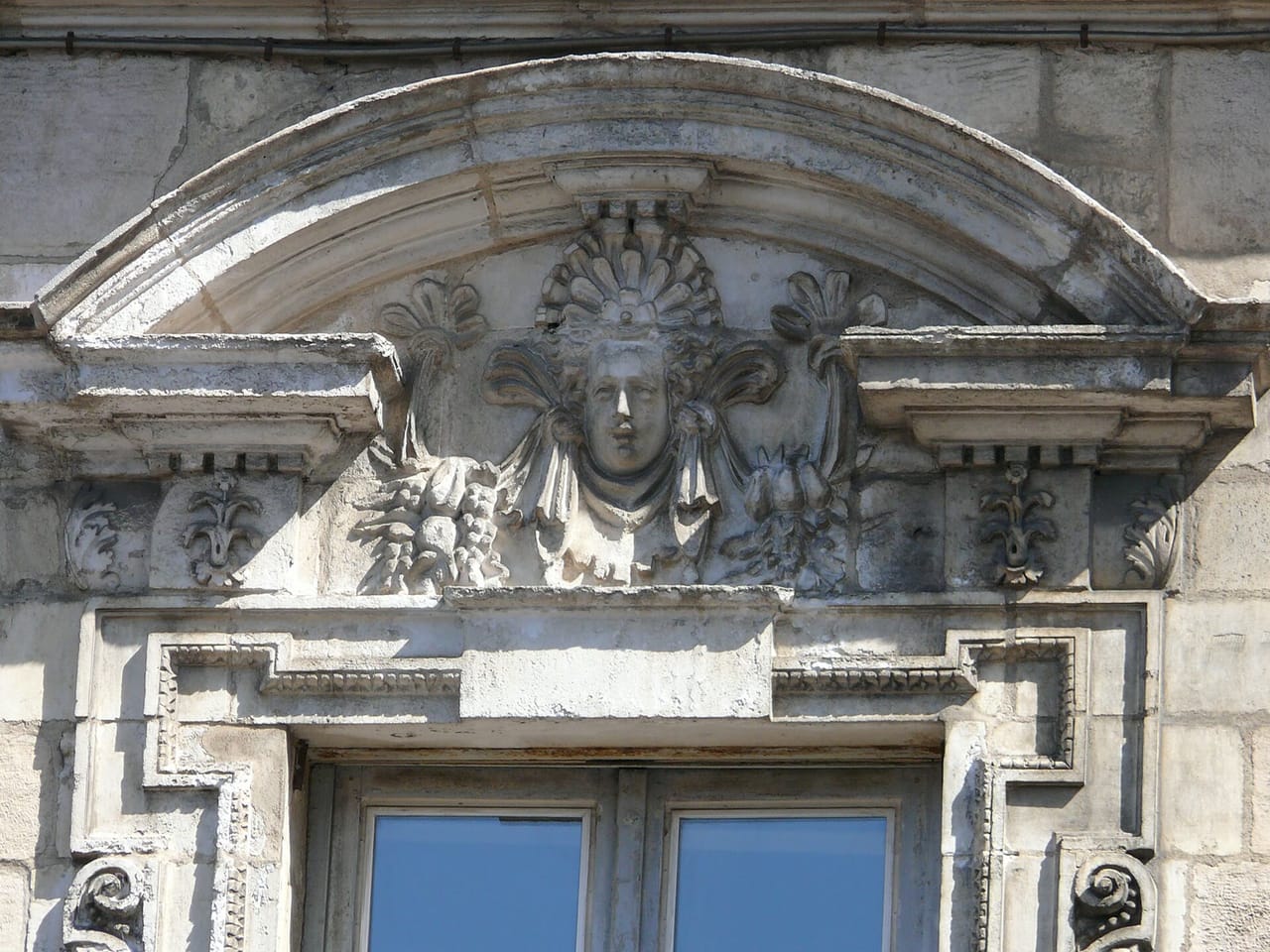
The façade is richly decorated: pedimented windows, dormers with small wing-shaped ornaments, carved heads and fruit motifs. These details are best appreciated by stepping back across the street, then moving in to read the stone. A quarter of an hour is plenty.
A private home in the old town
The mansion is private property, so it is best enjoyed from the street. It lies in Dijon's protected district, which the heritage record places within the Climats of the Burgundy Vineyards, a UNESCO site since 2015. Combine it with a walk towards place Bossuet or the Palace of the Dukes.
Frequently asked questions
When was the Hôtel Perreney de Baleure built?
Work began in 1618 for Antoine de Bretagne, a councillor at the Parlement of Burgundy, on older buildings.
What sets it apart from Dijon's other mansions?
Its main block faces the street directly instead of hiding between courtyard and garden, and its façade is richly carved.
Can it be visited?
It is private property, so it is mostly enjoyed from the street. The tourist office website lists any rare guided visits.
Wikimedia Commons — MOSSOT