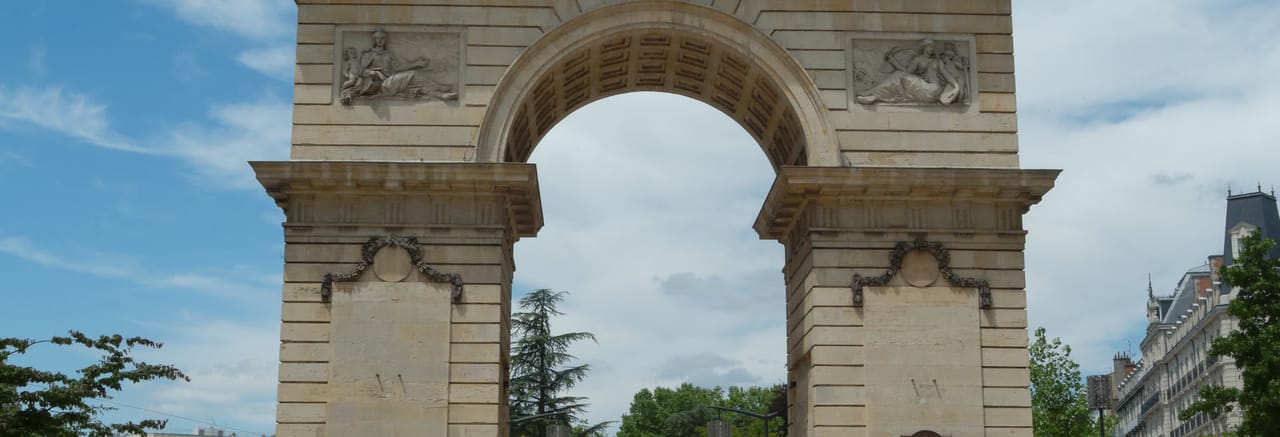
Porte Guillaume
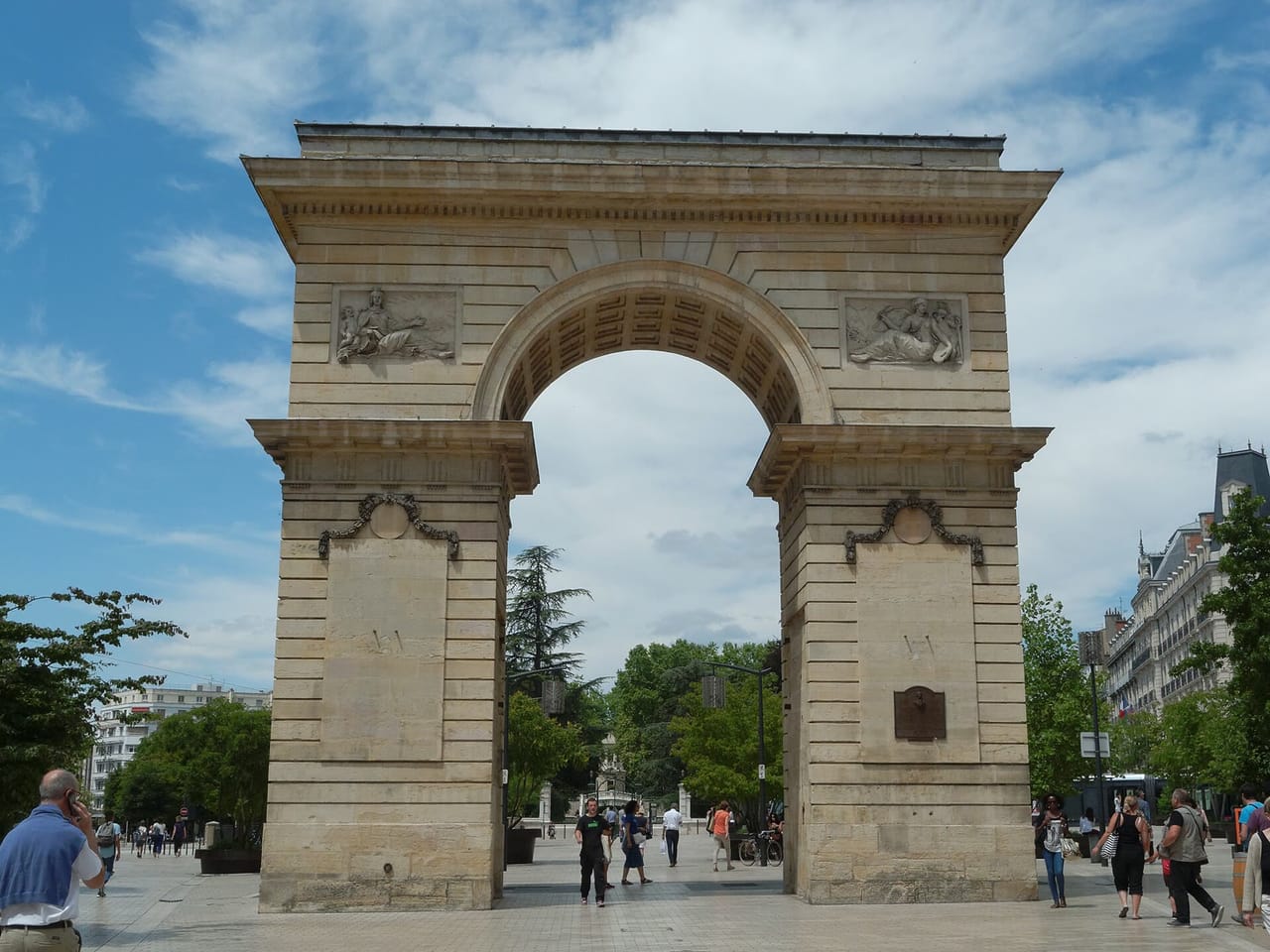
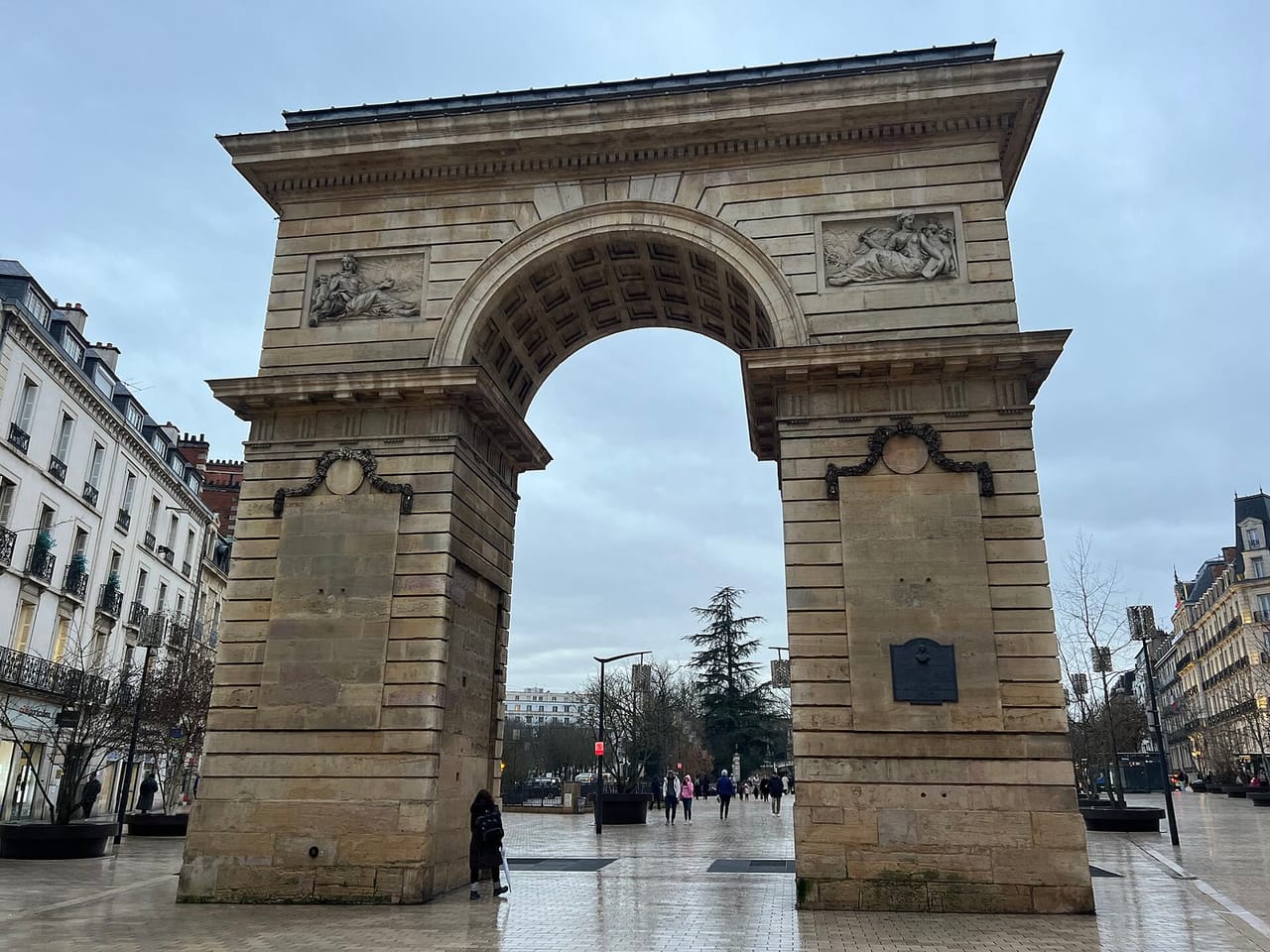
The Porte Guillaume is an 18th-century triumphal arch marking the western entrance to Dijon's centre, on Place Darcy. Built from 1786 to 1788 by Jean-Philippe Maret on the site of a medieval gate, it was first dedicated to the Prince de Condé. It has been a listed historic monument since 1938.
From Porte Condé to Porte Guillaume
The arch was built from 1786 to 1788 in honour of the Prince de Condé, governor of Burgundy, under the name Porte Condé. In 1791, during the Revolution, it became the Arc de la Liberté. In the 19th century it was renamed Porte Guillaume, after William of Volpiano, abbot of Saint-Bénigne.
Bas-reliefs on the Place Darcy side
The side facing Place Darcy bears bas-reliefs by the sculptor Claude-François Attiret. One shows a genius presenting the Prince de Condé's arms to Burgundy. Stop for a moment to look at them: they are a fine example of late Ancien Régime neoclassical decoration.
A starting point for the centre
Listed as a historic monument since 27 July 1938, the gate opens onto Rue de la Liberté, the main pedestrian street leading to the Palace of the Dukes. It sits within Place Darcy, a meeting point for locals. It is a natural starting point for a walk through the centre, and a good photo opportunity on the way.
Practical information
Address: Place Darcy, 21000 Dijon
Frequently asked questions
Where is the Porte Guillaume?
On Place Darcy, at the western entrance to Dijon's town centre.
Why is it called that?
Since the 19th century it has borne the name of William of Volpiano, abbot of Saint-Bénigne; it was first called Porte Condé.
What can you combine it with?
With the Darcy garden right next to it, then Rue de la Liberté all the way to the Palace of the Dukes.
Wikimedia Commons — Thomas Bresson · Wikimedia Commons — Chabe01