Chamber of Commerce Building, Nancy
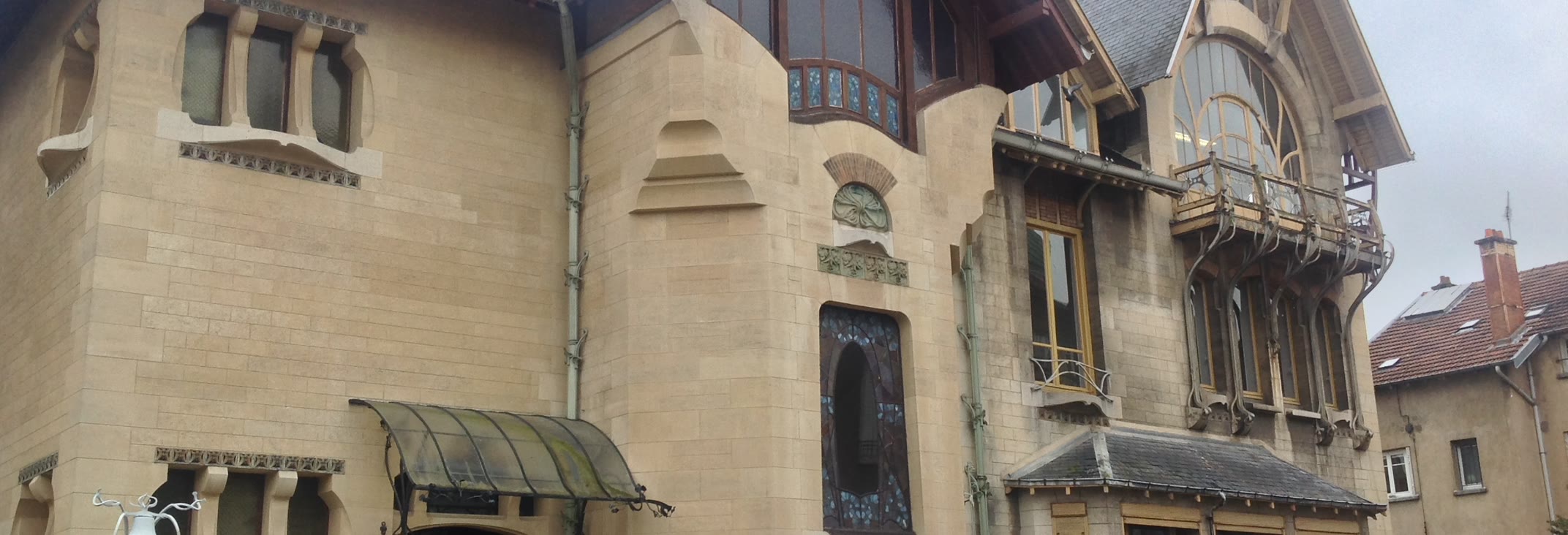
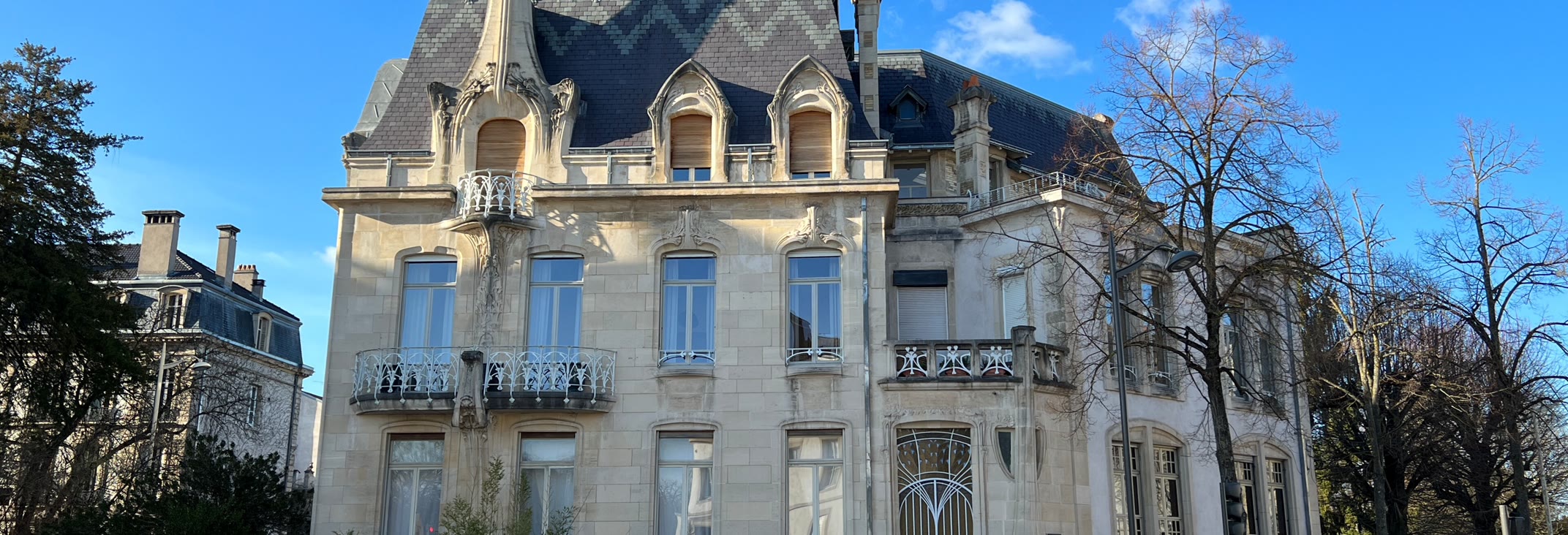
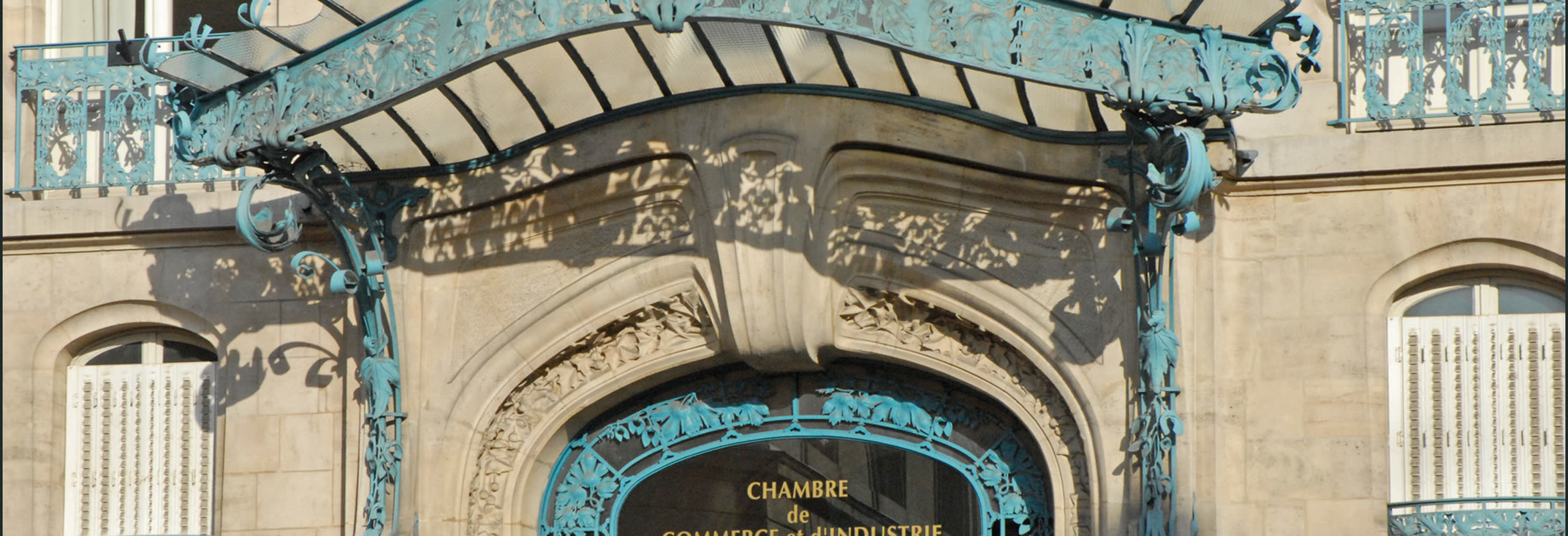
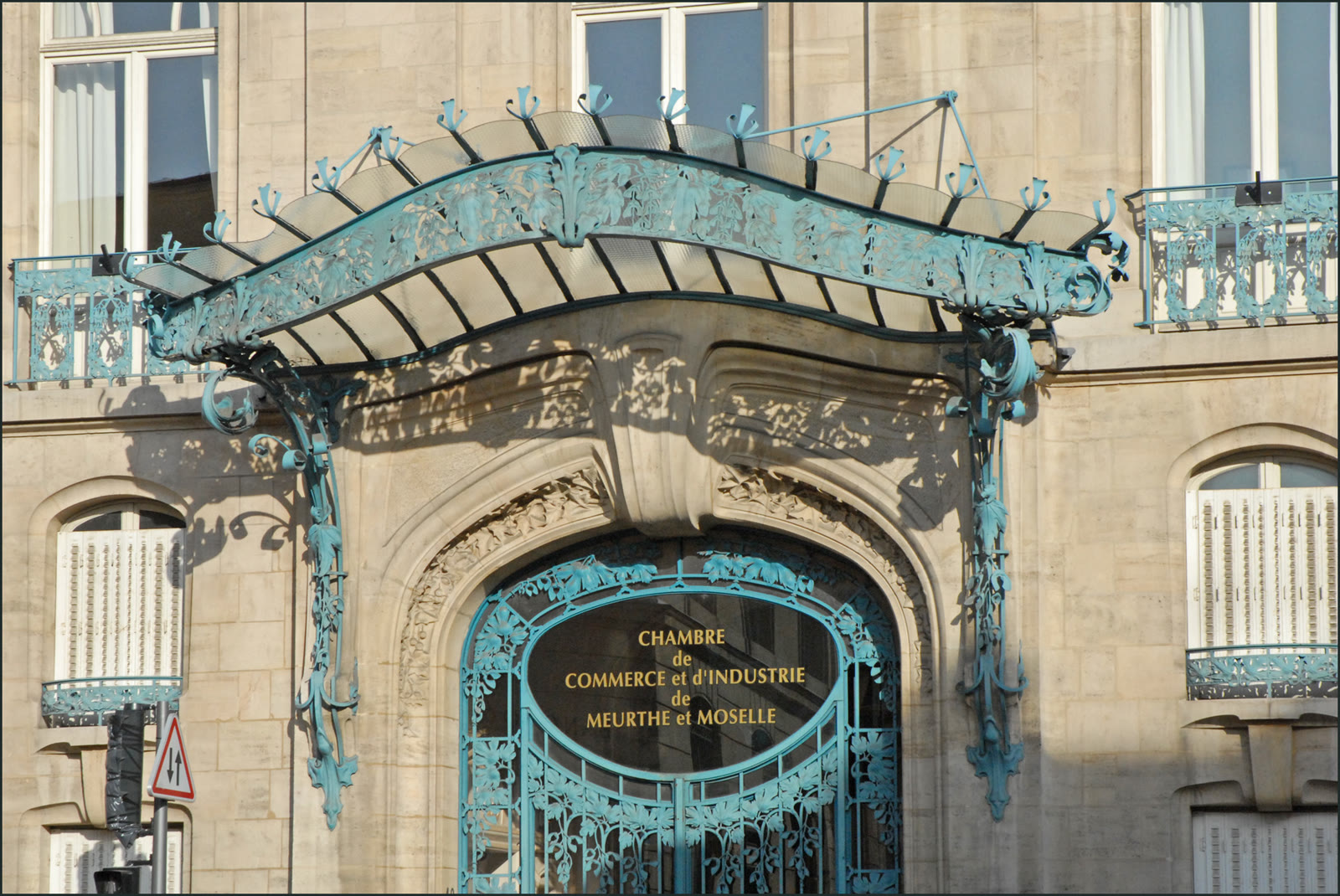
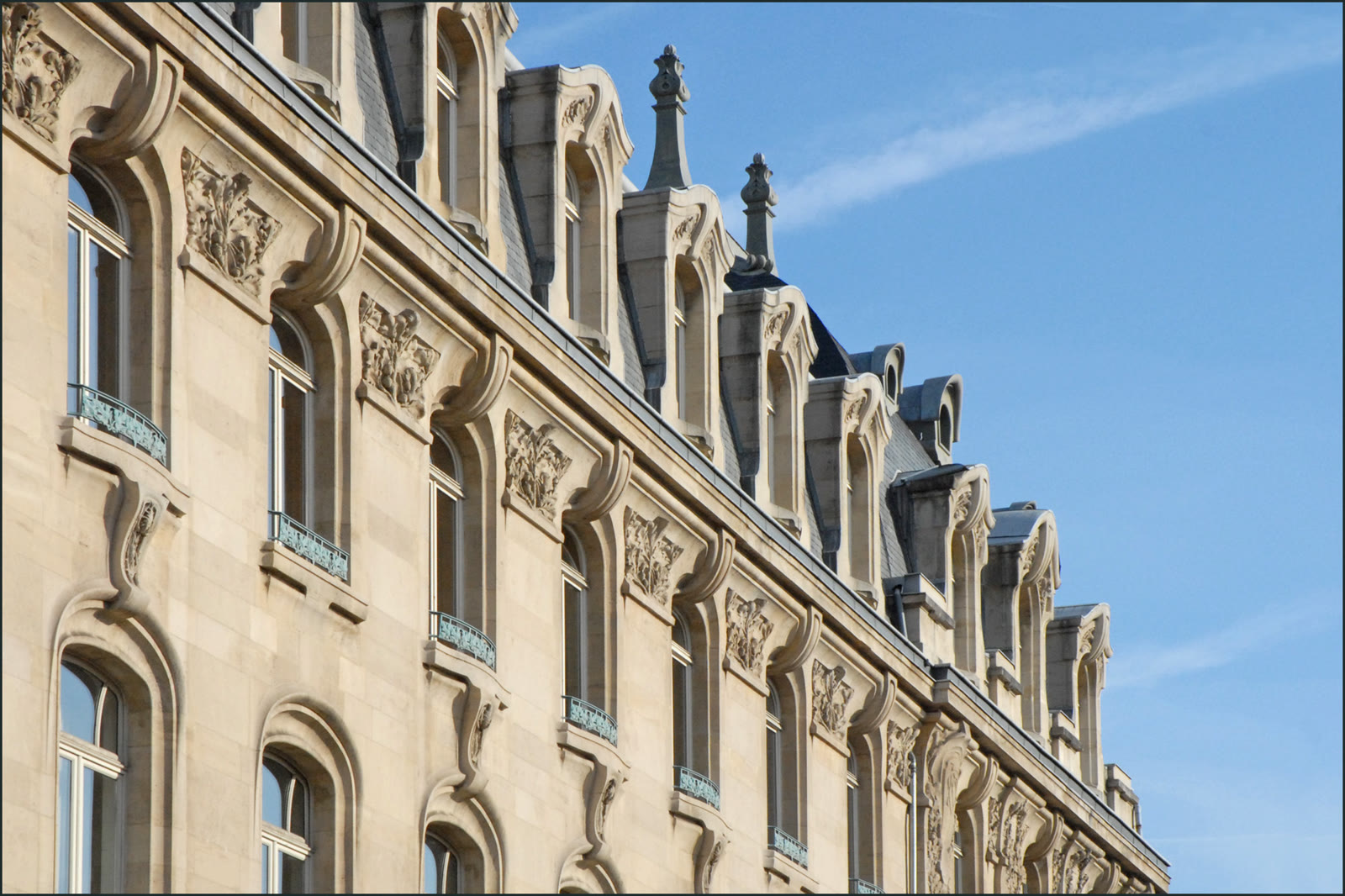
A stone's throw from Place Stanislas, the Chamber of Commerce reveals one of Nancy's richest Art Nouveau façades. Stained glass, glassware and ironwork here gather the greatest names of the École de Nancy around a shared tribute to industrious Lorraine.
A competition for a manifesto
In 1905 the Chamber of Commerce of Meurthe-et-Moselle launched a competition for its new headquarters. The design by architects Émile Toussaint and Louis Marchal won, and construction ran from 1906 to 1908, followed by an inauguration in June 1909. The building quickly became a manifesto of the École de Nancy, the movement that, around Émile Gallé, aimed to put art at the service of regional industry. Here, a public commission gave Lorraine's master glassmakers, cabinetmakers and ironworkers a collective showcase, matching the economic ambition of the Nancy region.
The Gruber and Daum stained glass
The décor's highlight lies in the ground-floor stained glass by Jacques Gruber and Antonin Daum. Far from Art Nouveau's usual floral motifs, it celebrates the region's work and industry: scenes of glassmaking, metalworking and chemistry, Lorraine landscapes bathed in coloured light. This unique iconography turns the building into a visual tribute to local know-how. Gruber's windows were listed as historic monuments in 1996, a distinction that underlines their importance in the history of French stained glass.
The ironwork of Louis Majorelle
Outside and in, the wrought metal bears the signature of Louis Majorelle. The entrance canopy, the railings and grilles unfold supple plant-like curves in the whiplash style that made the École de Nancy famous. Majorelle, as renowned for his furniture as for his ironwork, gives the building the decorative unity typical of the movement's great achievements: every detail, from handle to balustrade, shares one artistic impulse and one celebration of nature.
State rooms and economic life
The building is more than décor: it was designed for the life of business. The vast, luminous stock-exchange hall hosted commercial dealings, while the council chamber gathered the Chamber's officers. These spaces extend the façade's refinement indoors, in a harmony of woodwork, filtered light and flowing lines. Even today the Chamber of Commerce and Industry carries out its work here, making the place a rare example of an Art Nouveau monument still true to its original function.
How to discover it
Public reception is at 53 rue Stanislas, but the spectacular Art Nouveau façade unfolds on the rue Henri-Poincaré side. From the street you can freely admire Majorelle's canopy and the sculptures. The interior, however, remains a workplace and only opens to the public for events, conferences or the European Heritage Days. That is the sole way to see the Gruber and Daum windows from inside, in their full depth of colour. The visit ideally rounds off a stroll around Place Stanislas.
Infos pratiques
Adresse : 53 Rue Stanislas, 54000 Nancy
Questions fréquentes
Can you visit Nancy's Chamber of Commerce?
As the interior is a workplace, it mainly opens for events and the European Heritage Days. The façade can be admired freely from the street.
Who created the building's décor?
The greatest names of the École de Nancy: stained glass by Jacques Gruber and Antonin Daum, ironwork by Louis Majorelle, to designs by Émile Toussaint and Louis Marchal.
What do the stained-glass windows depict?
Unusually, they celebrate Lorraine's work and industry: glassmaking, metalworking, chemistry and regional landscapes, rather than the usual floral motifs.
Is the building protected?
Yes, it is protected as a historic monument; Gruber's windows were listed in 1996 for their exceptional value.
Where is the Chamber of Commerce?
Reception at 53 rue Stanislas in Nancy, very close to Place Stanislas; the Art Nouveau façade faces rue Henri-Poincaré.
Wikimedia Commons — Jean-Pierre Dalbéra from Paris, France