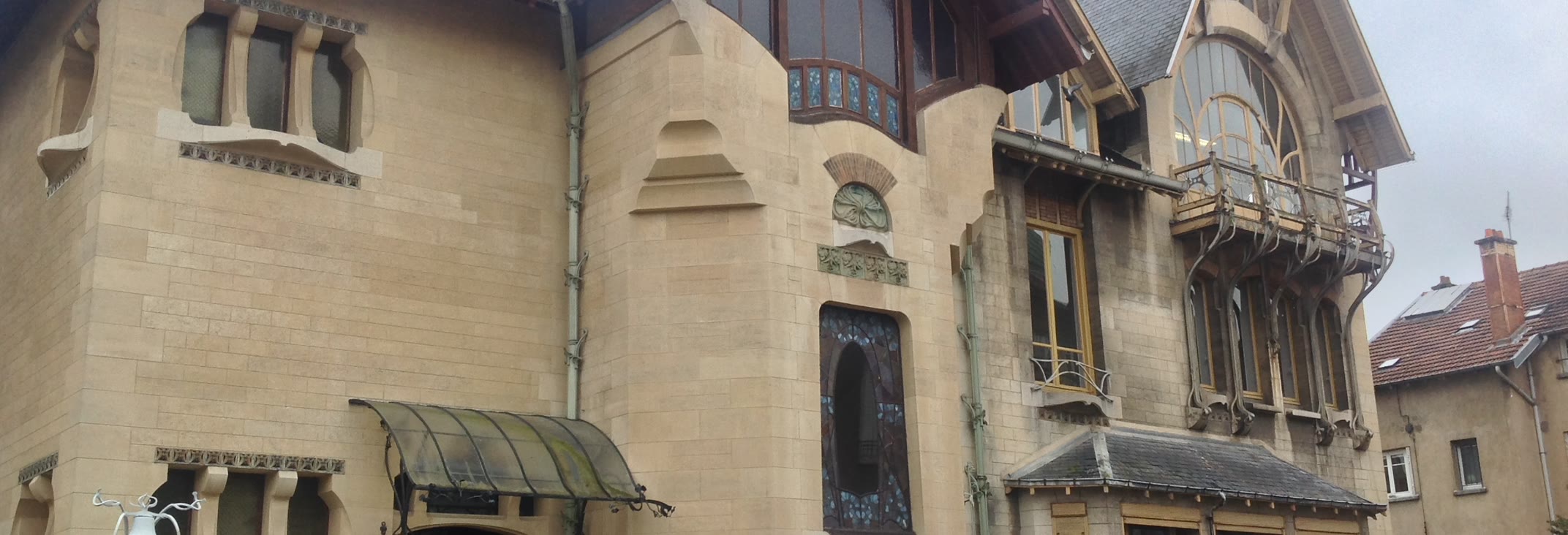
Villa Majorelle, a manifesto of Art Nouveau
In the south of Nancy, the Villa Majorelle was, in 1901-1902, the city's first house designed entirely in the Art Nouveau style. Home and showcase of the master cabinetmaker Louis Majorelle, it brings together architecture, ironwork, stained glass and furniture in a true total work of art. Restored and reopened in 2020, it now offers an intimate journey into 1900s Nancy.
The first Art Nouveau house in Nancy
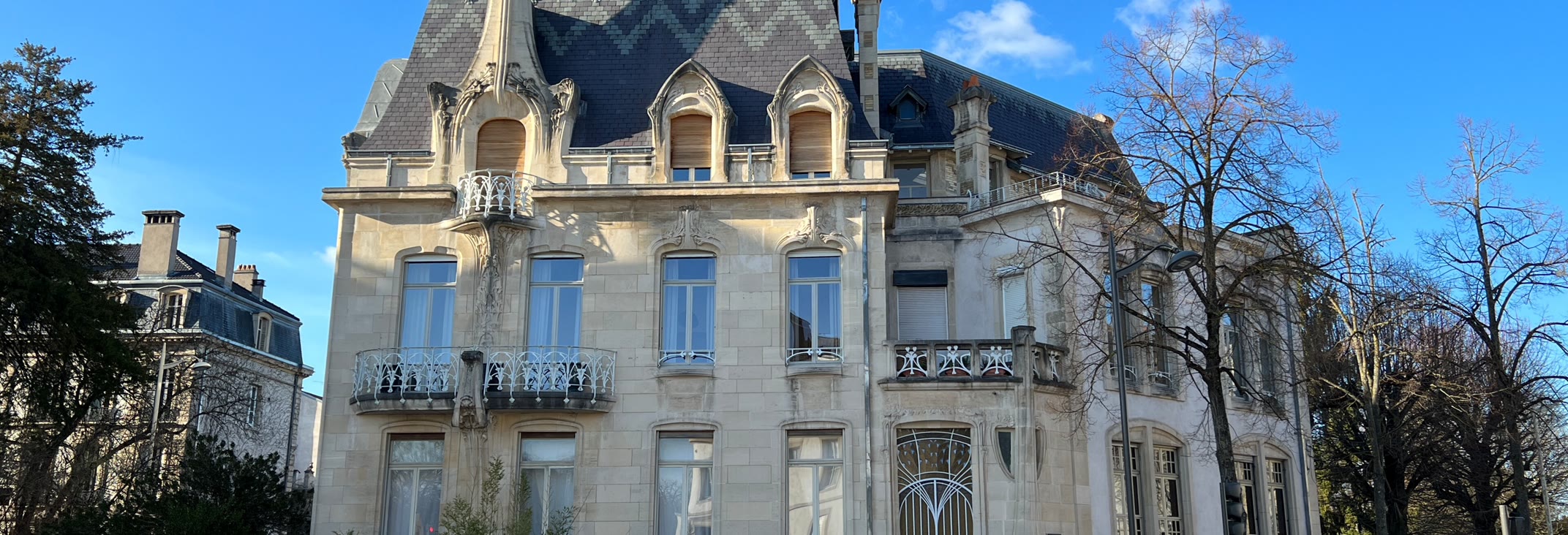
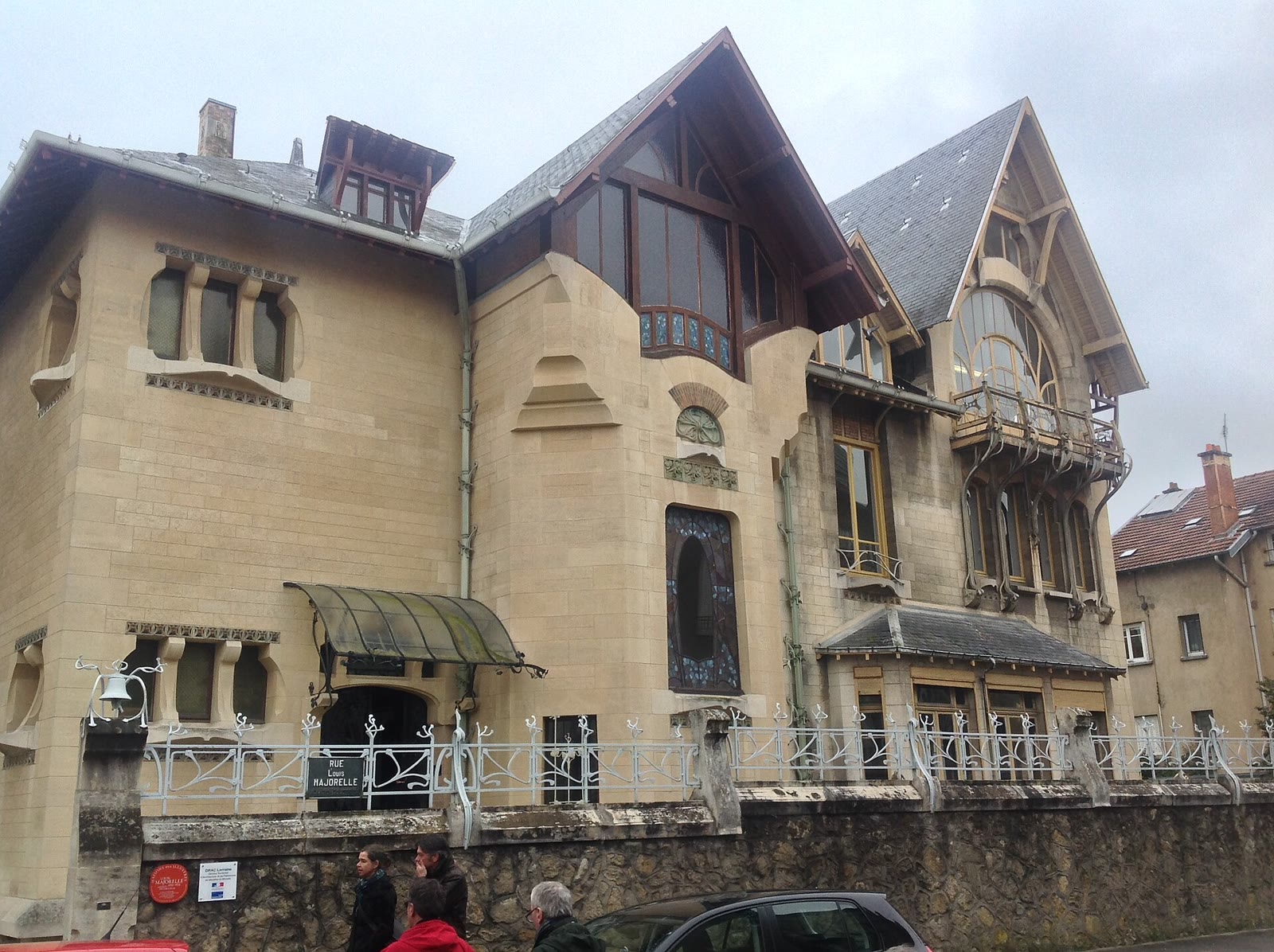
When Louis Majorelle, one of the leading figures of the École de Nancy, decided to build himself a house, he entrusted the project to a young 24-year-old Parisian architect, Henri Sauvage, assisted locally by Nancy-born Lucien Weissenburger. Built in 1901-1902, the villa broke sharply with academic tradition: asymmetrical volumes, exposed materials, decoration drawn from nature. It immediately stood out as a manifesto — proof that a new art, freed from historical styles, could inhabit every last detail of a house.
A collective work of the École de Nancy
True to the spirit of the École de Nancy, the villa is not the work of a single man but of a collective of artists. The stained glass is by Jacques Grüber, whose floral window on the staircase remains one of the highlights of the visit. The ceramist Alexandre Bigot created the terrace balustrade and the spectacular sandstone fireplace in the dining room. The painter Francis Jourdain added a frieze of birds, while Alexandre Charpentier contributed to the carved decoration. The furniture came from Louis Majorelle's workshops: Japanese ash and alder, copper and mother-of-pearl inlays, bronze handles shaped like stylised plants.
Architecture you can read from the outside
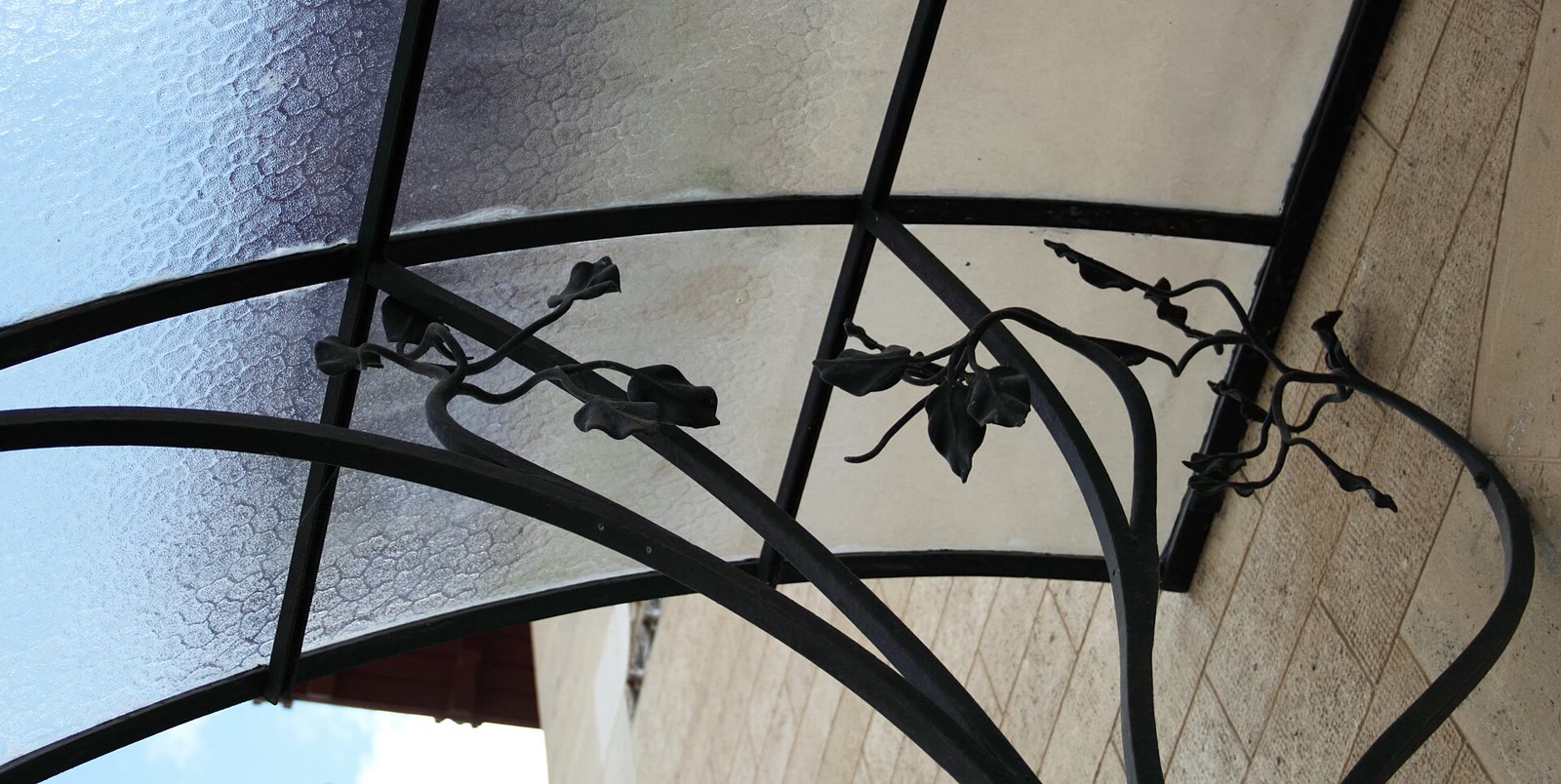
From the outside already, the villa tells its story. The deliberately asymmetrical façade hints at the interior layout rather than hiding it. Everywhere, the plant line makes its way in: wrought ironwork, downpipes drawn like stems, carved chimneys, grilles with foliage patterns. Nothing is decorative by chance — every element, down to the most utilitarian, is conceived as part of a single whole.
Inside: the art of living, 1900
Inside, the coherence is complete. The staircase, bathed in Grüber's stained glass, leads to rooms where woodwork, wallpaper, furniture and light fittings speak the same language. The dining room, with its flamed-sandstone fireplace and painted frieze, sums up the ambition of the place on its own: to bring nature and art into everyday life. The restoration completed in 2020 gave the interiors back their original colours and decoration, for a striking immersion in the intimacy of the Majorelle family.
Visiting the Villa Majorelle
After a major restoration campaign, the Villa Majorelle reopened to the public in February 2020. It can usually be visited from Wednesday to Sunday, 2 pm to 6 pm, by online booking — slots are limited, so it is best to book ahead. Like the other municipal museums, admission is free on the first Sunday of each month. The villa is at 1 rue Louis Majorelle; it pairs ideally with a visit to the nearby Musée de l'École de Nancy to grasp the full richness of Nancy's Art Nouveau. Listed as a historic monument and awarded the 'Maison des Illustres' label, it is one of the city's must-see sights.


%20-%202022-02-26%20-%201.jpg?width=1600)
%20-%202022-02-26%20-%202.jpg?width=1600)
%20-%202022-02-26%20-%203.jpg?width=1600)
%20-%202022-02-26%20-%205.jpg?width=1600)
Infos pratiques
Adresse : 1 Rue Louis Majorelle, 54000 Nancy
Questions fréquentes
Can you visit the Villa Majorelle?
Yes. It is open to the public, usually Wednesday to Sunday from 2 pm to 6 pm, by online booking. Opening hours may vary by season, so check before you go.
Is admission to the Villa Majorelle free?
There is an admission fee, but entry is free on the first Sunday of each month, as in Nancy’s municipal museums.
Who built the Villa Majorelle?
The architect Henri Sauvage, with Lucien Weissenburger, built it in 1901-1902 for the cabinetmaker Louis Majorelle, with the help of École de Nancy artists such as Jacques Grüber, Alexandre Bigot and Francis Jourdain.
Why is the Villa Majorelle famous?
It is Nancy's first fully Art Nouveau house and one of the most influential examples of the style in France: a total work of art, listed as a historic monument.
What to see around the Villa Majorelle?
The Musée de l'École de Nancy is very close and the neighbourhood has other Art Nouveau buildings: plan to combine the visits for a full immersion.
Wikimedia Commons — SiefkinDR · Wikimedia Commons — Léna · Wikimedia Commons — Chabe01