The Weissenburger building, an architect's Art Nouveau
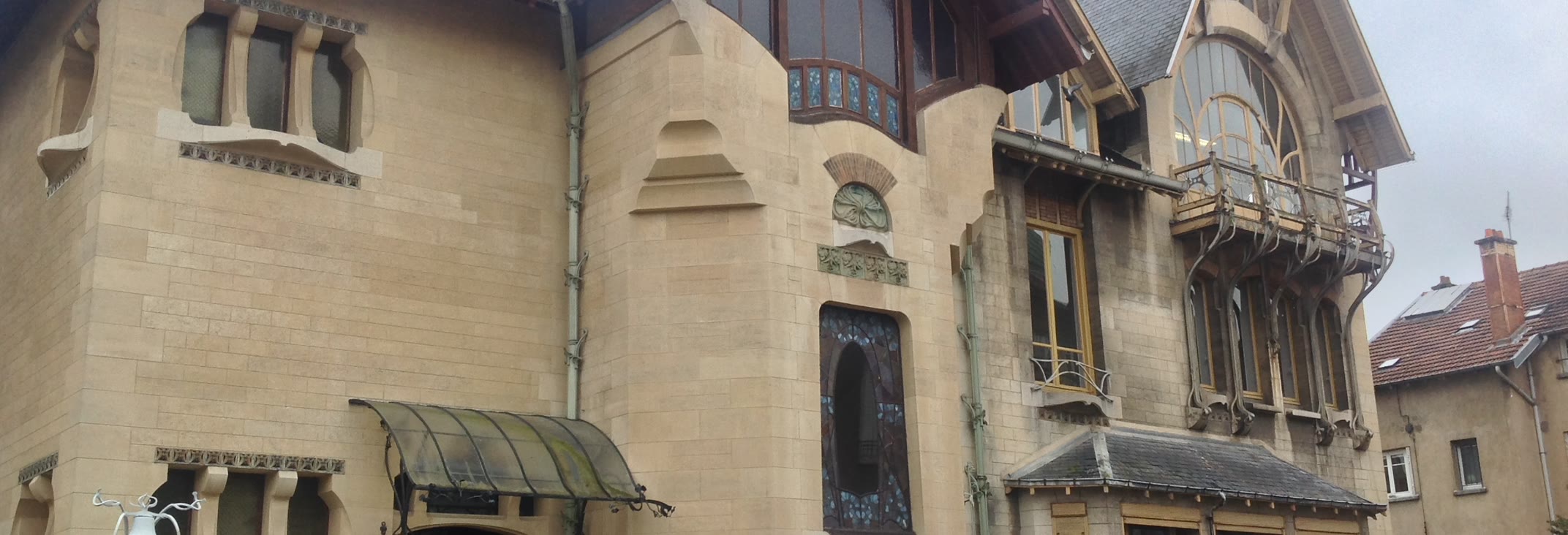
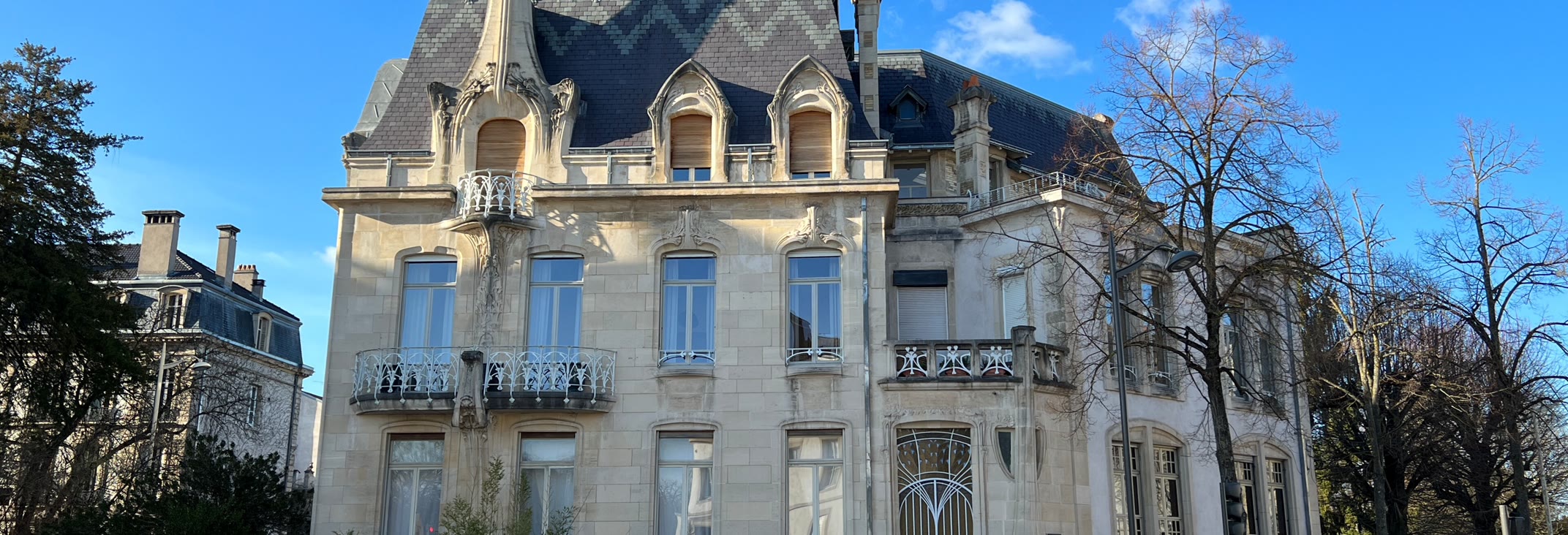
At 1 boulevard Charles-V, at the turn of the 20th century, the architect Lucien Weissenburger gave himself a showcase worthy of his art. This Art Nouveau building, designed as home and studio, brings together the greatest decorators of the École de Nancy around an elegantly free marine theme.
The home of an École de Nancy master
Lucien Weissenburger (1860-1929) was one of the leading Art Nouveau architects in Lorraine and sat on the board of the École de Nancy. In 1903-1904 he built this block to house his own home and studio. The exercise is telling: freed from a client's constraints, the architect deployed his full vision here. The building thus became a manifesto-work, revealing his command of volumes and his taste for collaborating with the city's finest art craftsmen, in the union-of-the-arts spirit dear to the movement.
A façade in movement
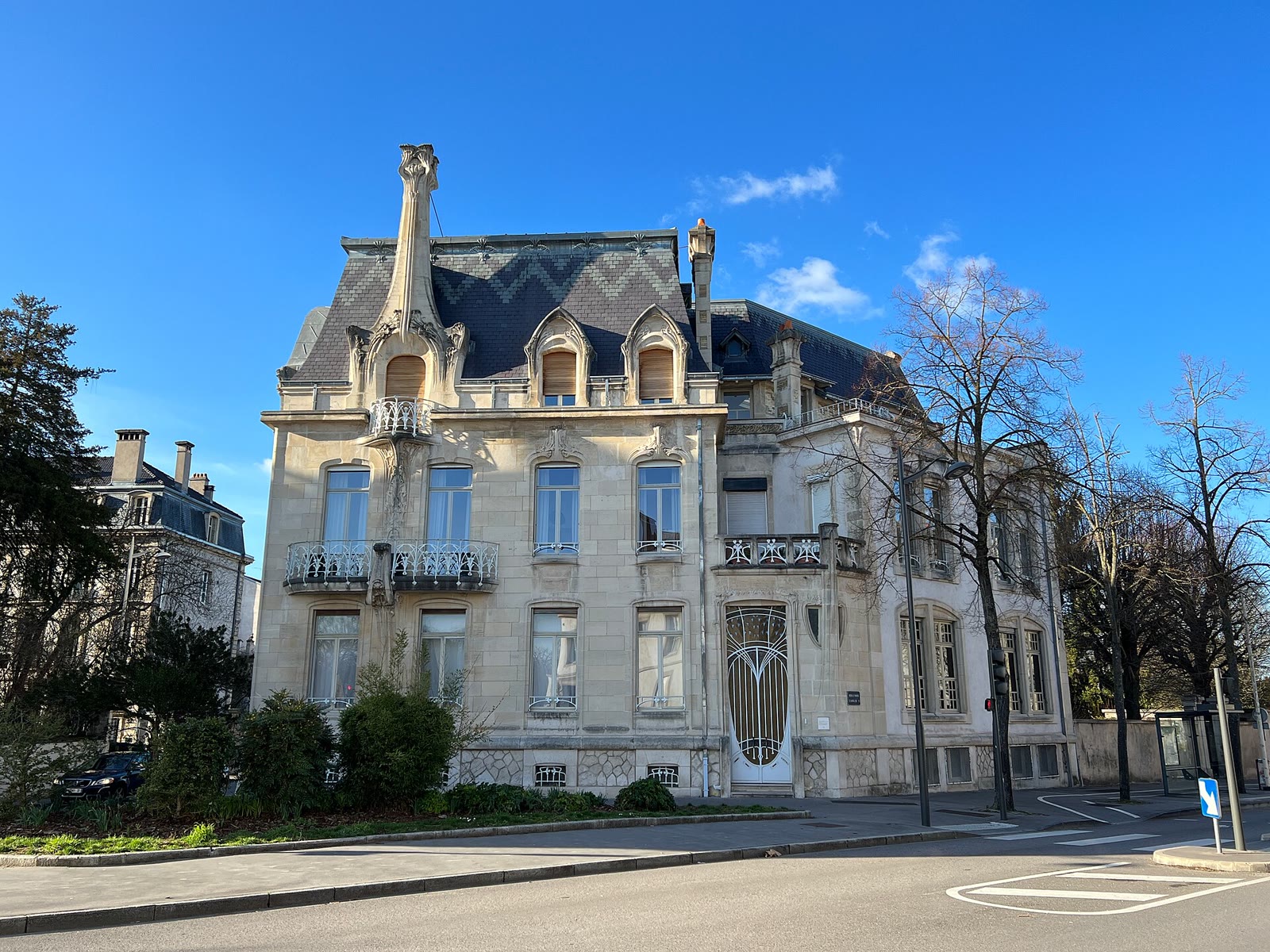
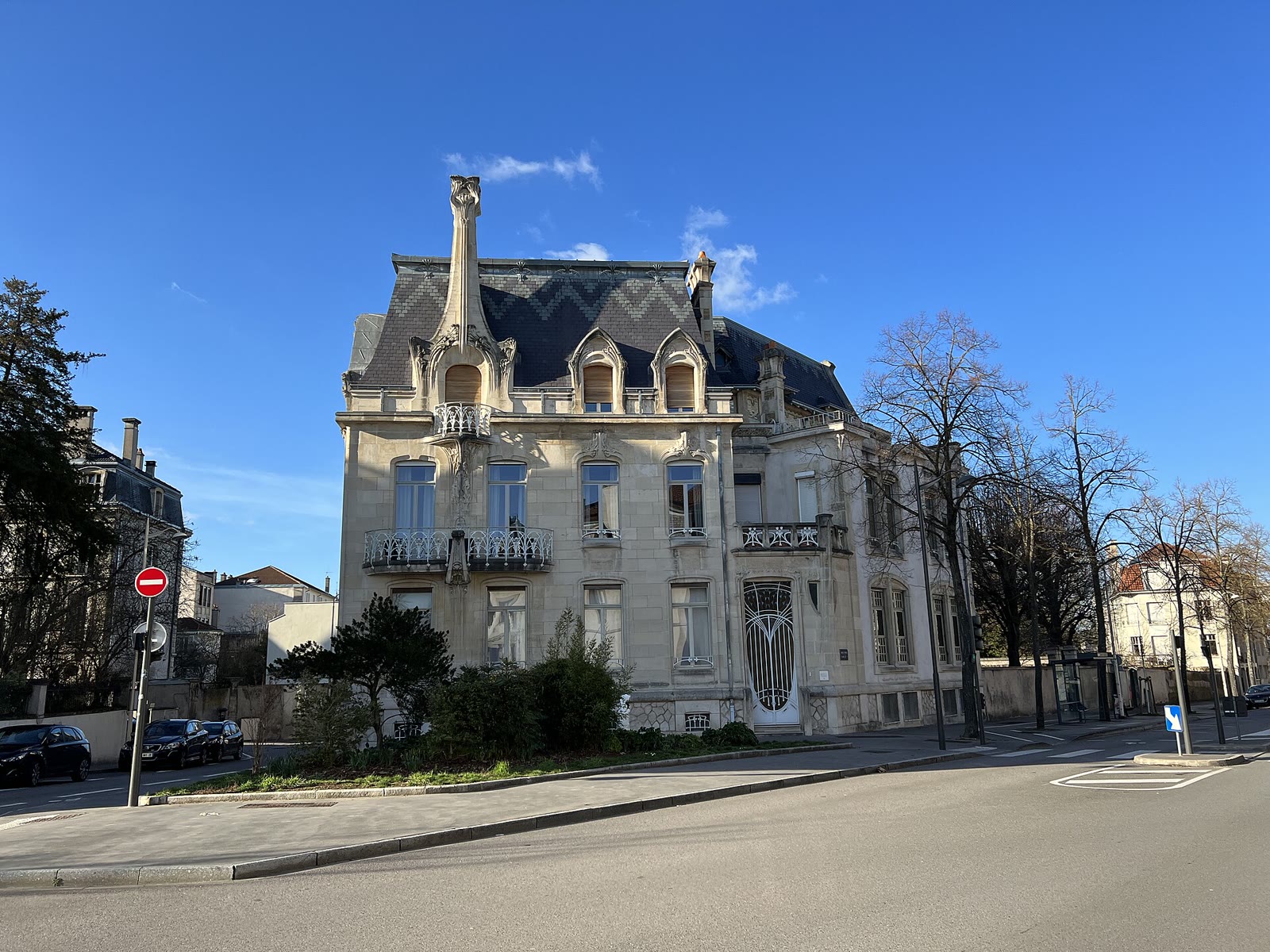
What strikes at once is the dynamism of the façade: recesses, projections and varying storey heights break with the bourgeois regularity of the neighbouring blocks. Weissenburger plays with relief to animate the stone and catch the light. The chosen decorative theme, seaweed and the marine world, runs from one material to another and gives the whole its coherence: it recurs in the sculpture, the ironwork and the stained glass. This freedom of composition perfectly illustrates Art Nouveau's ambition, rejecting the straight line in favour of the organic.
Gruber, Majorelle and the marine décor
For his stained glass, Weissenburger called on Jacques Gruber, whose coloured glass casts an underwater light through the interiors. The ironwork went to Louis Majorelle, who reworked the undulating seaweed motif in railings and grilles. Sculpture, glass and metal thus speak the same language, that of a stylised aquatic nature. Bringing the great names of the École de Nancy together on a residential block, rather than a public building, shows how far the movement wished to bring art into daily life, right into an architect's own home.
A protected heritage
The building's heritage value is recognised by listing as a historic monument, which safeguards its decorative work. It belongs to Nancy's remarkable Art Nouveau ensemble, which earned the city its "Town of Art and History" label and draws architecture lovers and the curious each year. Set in a district rich in the movement's works, it is a natural stop on itineraries devoted to the École de Nancy, alongside the Villa Majorelle or the Musée de l'École de Nancy.
Seeing it today
As a private residential building, it cannot be visited: it is from the pavement of boulevard Charles-V that you enjoy it. Take time to look up and study the play of relief on the façade, the ironwork and, when the light allows, the stained glass hinting at the interior. The façade is best seen by day, on foot. You can extend the walk towards the centre's other Art Nouveau gems, mapping out your own route through the city.
.jpg?width=1600)
Infos pratiques
Adresse : 1 Boulevard Charles V, 54000 Nancy
Questions fréquentes
Can you visit the Weissenburger building?
No, it is a private residential building. It can only be admired from outside, on boulevard Charles-V.
Who built this building?
The architect Lucien Weissenburger, in 1903-1904, to house his own home and studio.
What is the façade's decorative theme?
The marine world: the undulating seaweed motif recurs in the sculpture, Majorelle's ironwork and Gruber's stained glass.
Who made the stained glass and ironwork?
The stained glass is by Jacques Gruber and the ironwork by Louis Majorelle, two major figures of the École de Nancy.
Where is the Weissenburger building?
At 1 boulevard Charles-V in Nancy, in an area rich in Art Nouveau architecture, near the city centre.
Wikimedia Commons — Chabe01 · Wikimedia Commons — Alexandre Prevot from Nancy, France