Nancy, the most Italian of eastern French cities
Former capital of the Dukes of Lorraine, Nancy is a city of art and history best discovered on foot, eyes upturned. Between the gilded splendour of Place Stanislas, the curves of Art Nouveau and the sweetness of its cuisine, it offers a refined, human-scale stay in the heart of the Grand Est.
A thousand-year-old ducal capital
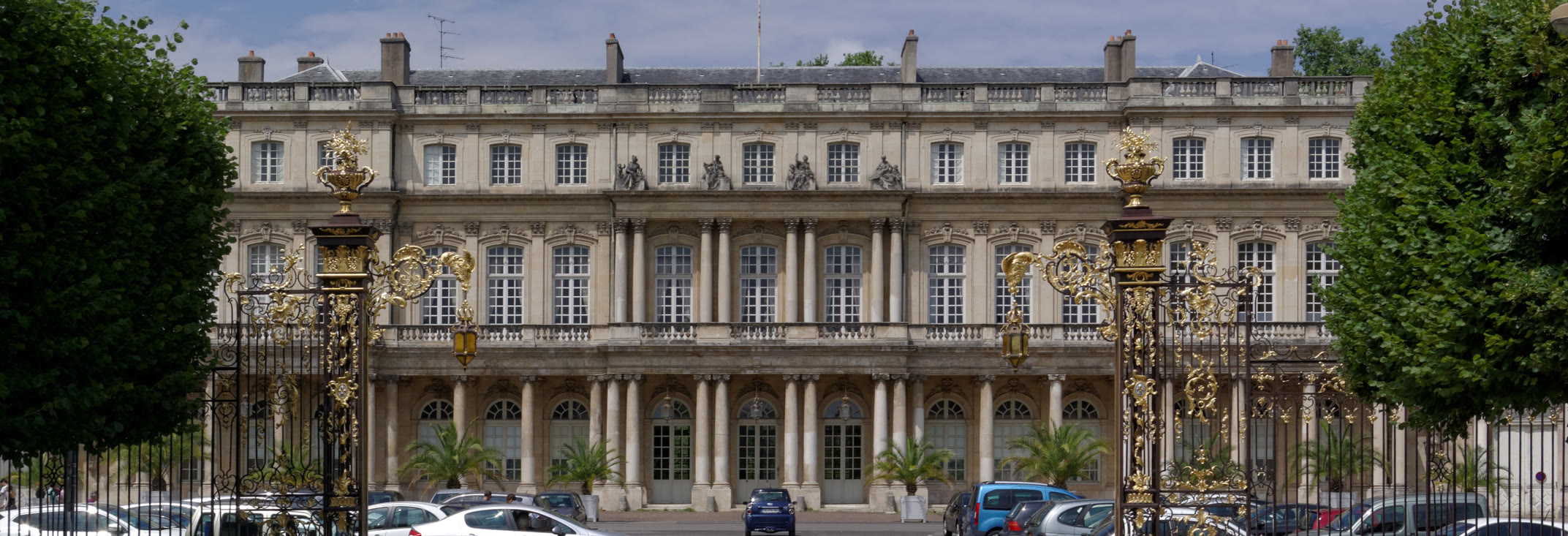
For centuries, Nancy was the capital of the Duchy of Lorraine. Its historic heart, the Old Town, keeps the memory of the dukes with the ducal palace, the Cordeliers church housing their necropolis, and the Porte de la Craffe, a remnant of the medieval walls. In the 16th century, Duke Charles III had a New Town built with regular streets. But the city reached its golden age in the 18th century under Stanislas Leszczynski, deposed king of Poland turned Duke of Lorraine and father-in-law of Louis XV. On his death in 1766, Lorraine was joined to France, leaving Nancy adorned with a unique heritage.
Place Stanislas, a UNESCO-listed gem
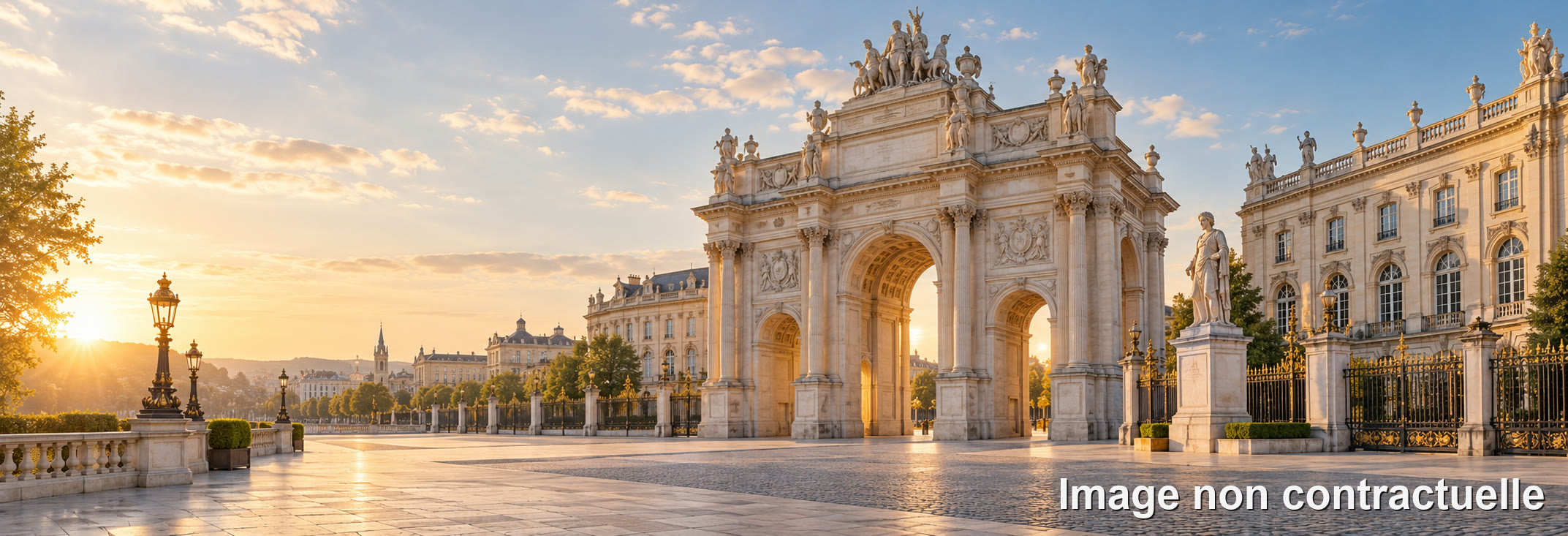
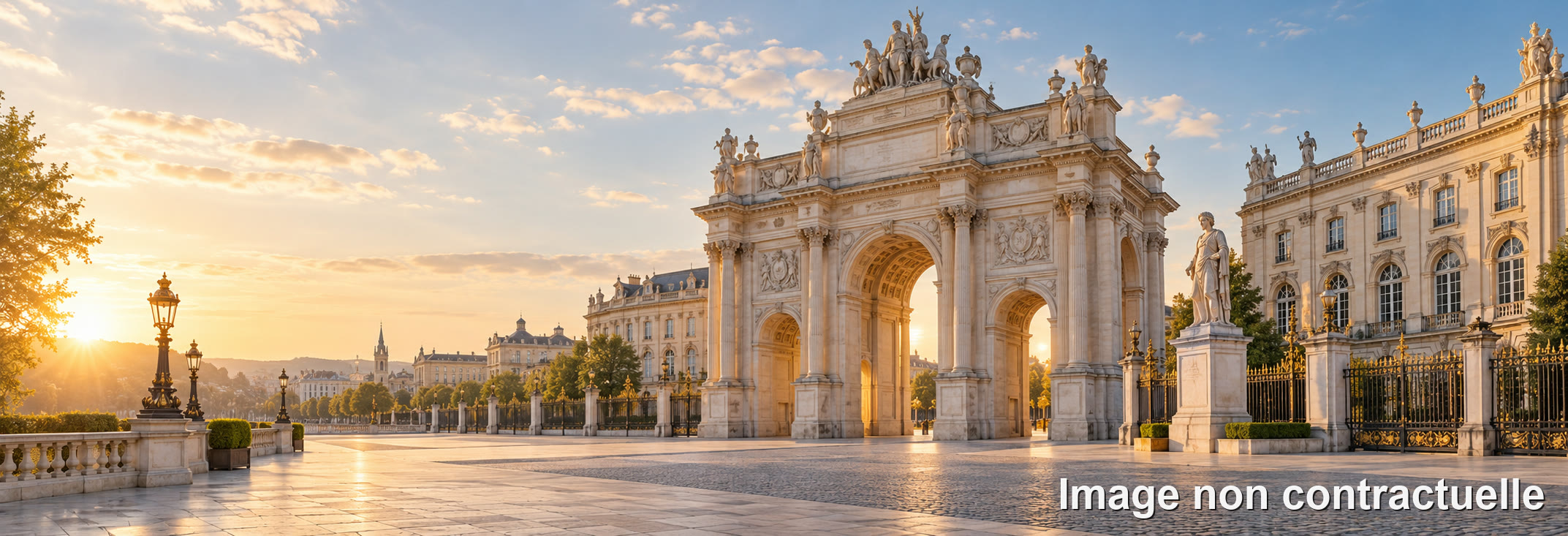
A masterpiece of 18th-century town planning, Place Stanislas is the beating heart of Nancy. Built between 1752 and 1756 by architect Emmanuel Héré, it is ringed by wrought-iron gates gilded with fine gold, the virtuoso work of ironsmith Jean Lamour, and punctuated by the fountains of Neptune and Amphitrite. Linked to Place de la Carrière by the Héré arch, then to Place d'Alliance, it forms an ensemble listed as UNESCO World Heritage since 1983. In the evening, lit up, it offers an unforgettable spectacle that alone justifies the journey.
Cradle of Art Nouveau
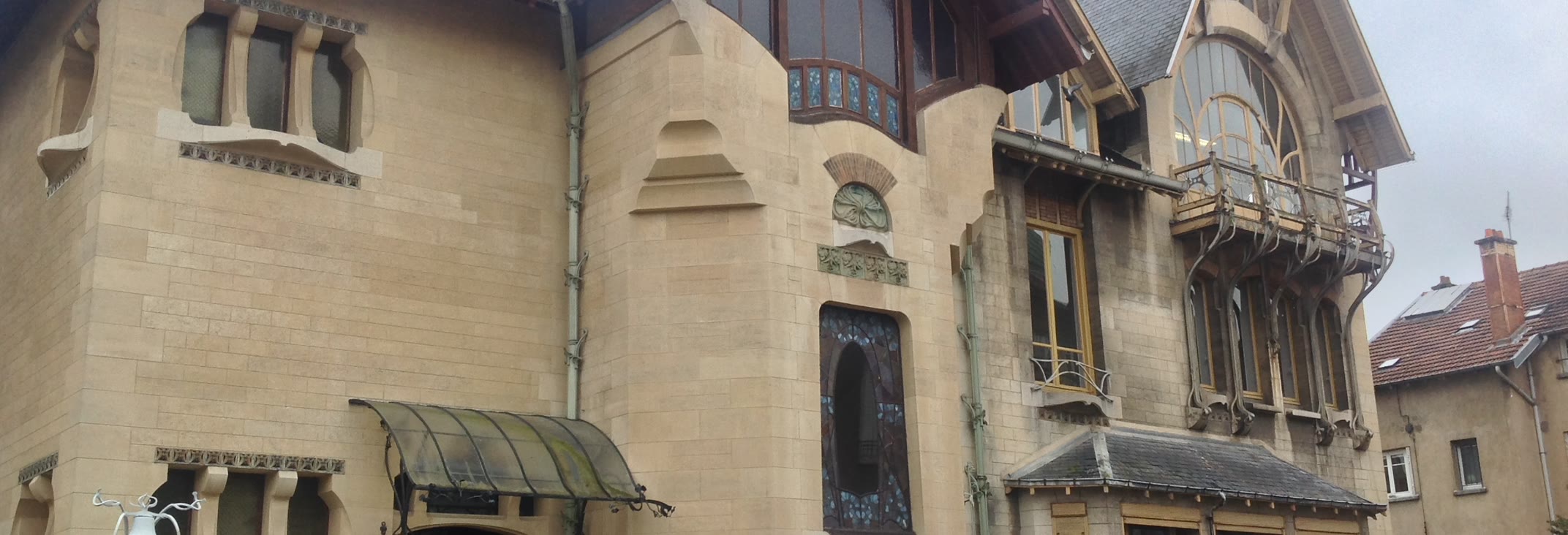
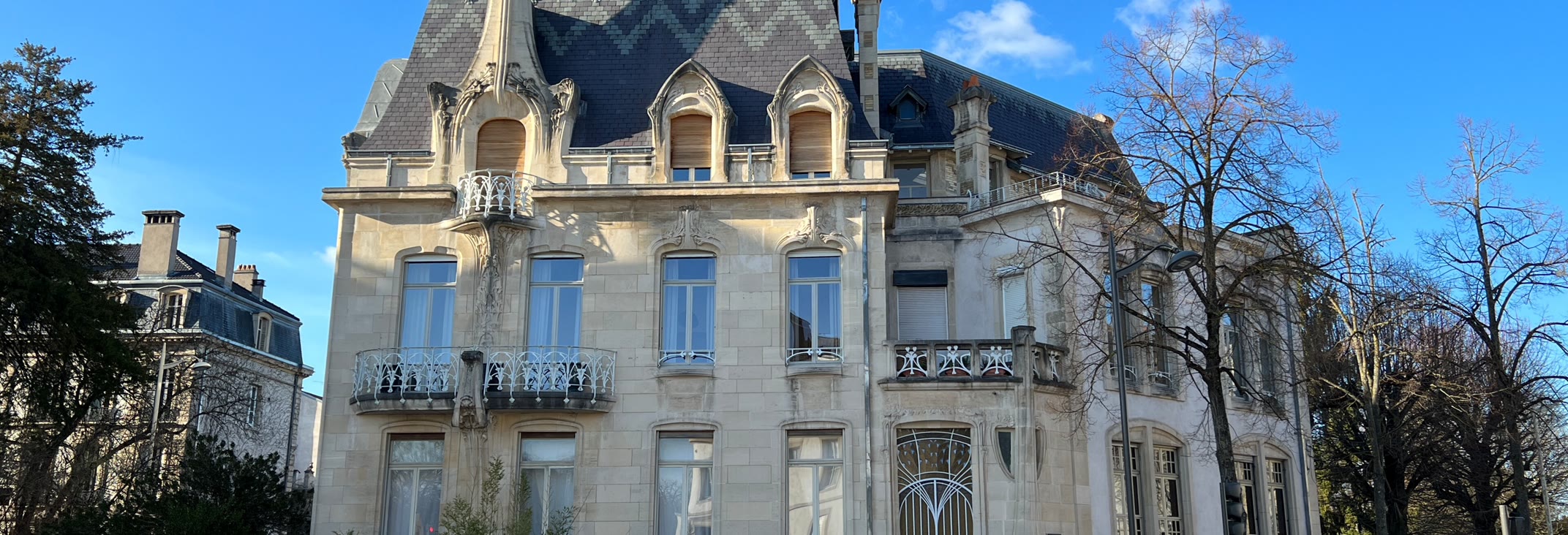
Nancy is also the French capital of Art Nouveau, thanks to the Nancy School founded in 1901 around Émile Gallé. Glassmakers, cabinetmakers and architects dreamed of bringing beauty into daily life, inspired by the curves of nature. The city preserves an exceptional heritage: the Villa Majorelle, the movement's manifesto, the Nancy School Museum with its furniture, glassware and stained glass, and many façades scattered across the districts. The creations of the Daum brothers, Louis Majorelle and Gallé still shine, making Nancy an essential stop for lovers of the decorative arts.
Sweets and Lorraine cuisine
In Nancy, indulgence is an institution. The bergamote de Nancy, a small translucent sweet with a citrus flavour, is the city's emblematic speciality. The Nancy macaron, a recipe inherited from nuns in the 18th century, is enjoyed soft and without a coloured shell. The region also celebrates the mirabelle of Lorraine, a small golden plum served in tarts, jams and brandies. Not forgetting the rum baba, whose invention is attributed to Stanislas's court. Between historic pastry shops, Art Nouveau brasseries and the covered market, the city delights lovers of good food.
A student city where life is good
Nancy is not just a museum-city: it is a young, lively town, animated by tens of thousands of students. Its terraces, its parks such as the Pépinière, its shopping lanes and its cultural life make it a pleasant destination in every season. Compact, it is easily explored on foot or by tram, and serves as an ideal gateway to Lorraine and the Grand Est. Connected to Paris in under two hours by train, Nancy offers the luxury of a discovery-rich weekend without the bustle of a large metropolis. A stay that combines heritage, art of living and conviviality.
Infos pratiques
Adresse : Place Stanislas, HOTEL DE VILLE, 54000 Nancy
Questions fréquentes
Why visit Nancy?
For its UNESCO-listed Place Stanislas, its Art Nouveau heritage (Nancy School), its past as a ducal capital and its cuisine. A human-scale city of art.
How long do you need to visit Nancy?
A weekend is enough for the essentials: Place Stanislas, the Old Town and a museum. Allow three days to explore Art Nouveau and wander more.
What are Nancy's specialities?
The bergamote de Nancy, the Nancy macaron, the mirabelle of Lorraine and the rum baba, attributed to King Stanislas's court.
How do you get to Nancy?
By train, Nancy is under two hours from Paris. The city is then easily explored on foot or by tram.
Who was Stanislas?
Stanislas Leszczynski, deposed king of Poland and father-in-law of Louis XV, was the last Duke of Lorraine. He embellished Nancy and left it the square that bears his name.
Pexels — Alexis B · Pexels — Marc Schneid