
Notre-Dame-de-Bonsecours, Stanislas's Baroque masterpiece
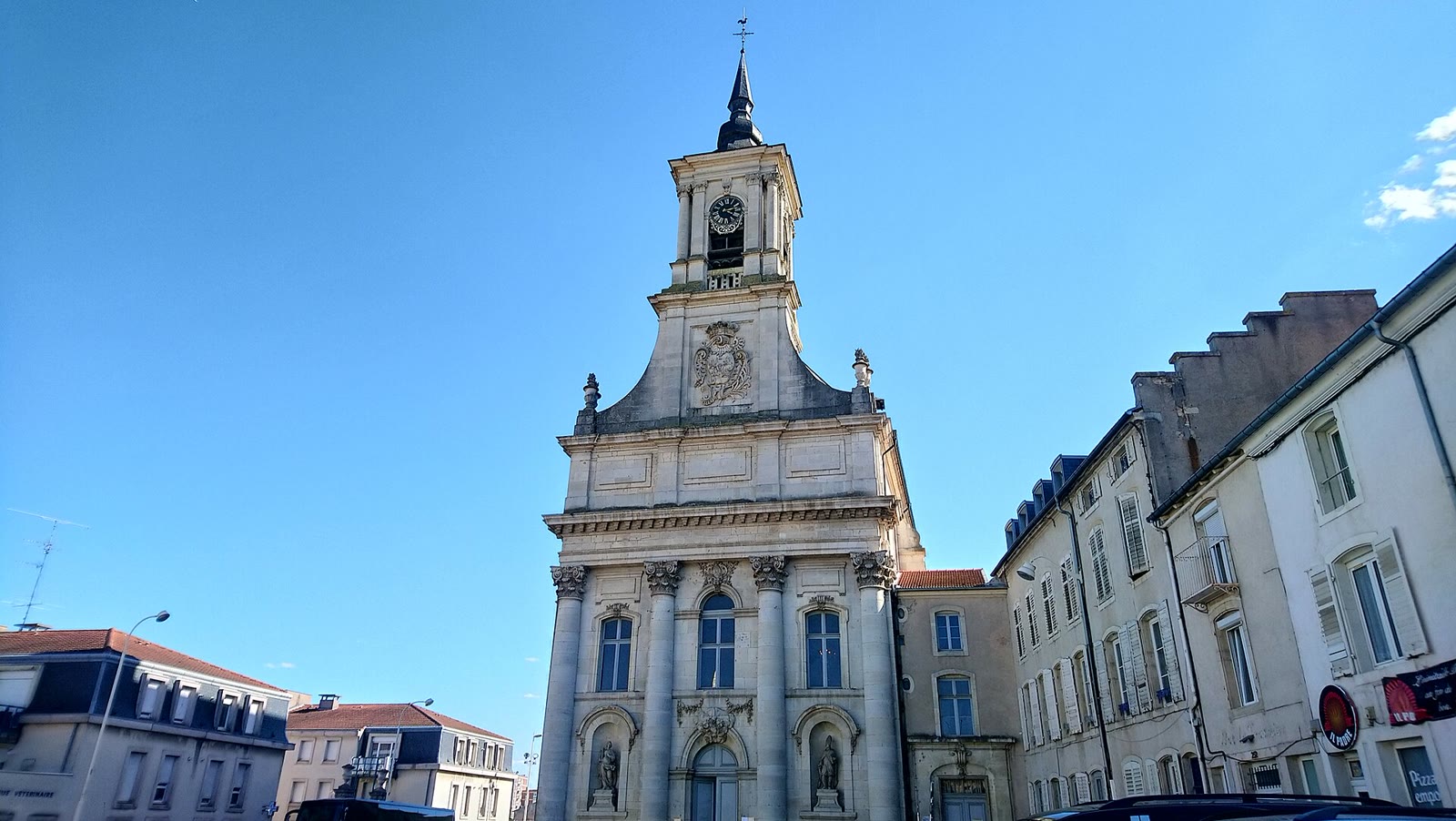
Modest in size but sumptuous in décor, Notre-Dame-de-Bonsecours is King Stanislas's Baroque masterpiece in Nancy. Rebuilt by Emmanuel Héré, it houses the tombs of the last Duke of Lorraine and his wife Catherine Opalinska.
From a victory chapel to Stanislas's sanctuary
The site's story begins in 1484: a chapel was raised after the Battle of Nancy (1477), where Duke René II defeated Charles the Bold. It housed a statue of the Virgin carved in 1505 by Mansuy Gauvain and became a place of pilgrimage. In 1737, Stanislas Leszczynski, former king of Poland, received the duchy of Lorraine. He decided to rebuild the entire church as his mausoleum and entrusted the work to his architect Emmanuel Héré. Built from 1738 to 1741, the new church blends Marian devotion with royal ambition, in a refinement typical of the Age of Enlightenment.
A gilded, sculpted Baroque interior
Behind a narrow façade with engaged columns and a bulbous bell tower, the interior dazzles. Coloured stucco, gilding and rocaille motifs cover the walls in a controlled profusion. The richly ornamented pulpit bears the symbols of the evangelists. Eight polychrome statues depict saints venerated in Poland, a tribute to Stanislas's origins. The vault frescoes, painted by Joseph Gilles in 1742, portray the Annunciation, the Assumption and the Immaculate Conception. Later, at the end of the 19th century, the Nancy artist Eugène Vallin added Art Nouveau-inspired confessionals. This blend of styles makes Bonsecours a true jewel case of Lorraine sacred art.
The tombs of Stanislas and Catherine
The church is also the ducal couple's mausoleum. Facing each other in the choir, two funerary monuments answer one another. That of Catherine Opalinska, who died in 1747, was sculpted by Nicolas-Sébastien Adam: the queen appears kneeling, guided towards heaven by an angel, in a moving composition. Opposite, the tomb of Stanislas, commissioned by Louis XV from Claude-Louis Vassé and finished by his pupil Félix Lecomte, was installed in 1775. A monument is also dedicated to the heart of their daughter, Marie Leszczynska, queen of France and wife of Louis XV. A place of memory with European resonance.
Visiting Notre-Dame-de-Bonsecours
Located on Avenue de Strasbourg, a little away from the centre, the church amply rewards the short detour. Listed as a Historic Monument since 1906, it can be visited freely during opening hours; the tourist office offers themed guided tours to decode its décor and history. Take time to admire the tombs, the pulpit and the frescoes, then linger on the statue of the Virgin, heart of the original pilgrimage. Bonsecours perfectly rounds off a discovery of Stanislas's legacy in Nancy, after Place Stanislas and the Arc Héré, both designed by the same architect.
Infos pratiques
Adresse : 256 Avenue de Strasbourg, 54000 Nancy
Questions fréquentes
Who is buried at Notre-Dame-de-Bonsecours?
King Stanislas Leszczynski, the last Duke of Lorraine, and his wife Catherine Opalinska. A monument also honours the heart of their daughter Marie Leszczynska.
Who built the church?
The architect Emmanuel Héré, between 1738 and 1741, for King Stanislas. It is the same artist who designed Place Stanislas.
Why statues of Polish saints?
Stanislas was the former king of Poland. The eight statues of saints venerated in Poland pay tribute to his origins and faith.
Is the church far from Nancy's centre?
It stands on Avenue de Strasbourg, a little away from the historic centre, but remains reachable in a few minutes by tram, bus or car.
Wikimedia Commons — Killian Janot 88