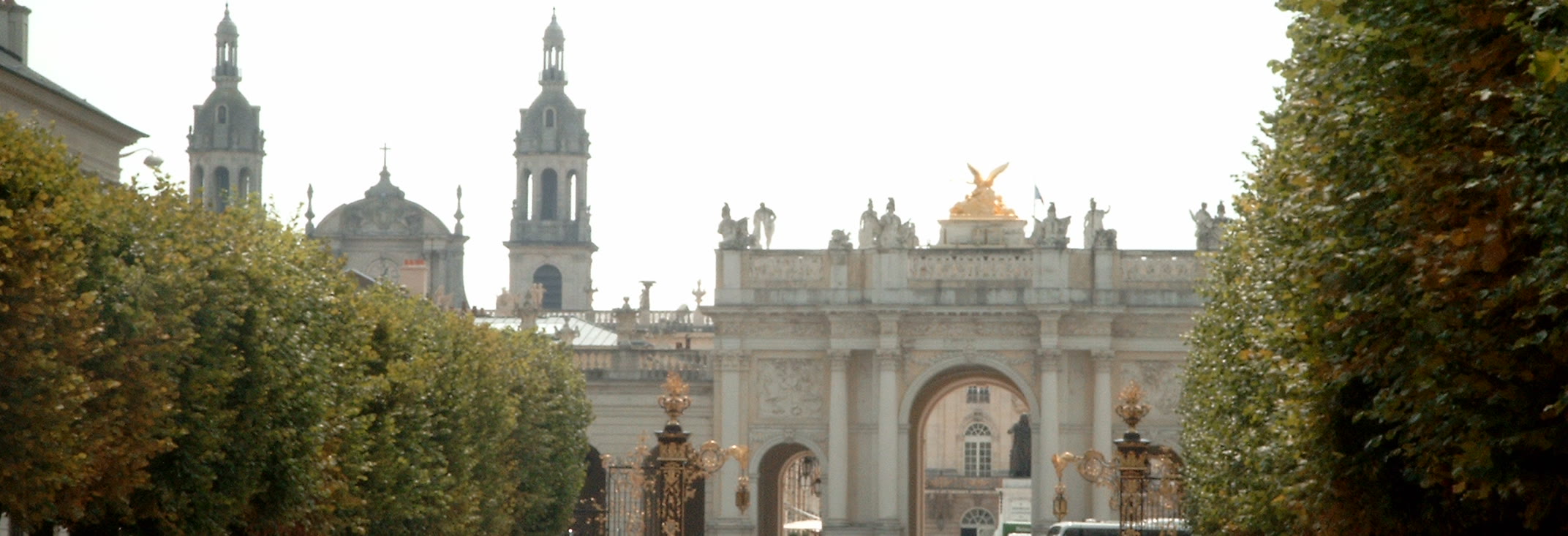
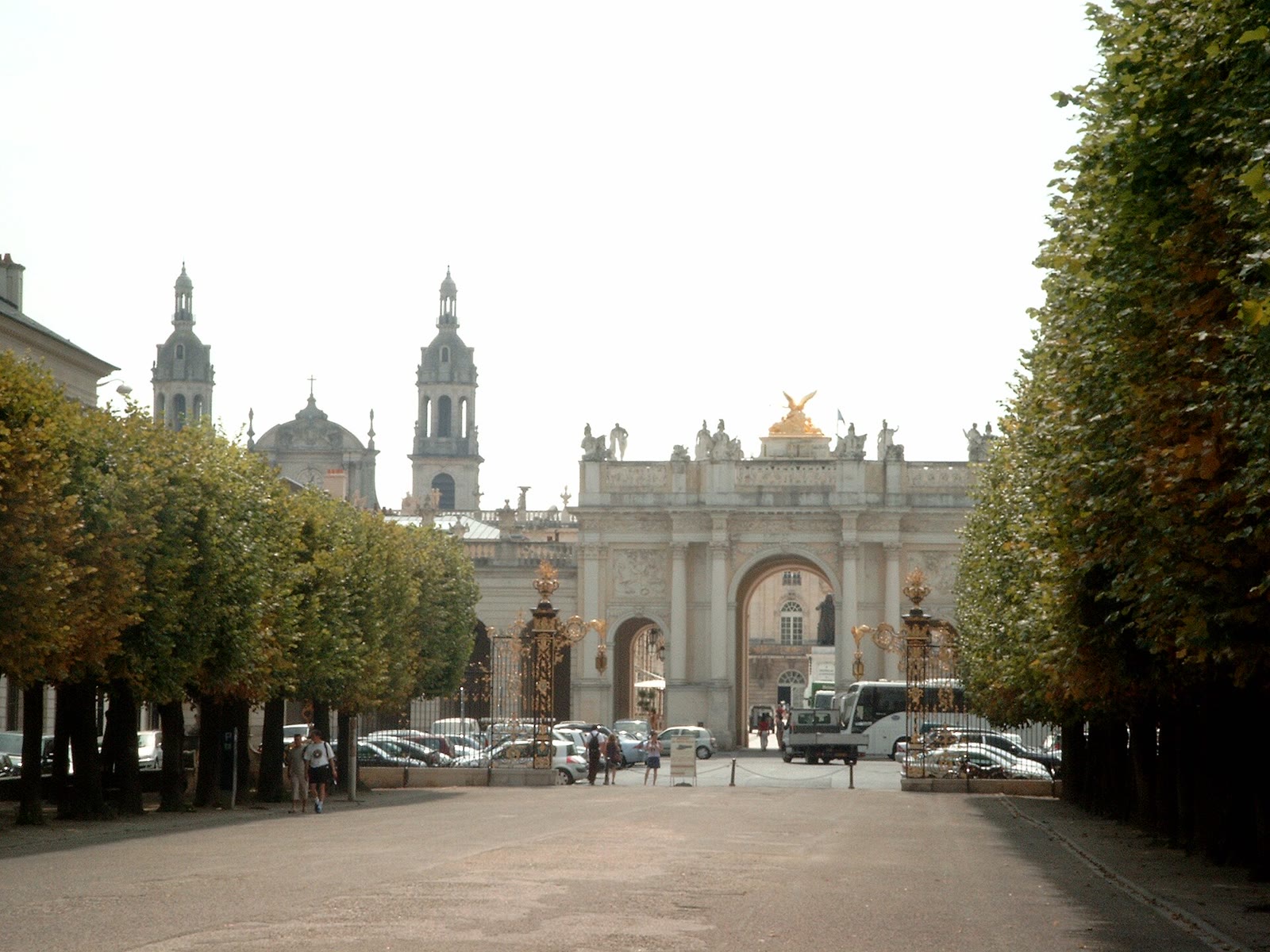
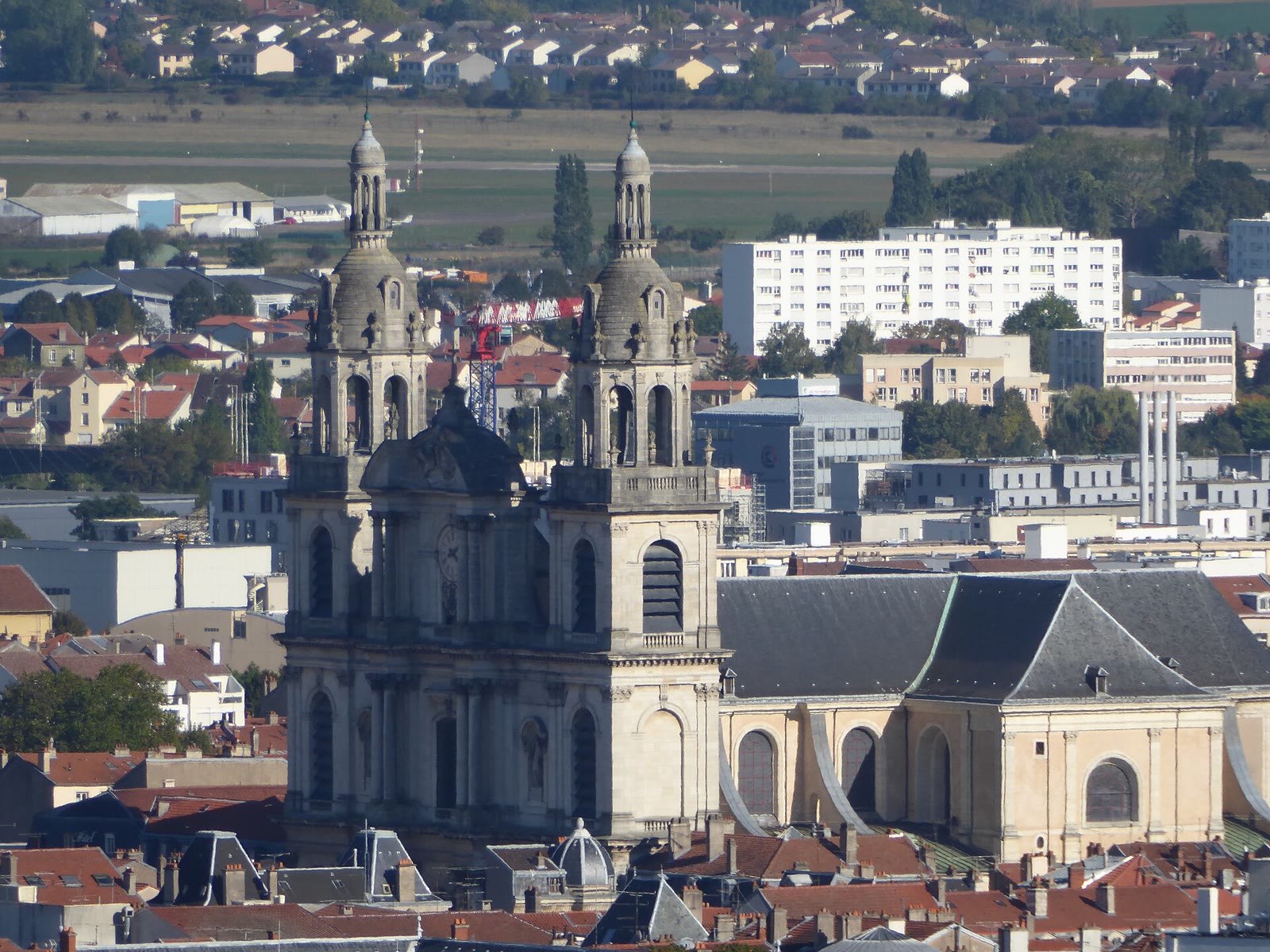
Notre-Dame-de-l'Annonciation Cathedral, Nancy's baroque church
Built from 1703 for Duke Leopold, Notre-Dame-de-l'Annonciation Cathedral unfurls a majestic Baroque façade in the heart of the city. Behind its two towers lie a painted dome, a grand organ, ironwork by Jean Lamour and a thousand-year-old treasury.
From primatial church to cathedral
The plans were drawn up around 1700, inspired by the Roman church of Sant'Andrea della Valle. Construction began in 1703 under Duke Leopold, continued with the help of renowned architects, and culminated in the first Mass in 1742. The building was at first only a primatial church; it became a cathedral in 1777, when the bishopric of Toul was transferred to Nancy, then capital of a Lorraine that had become French. This long project, spanning nearly forty years, explains the coherence of its Baroque style, more restrained and classical than exuberant, reflecting 18th-century Lorraine taste.
A Baroque façade and a painted dome
The great façade, framed by two towers, is adorned with columns and statues that punctuate the pale stone. Inside, the eye is drawn to the dome painted by Claude Jacquard, whose trompe-l'œil frescoes open the sky above the crossing. The vast, luminous nave leads to a solemn choir. On the walls, paintings from the Lorraine school recall the region's artistic wealth. The whole strikes by its balance: Baroque monumentality meets a thoroughly classical restraint, offering a setting suited both to contemplation and to architectural admiration.
Grand organ and Jean Lamour ironwork
The cathedral holds an exceptional instrument: the grand organ, built by Nicolas Dupont between 1756 and 1763, enlarged and then rebuilt in the 19th century by the famous organ-builder Aristide Cavaillé-Coll. It is now listed. Two side chapels are closed by wrought-iron grilles by Jean Lamour, made between 1751 and 1755, just before he forged those of Place Stanislas. Other grilles are the work of his apprentice François Jeanmaire. This dialogue between artistic ironwork, music and painting makes the cathedral a summary of Lorraine genius in the Age of Enlightenment.
The treasury of Saint Gauzelin
The cathedral holds one of the oldest treasuries in France. It gathers liturgical objects from the 9th and 10th centuries that belonged to Saint Gauzelin, bishop of Toul from 922 to 962. The centrepiece is his evangeliary, bound in gold, silver and precious stones, a masterpiece of medieval goldsmithing. Also kept here are a chalice, paten and other precious items testifying to the continuity of religious life between Toul and Nancy. This treasury, shown during specific tours, offers a striking journey through more than a thousand years of Christian history in Lorraine.
%20-%202022-02-26%20-%201.jpg?width=1600)
Infos pratiques
Adresse : 52bis Place Monseigneur Ruch, 54000 Nancy
Questions fréquentes
When was Nancy Cathedral built?
Construction began in 1703 under Duke Leopold; the first Mass was celebrated there in 1742. The building became a cathedral in 1777.
What is the treasury of Saint Gauzelin?
A set of 9th-10th-century liturgical objects, including an evangeliary bound in gold and precious stones, that belonged to Gauzelin, bishop of Toul.
Is there an admission fee for the cathedral?
No, entry is free. The treasury and certain areas can be seen on specific guided tours.
Who made the cathedral's grilles?
Jean Lamour, the ironworker of Place Stanislas, forged several grilles between 1751 and 1755; others are by his apprentice François Jeanmaire.
Wikimedia Commons — Axel41 · Wikimedia Commons — Musicaline · Wikimedia Commons — Chabe01