Place de la Carrière, a classical promenade in the Old Town
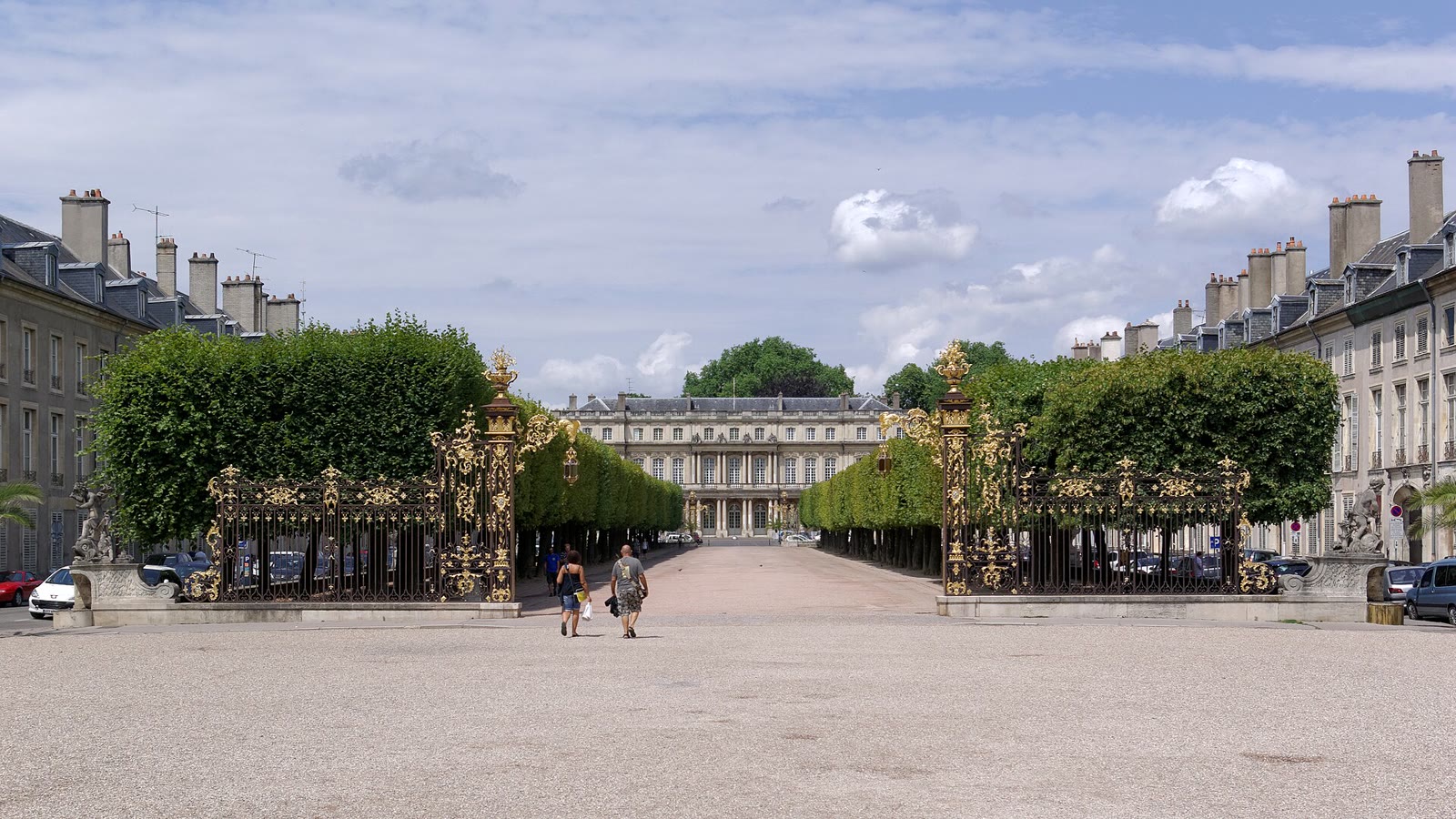
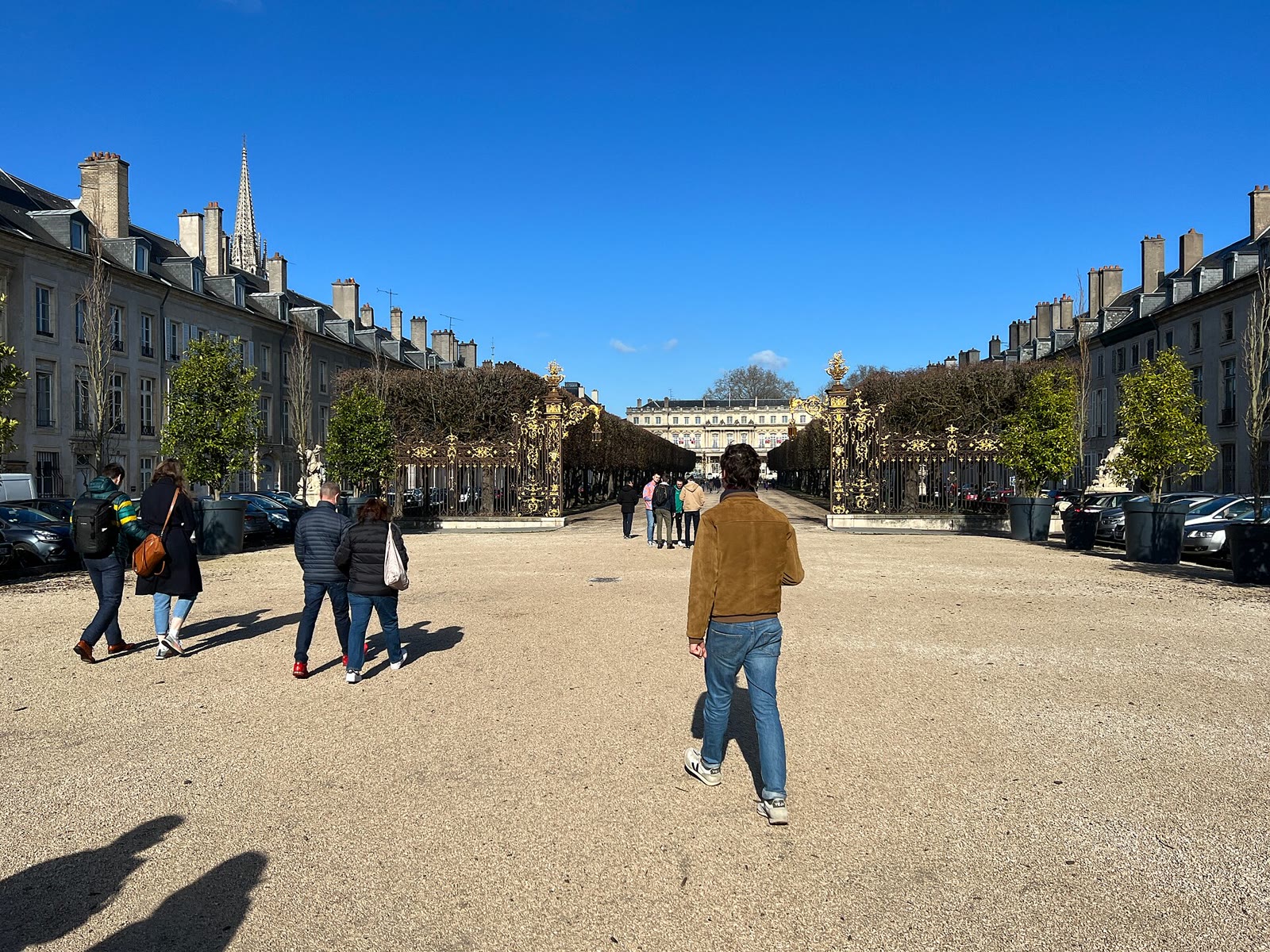
Extending Place Stanislas, Place de la Carrière unfurls its long esplanade of clipped trees between two rows of elegant townhouses. A former jousting ground turned royal promenade under Emmanuel Héré, it links the new city to the Palais du Gouvernement and completes the UNESCO-listed ensemble.
From jousts to a royal promenade
The square dates from the 16th century, when the old town was enlarged, as a vast ground where the Lorraine nobility held tournaments, jousts and equestrian carousels — hence the name "carrière", the riders' lists. Around it, great families built their residences. In the 18th century, Emmanuel Héré transformed this uneven space into a symmetrical, refined composition, extending the grand vista born at the town hall. The square then became an elegant promenade, a link between Stanislas's city and the royal power installed to the north.
A carefully staged perspective
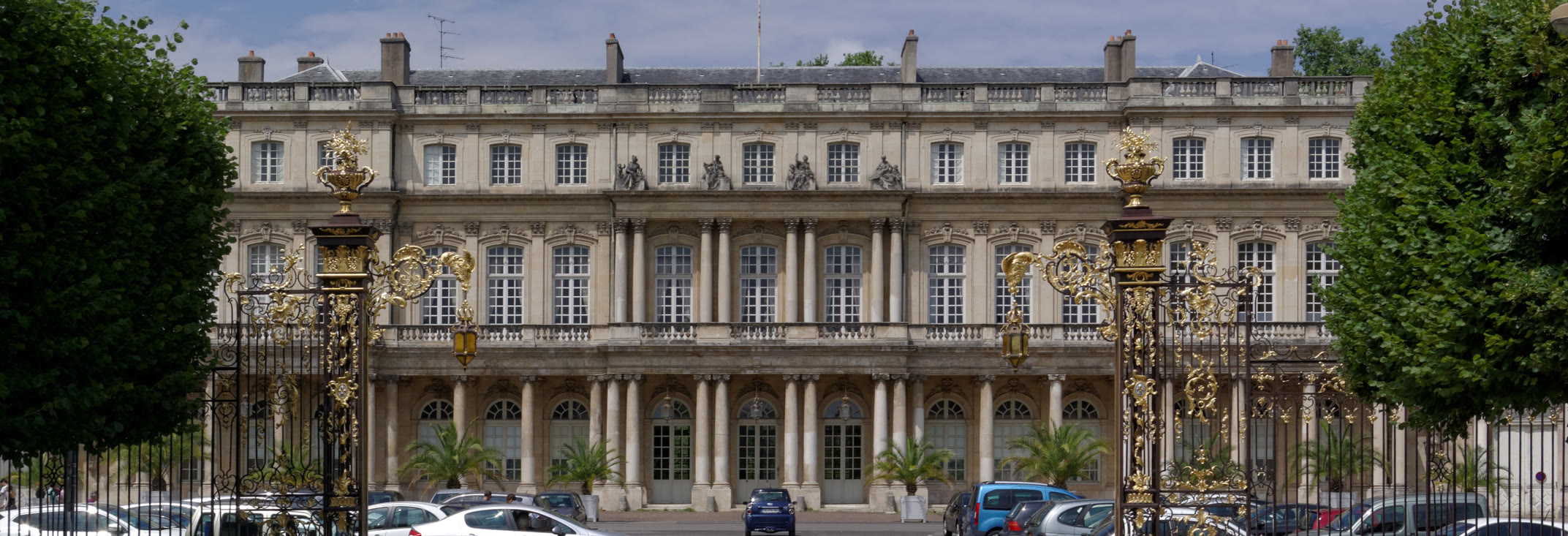
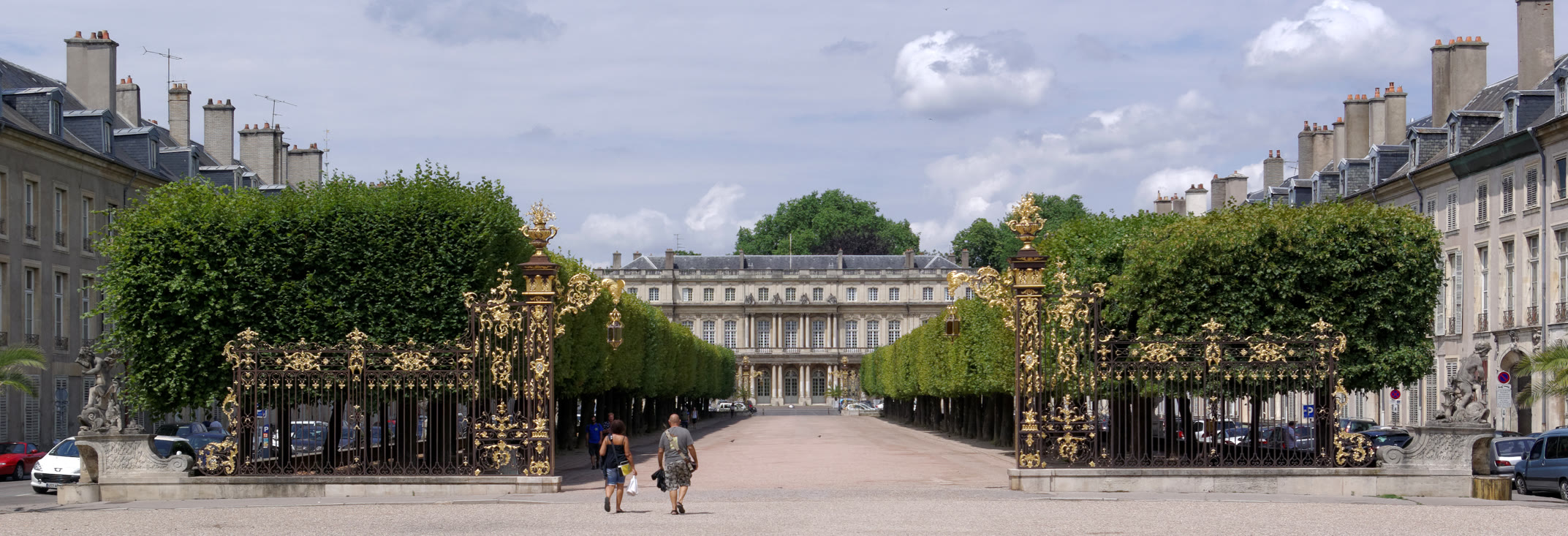
Once through the Arc Héré, you find a straight avenue lined with four rows of neatly clipped trees, framed by low, regular façades. At each end, fountains and porticoes punctuate the space. At the far end, the Palais du Gouvernement closes the vista with an elegant colonnaded hemicycle, embracing the square like two open arms. This sequence of architecture, greenery and vanishing points perfectly illustrates 18th-century urban art: each element leads the eye to the next, in a composition worthy of a French formal garden set right in the city.
Townhouses and the Hôtel de Beauvau-Craon
The square retains fine aristocratic residences, the most remarkable being the Hôtel de Beauvau-Craon, built in 1713 by architect Germain Boffrand for Marc de Beauvau, Prince of Craon. The only earlier building Héré chose to keep, it charms with its harmonious façade and now houses Nancy's Court of Appeal. The other townhouses, their façades unified by Héré, form a strikingly elegant frontage. This continuity, where older buildings converse with 18th-century creations, makes the square an open book on the architectural history of the ducal city.
The Palais du Gouvernement
At the northern end of the square stands the Palais du Gouvernement, former residence of the king's intendant and later the military governor. Fronted by its colonnaded hemicycle, it majestically closes the vista and marks the transition to the old town. Long owned by the army, it was returned to the City in 2010 and is the focus of enhancement plans. From the square, the Palace of the Dukes of Lorraine and the Cordeliers church appear behind it — an invitation to continue towards Nancy's medieval heart.


Infos pratiques
Adresse : Place de la Carrière, 54000 Nancy
Questions fréquentes
Where is Place de la Carrière?
It lies just north of Place Stanislas, from which it is separated by the Arc Héré, in the very centre of Nancy (54000). It is freely accessible on foot within a few minutes.
Why is it called la Carrière?
The name comes from the "carrière", the track where tournaments and horse races were held from the 16th century onward. The square kept the name despite becoming a promenade in the 18th century.
Can the square's buildings be visited?
The square is freely accessible. Most townhouses house administrative offices (including the Court of Appeal) and are not open to visitors, except during Heritage Days or occasional guided tours.
Is it part of the UNESCO site?
Yes. Along with Place Stanislas and Place d'Alliance, Place de la Carrière has been a UNESCO World Heritage site since 1983 as part of this 18th-century urban ensemble.
What is there to see around the square?
The square opens south onto the Arc Héré and Place Stanislas, and north onto the Palais du Gouvernement, the Palace of the Dukes of Lorraine, the Cordeliers church and the medieval Grande-Rue district.
Wikimedia Commons — Berthold Werner · Wikimedia Commons — Chabe01 · Wikimedia Commons — G.Garitan · Wikimedia Commons — Jebulon · Wikimedia Commons — Pierre-Philippe Arnould