Porte de la Craffe, Nancy's medieval gateway
With its two round towers capped by conical roofs, the Porte de la Craffe is the most imposing remnant of Nancy's medieval fortifications. Standing to the north of the Old Town since the 14th century, it served in turn as a defensive gate and a dreaded prison.
The northern gate of the Old Town
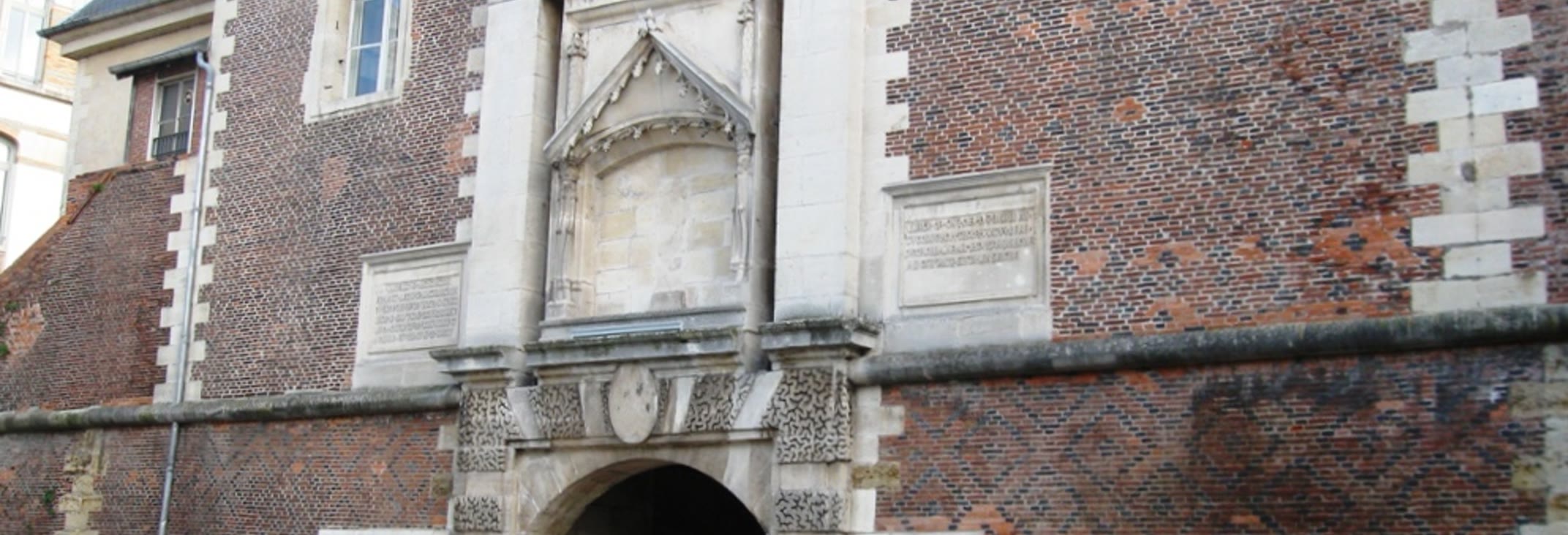
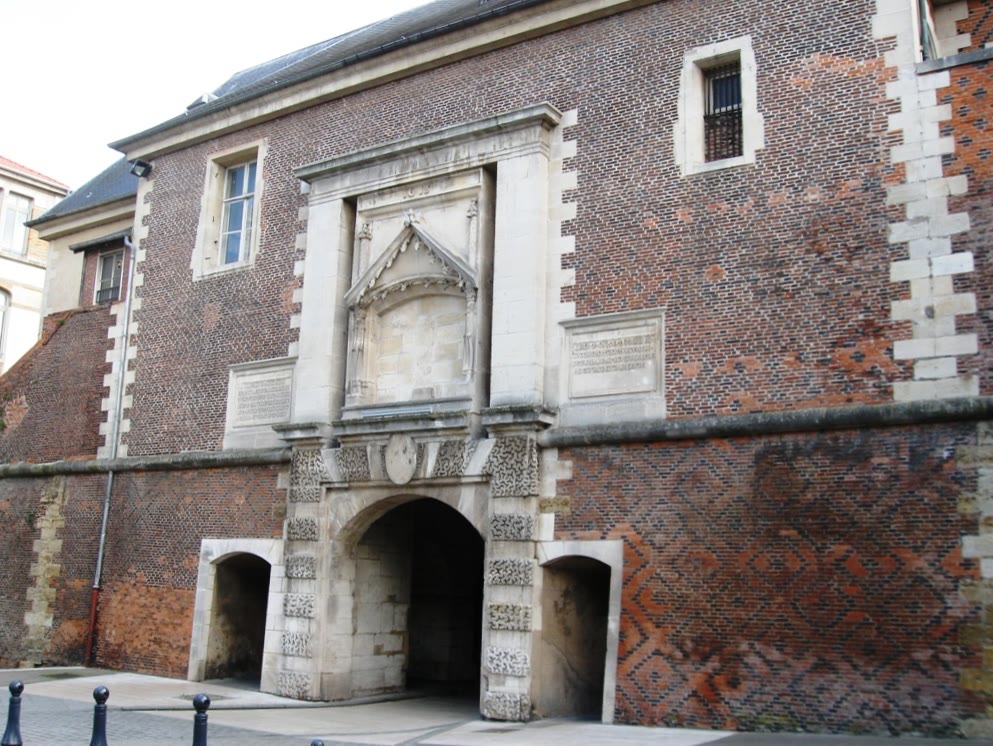
The Porte de la Craffe is the only surviving remnant of Nancy's fortifications predating Vauban. Its square gate-tower was raised in the second half of the 14th century, under Duke Jean I of Lorraine (1346-1390). It was then the sole access point to the north of the town, a strategic lock guarding the road towards Champagne and Germany. Later extended by the Porte de la Citadelle, it now forms, along the Grande Rue, the monumental entrance to the Old Town. It is the oldest monument still standing in the historic centre, a witness to the days when Nancy was just a small ducal city ringed by ramparts.
Two round towers with three-metre walls
Around 1463, the original gate-tower was reinforced by two powerful round towers with walls three metres thick, built to withstand the emerging artillery. In the 16th century they were topped with tall conical pepper-pot roofs that give the ensemble its unmistakable silhouette. The central passage opens through a large pointed arch, crowned by a niche sheltering a 14th-century Virgin and Child. On the façade you can also spot the Lorraine thistle and the Cross of Lorraine, ducal emblems carved in stone. Sturdy and proud, the gate embodies medieval military art adapted to the first firearms.
A dreaded prison until the 19th century
Gradually losing its defensive role, the gate became a place of detention. From the late Middle Ages until the 19th century, its thick towers held civilian and later military prisoners in dark, damp dungeons that remained grimly famous. Torture is said to have been carried out there, and the condemned held awaiting trial. This long and gruelling carceral use explains the slightly unsettling aura that still surrounds the monument. Now listed as a Historic Monument, the Porte de la Craffe has regained its dignity: its massive volumes and arrow slits tell, better than any speech, the harshness of urban life in medieval times.
Seeing the gate and strolling the Old Town
The Porte de la Craffe can be admired freely, by day or by night, when its floodlighting makes it especially photogenic. It marks the start of the Grande Rue, the historic thoroughfare lined with mansions that leads to the church and palace of the Dukes of Lorraine. The interior of the towers is not usually open, but it does welcome visitors during the European Heritage Days. Plan to combine your visit with the nearby Saint-Epvre Basilica and the Porte de la Citadelle, just to the north. It is the perfect starting point for a medieval walk, before heading to the elegant UNESCO-listed Place Stanislas.


.jpg?width=1600)
Infos pratiques
Adresse : Grande Rue, 54000 Nancy
Questions fréquentes
How old is the Porte de la Craffe?
Its gate-tower dates from the second half of the 14th century; the two round towers were added around 1463. It is the oldest monument in Nancy's historic centre.
Can you visit inside the towers?
The interior is not permanently open, but is sometimes accessible during the European Heritage Days. The gate is mainly discovered from the outside.
Was the gate used as a prison?
Yes. From the late Middle Ages until the 19th century, its towers served as a prison for civilian and then military detainees.
Where is the Porte de la Craffe?
At the north end of the Old Town, at the top of the Grande Rue, a few minutes' walk from Saint-Epvre Basilica and Place Stanislas.
Wikimedia Commons — RuganiMarc · Wikimedia Commons — Musicaline · Wikimedia Commons — Karlavidal · Wikimedia Commons — M.Strīķis