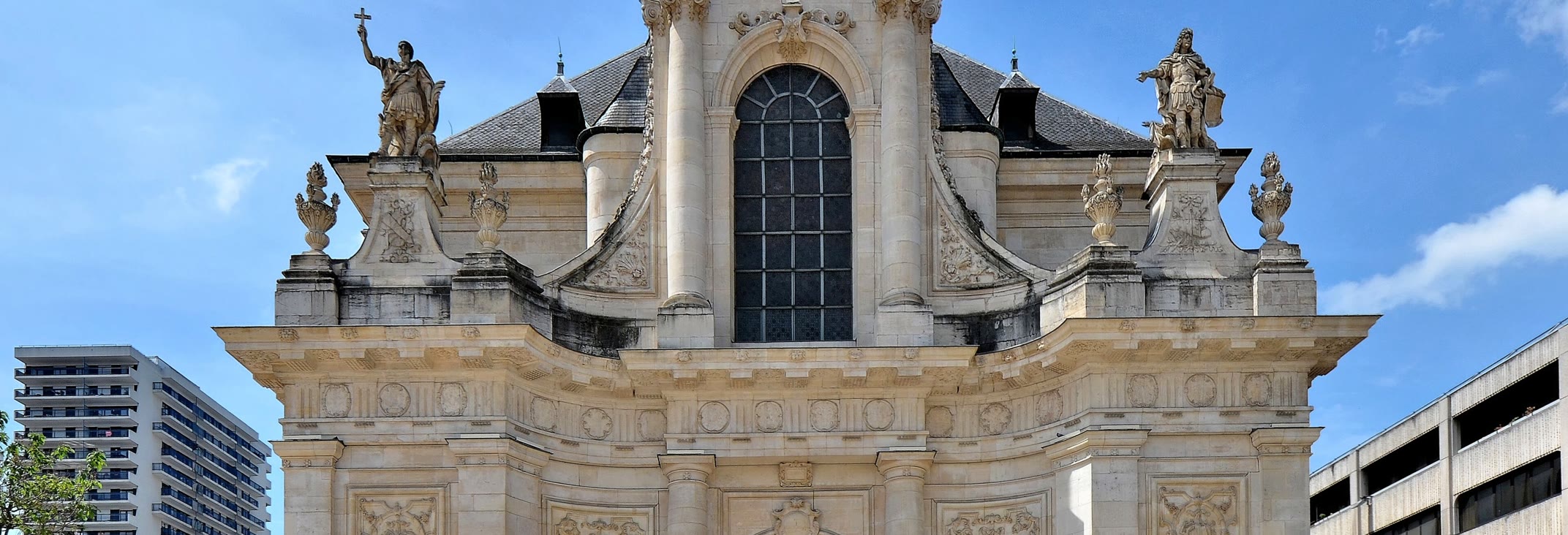
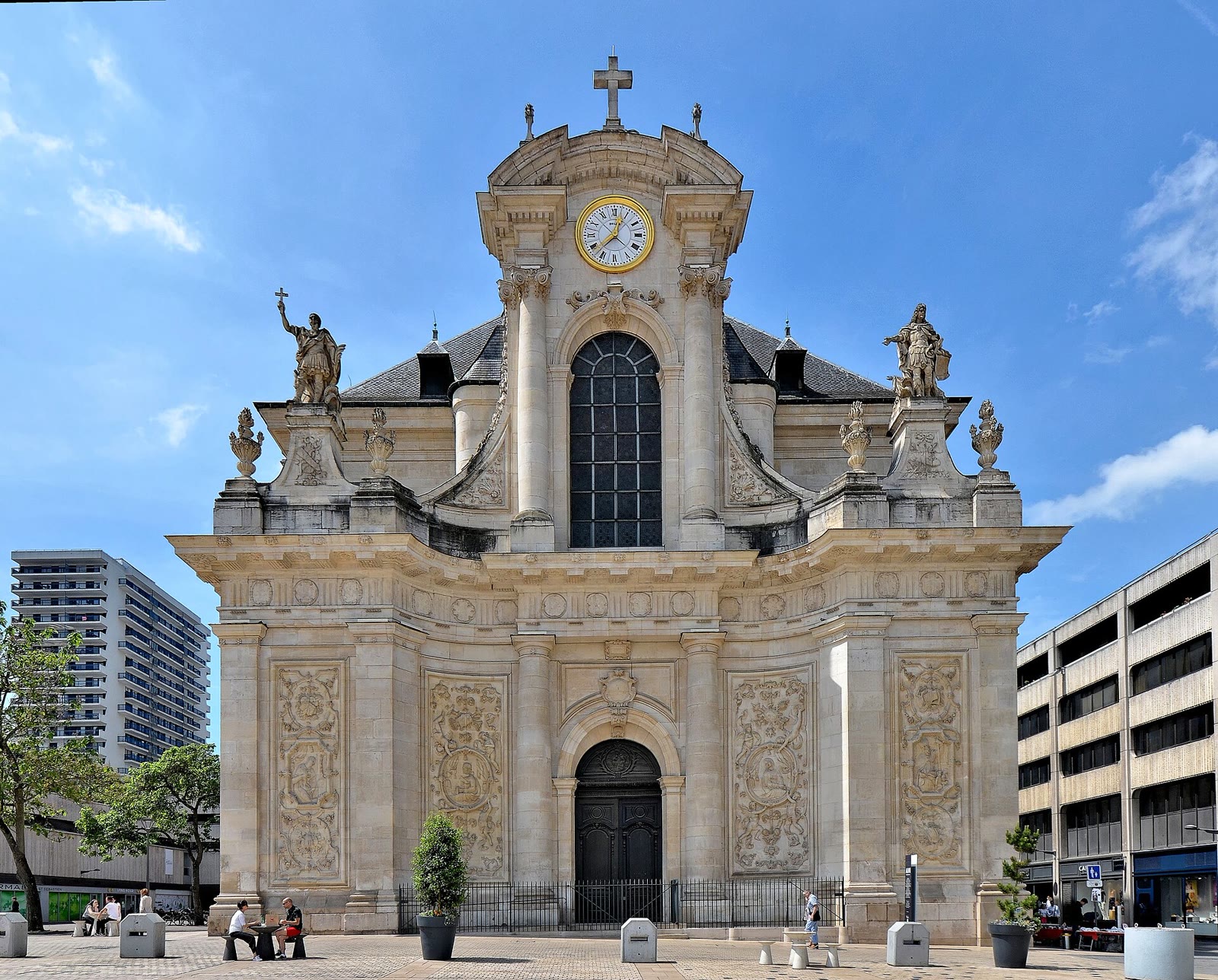
Saint-Sébastien Church and its Baroque façade
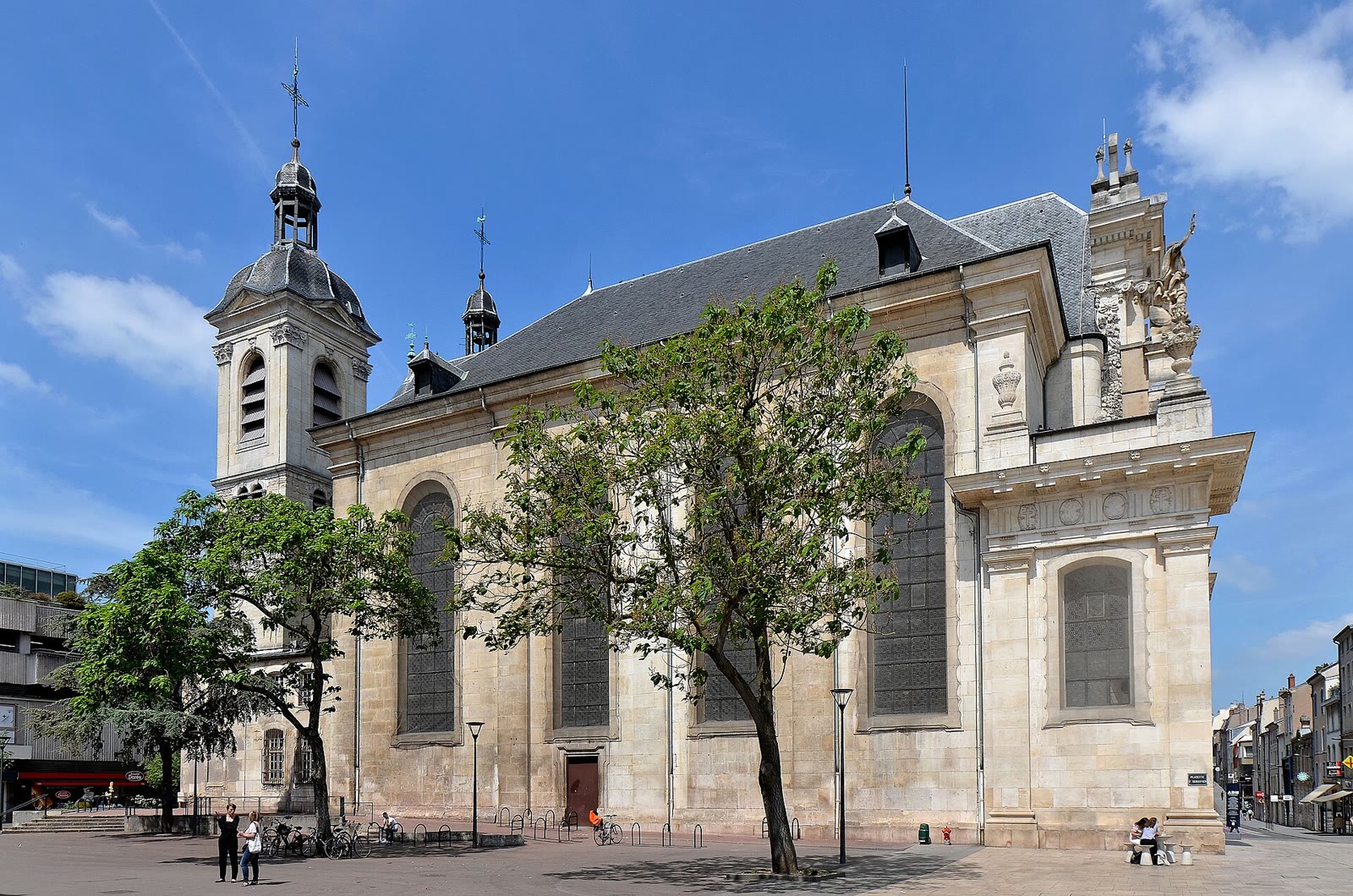
A stone's throw from Nancy's covered market, the Saint-Sébastien church astonishes with its concave façade and unusually bright interior. Built between 1720 and 1731, it ranks among Lorraine's finest examples of the baroque.
A one-of-a-kind concave façade
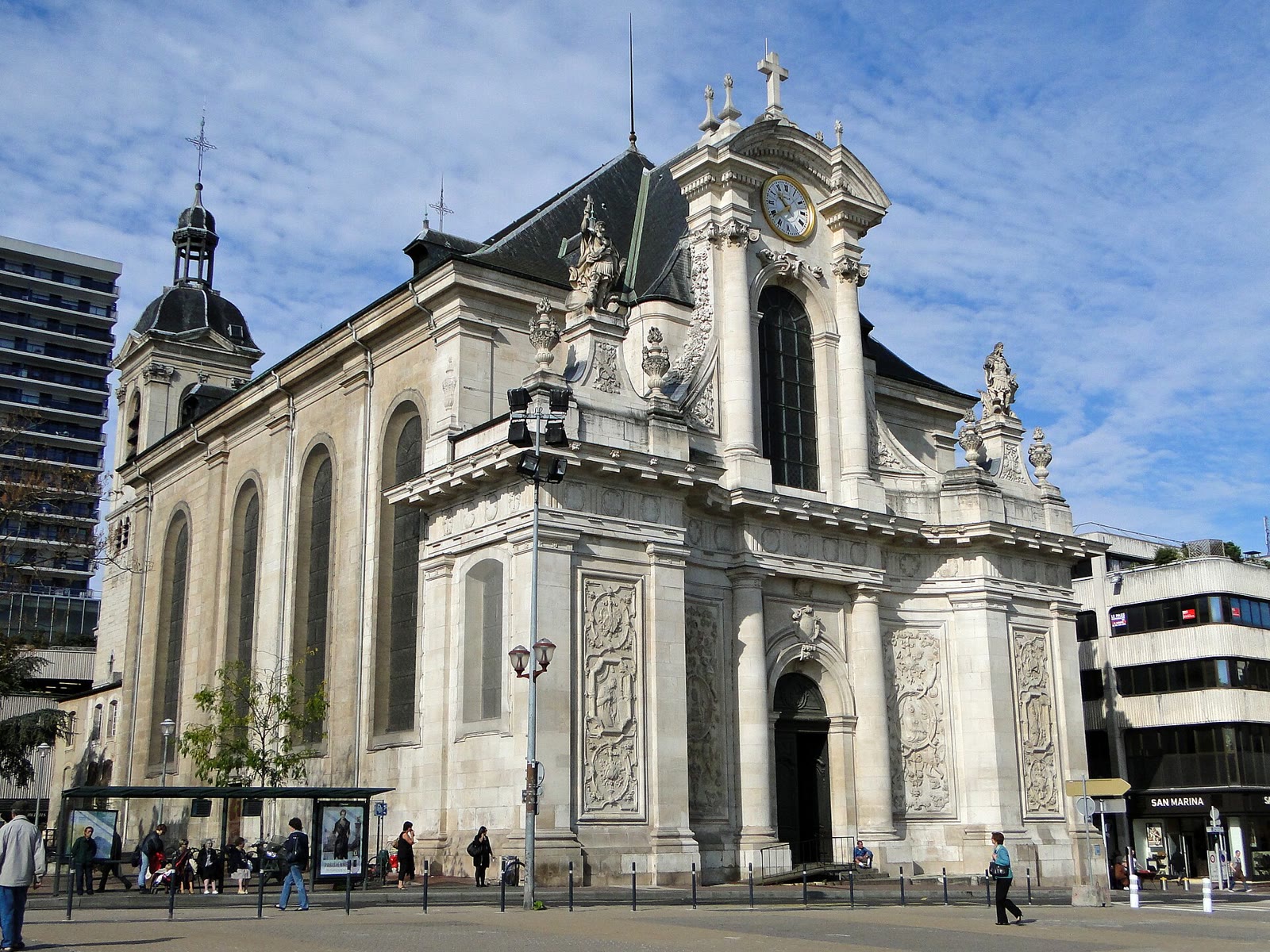
The inward-curving façade is Saint-Sébastien's true signature. By bending the stone inward, architect Jean-Nicolas Jennesson (1686-1755) managed to fit a large building onto a plot hemmed in by four streets. Punctuated by Doric columns and pilasters, the front carries four bas-reliefs by Joseph-Dieudonné Pierre, depicting the Saviour, the Virgin, Saint Nicholas and Saint Charles. Two towers topped with lanterns frame it, while statues of Saint Sebastian and Duke Léopold were added in 1882. The whole gives the square a thoroughly baroque sense of theatre.
A hall-church flooded with light
Step through the door and the surprise is complete: the interior is vast, airy and bright. Saint-Sébastien follows the Lorraine hall-church plan, with a four-bay nave and side aisles of equal height. Slender columns carry the whole and free up the space, letting light flow from one end of the nave to the other. The choir vaults are painted with scenes of Saint Sebastian's martyrdom, pierced with arrows. This brightness, rare for a baroque church, makes it a soothing place, quite unlike the dark atmosphere one often expects on entering.
Two centuries in the making
A first chapel already stood here in 1603. The present building's foundation stone was laid on 20 July 1720; it was blessed on 30 September 1731 and consecrated on 9 August 1732. The décor grew richer over time: the great Dalstein-Haerpfer organ dates from 1879 and remains one of the city's major instruments, much sought after for concerts. The façade statues were added in 1882 by Victor Huel. Listed as a Historic Monument on 6 July 1921, the church reflects Nancy's artistic ambition under the Dukes of Lorraine.
At the heart of Nancy's market district
Saint-Sébastien borders Place Henri-Mengin and the large covered market, one of the liveliest in France. The two make an easy pairing: a wander among the food stalls in the morning, then a quiet pause beneath the church's vaults. This busy shopping district links Place Stanislas to the rest of the centre in a few minutes on foot. For travellers staying in Nancy, it is an excellent landmark for exploring the city: central, lively, and within walking distance of the great sites listed as UNESCO World Heritage.
Infos pratiques
Adresse : 76 Rue des Ponts, 54000 Nancy
Questions fréquentes
Where is the Saint-Sébastien church in Nancy?
It stands at 76 rue des Ponts, in central Nancy, next to Place Henri-Mengin and the covered market, a few minutes' walk from Place Stanislas.
Why is the façade curved?
This concave façade, typical of the baroque, let architect Jean-Nicolas Jennesson fit a large building onto a narrow plot surrounded by four streets, while creating a striking sense of movement.
Is admission free?
Yes, entry to the church is free. As with any place of worship, visitors should keep quiet and avoid coming during services.
Can you hear the organ there?
Yes. The 1879 Dalstein-Haerpfer organ is one of Nancy's finest and sounds during services as well as concerts held from time to time in the church.
Wikimedia Commons — Patrick from Compiègne, France · Wikimedia Commons — Alexandre Prévot