The Désilles memorial, a monumental gate of 1783
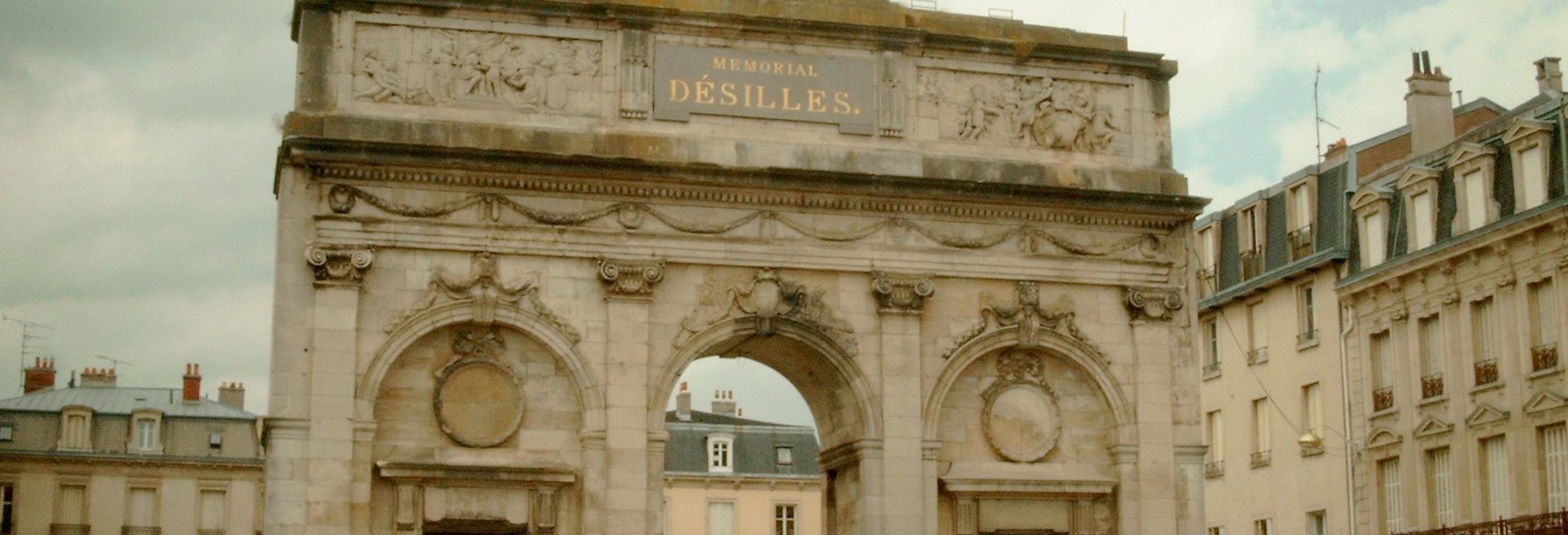
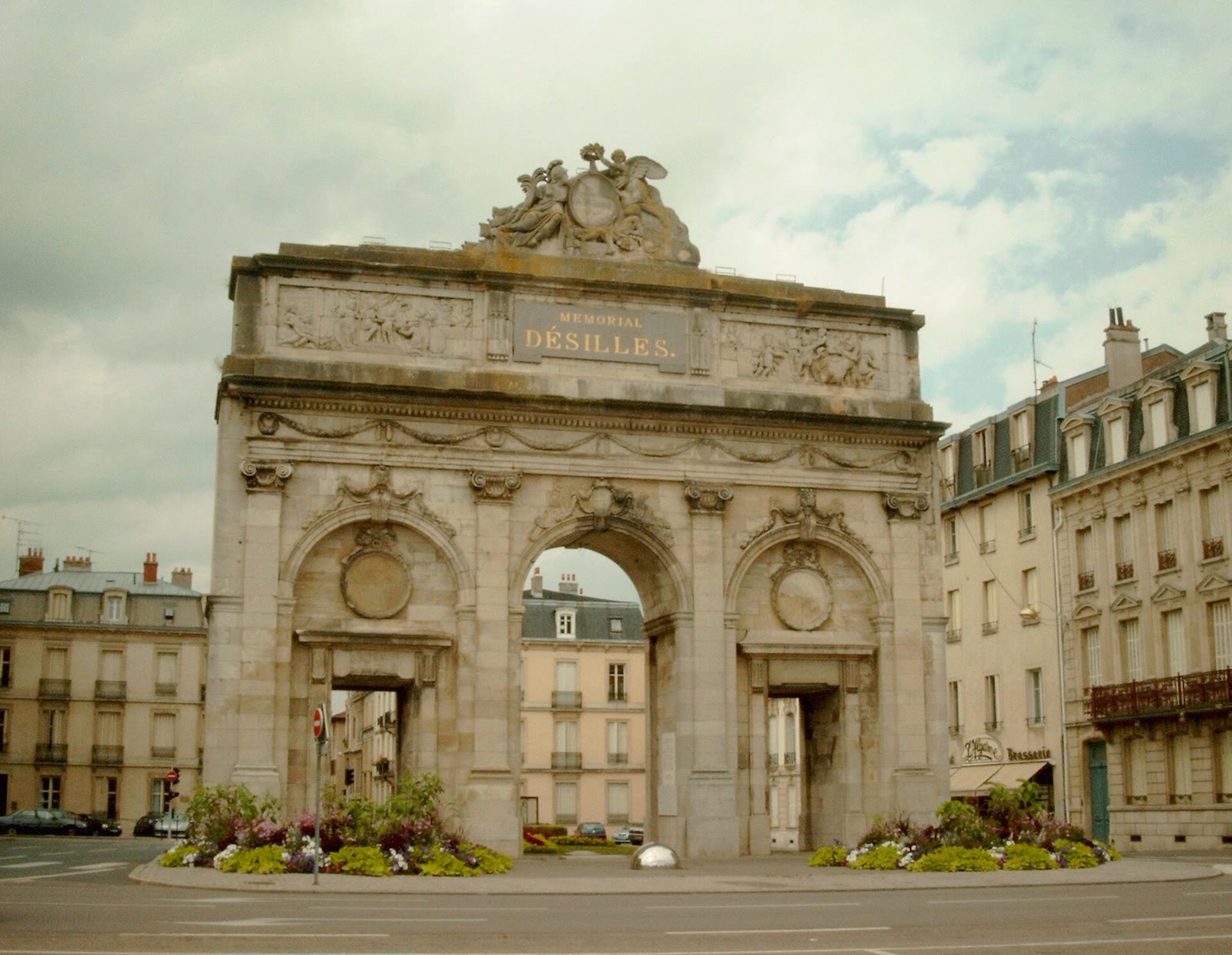
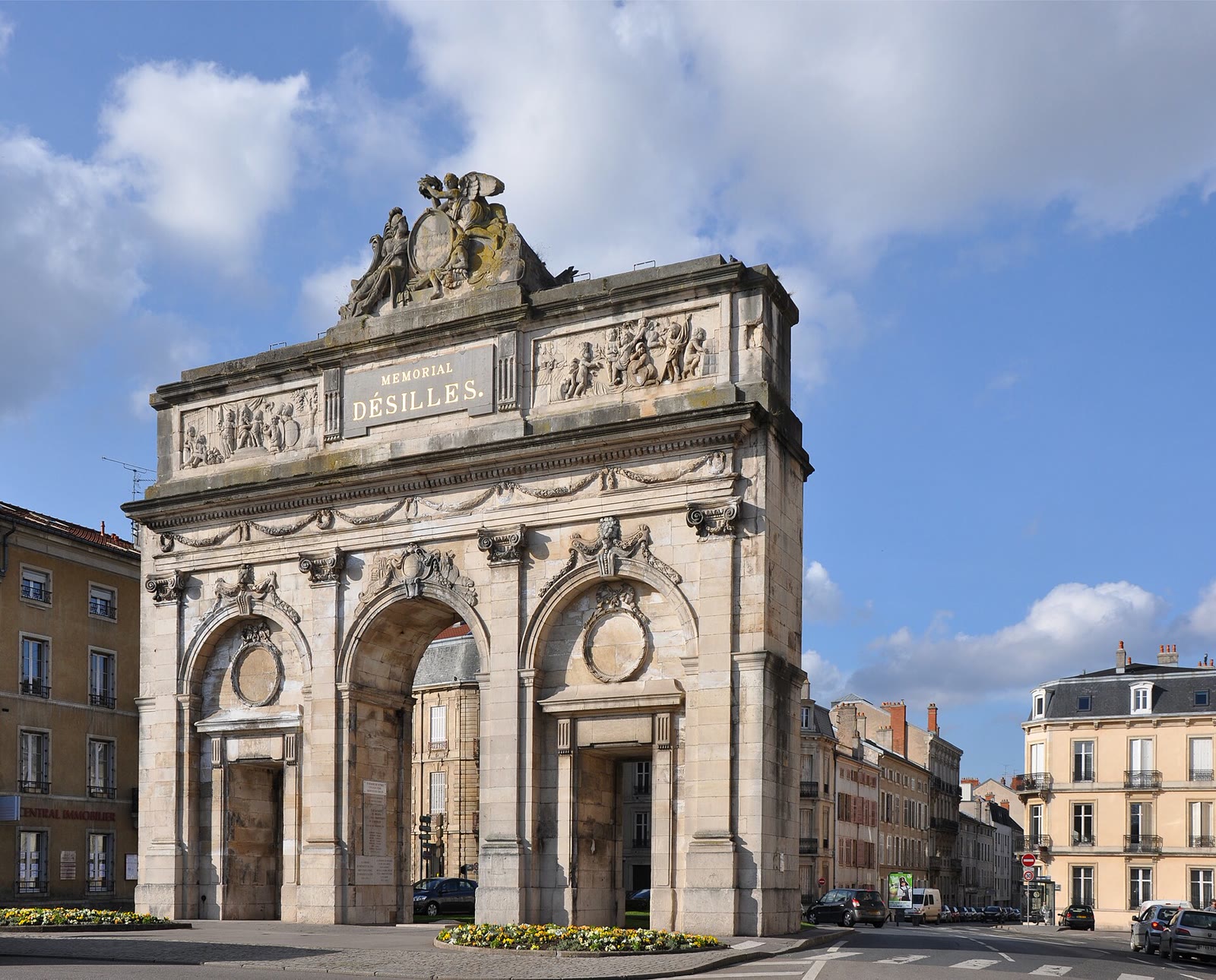
At the end of the Cours Léopold, the Désilles gate raises its neoclassical mass on the Place du Luxembourg. Built in the 1780s, it is both a city gate and a commemorative monument: it honours men of Nancy who fell far from home and bears the name of a heroic young officer of the Revolution.
A gate to close the Cours Léopold
Built between 1782 and 1784 by architect Didier-Joseph-François Mélin, on the initiative of the Count of Stainville, commander-in-chief of Lorraine, the gate rises to the north of the town. It was designed to close the long vista of the Cours Léopold and, in the same gesture, to open the view towards the Route de Metz. This dual role, scenographic and functional, ties it to the refined urban planning of 18th-century Nancy. Now set on the Place du Luxembourg, at the junction of Rue Désilles, Rue de Metz and Rue de la Craffe, it remains a major landmark of the northern entrance.
A tribute to the dead of Yorktown
The monument does more than order space: it commemorates the men of Nancy who died during the American War of Independence, notably at the Siege of Yorktown in 1781, where French troops fought alongside the insurgents. This memorial dimension is rare for the period: the gate is often regarded as one of France's oldest war memorials. It recalls the commitment of Lorraine and France to a distant conflict, decisive for the birth of the United States. Behind the apparent coldness of a stone gate lies a genuine act of collective remembrance.
André Désilles, hero of 1790
The gate first bore other names — Porte Saint-Louis, then Porte Stainville — before taking that of André Désilles. This young lieutenant from Saint-Malo became famous during the Nancy affair of August 1790: several regiments had mutinied over unpaid wages, and the repression was brutal. To stop the carnage, Désilles threw himself between the cannons and the soldiers, his body offered to the fire. Gravely wounded, he died of his injuries a few weeks later, aged only twenty-three. His act made him a heroic figure of the Revolution, whose memory the monument perpetuates.
A listed monument to discover
Listed as a historic monument in 1925, the Désilles gate unfolds in a neoclassical vocabulary: columns, pediments and engraved inscriptions form a solemn façade, conceived like a triumphal arch. It is freely admired, in every season, from the Place du Luxembourg and the neighbouring esplanade. It makes an ideal starting point for reaching the Old Town via Rue de la Craffe and its famous medieval gate, or for following the Cours Léopold towards the centre. Often less known than the Place Stanislas, the Désilles gate deserves a pause for its rich history and unique commemorative significance.
.jpg?width=1600)
Infos pratiques
Adresse : 13 Place du Luxembourg, 54000 Nancy
Questions fréquentes
Who built the Désilles gate?
Architect Didier-Joseph-François Mélin, between 1782 and 1784, on the initiative of the Count of Stainville, commander-in-chief of Lorraine.
Who was André Désilles?
A young lieutenant born in Saint-Malo. During the Nancy affair of August 1790, he interposed himself between the cannons and the mutineers to prevent a massacre. Gravely wounded, he died at twenty-three, becoming a hero of the Revolution.
Why is it called a "memorial"?
Because the gate commemorates men of Nancy who died in war, notably at the Siege of Yorktown in 1781. It is often cited as one of France's oldest war memorials.
Where is the memorial and can it be seen freely?
On the Place du Luxembourg, north of Nancy, in the extension of the Cours Léopold. It is an open-air monument, freely visible at any time.
Wikimedia Commons — Axel41 · Wikimedia Commons — M.Strīķis · Wikimedia Commons — Alexandre Prevot from Nancy, France